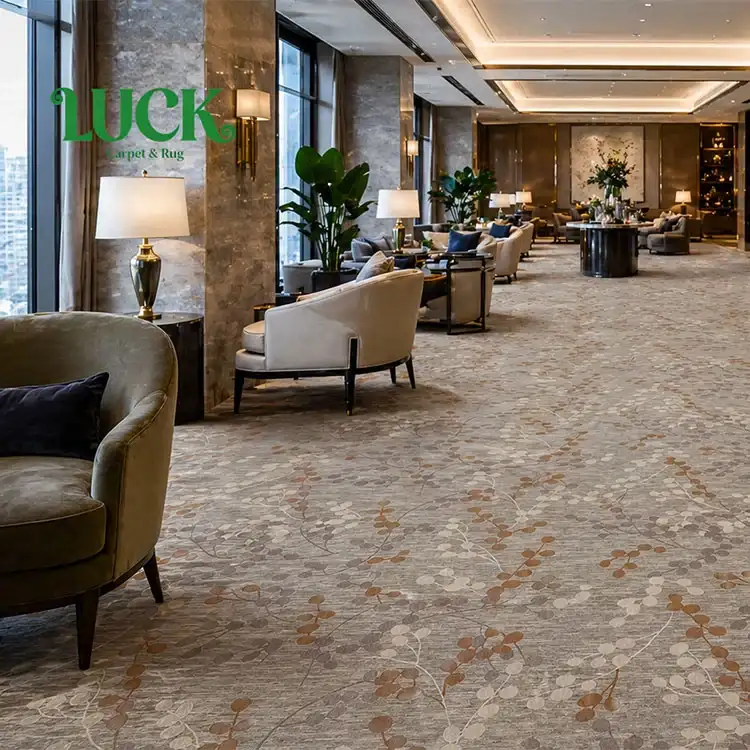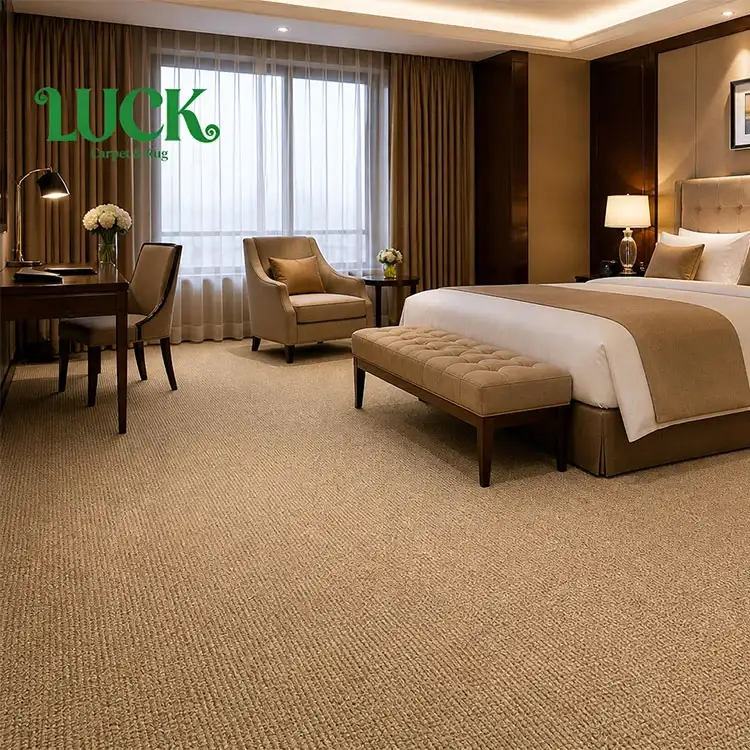
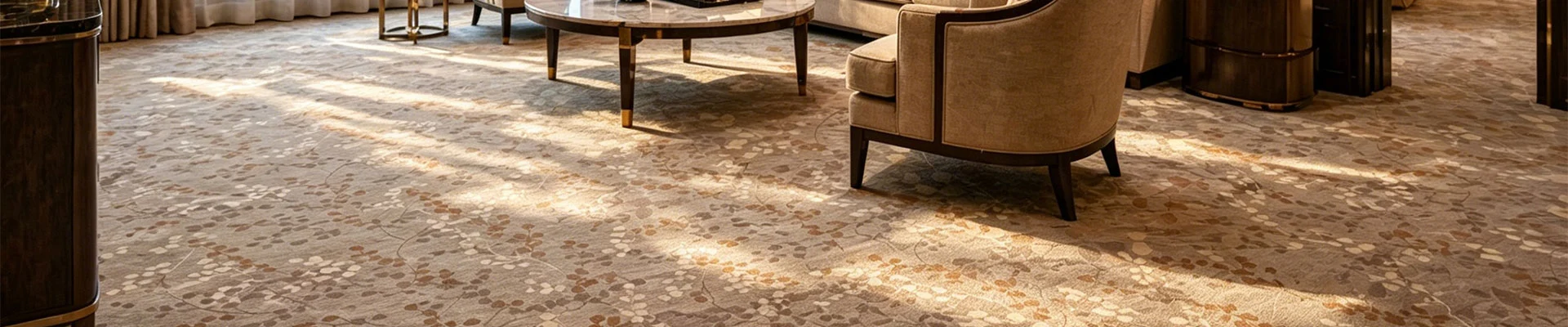
Carpet tile cost per square foot is the first question in nearly every enquiry, and it is the one most often answered with a figure that does not survive contact with the site. On 2026 projects material runs $1.50 to $4.50 per square foot and installed work $3.00 to $8.00, but that spread is carrying a lot of weight. I will pull a quote apart, show which four specs move the total, name the subfloor and labour lines that tend to go missing, and hand you a table to put next to any bid. By the end you will know whether a number is fair, and what to push back on.
Alistair Leung
Five years as a carpet engineer in commercial flooring. Most of it spent on specification and quality control: reading subfloor reports, arguing with contractors about adhesive, and going back three years after handover to see what actually held up. He also handles technical support for a carpet manufacturer and wholesale supplier, so he sees the quotation and the invoice.
Two quotes for the same room can differ by 60 percent, and it is almost never the colour.
Yarn is the biggest lever and the one buyers look at last. Polypropylene sits at the budget end, solution-dyed PET in the middle, solution-dyed nylon 6,6 at the top. Going from polypropylene to nylon 6,6 multiplies material cost by roughly two and a half, and it is the upgrade I argue for most often. Nylon 6,6 does not flatten under casters the way olefin does, and it tolerates the bleach-based spotters that get used in real buildings rather than in test reports. Face weight is the second lever. A 15 oz tile and a 32 oz tile can share a colour name and the same warranty headline and still be five years apart on a corridor. Move both specs and you can shift the price by more than double without changing anything a client would spot on a sample board.
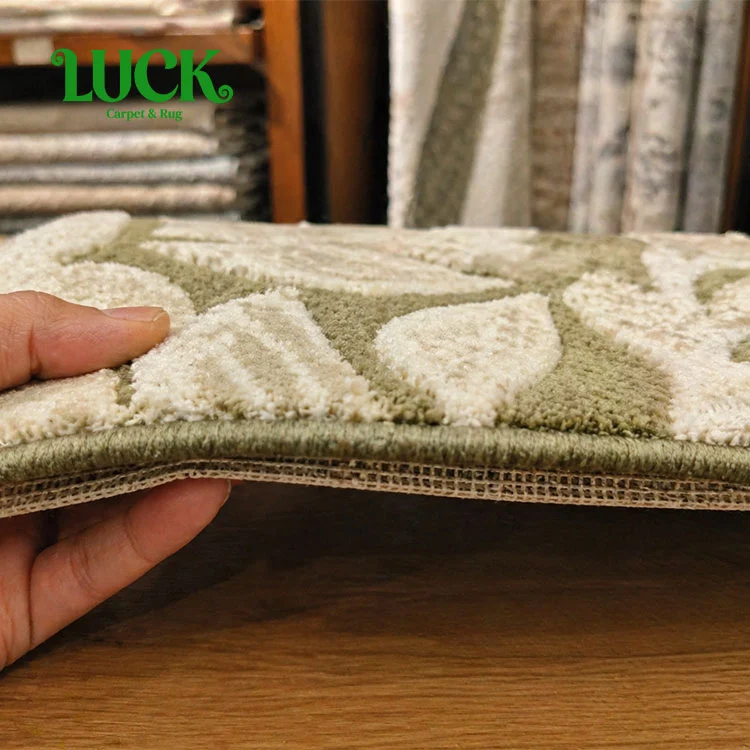
Backing is where money disappears quietly. PVC hardback is the commercial default and the cheapest. Bitumen and recycled PVB sit a little above it. A polyurethane cushion backing buys comfort underfoot and takes measurable impact noise out of the floor, for sixty cents to a dollar twenty per square foot. In a school, a clinic, or any building with tenants above tenants, that is the cheapest complaint-prevention you will ever buy. Traffic class is not a marketing label. It is a durability promise, and I have walked into three-year-old floors where somebody laid Class 31 in a Class 33 corridor. You could see exactly where the traffic went. Fire performance is not optional either. ASTM E648 Class I is the floor, and circulation space usually wants smoke density as well, reported as ASTM E662 at 450 or below. If a wholesale supplier cannot send both numbers the same day, that tells you something.
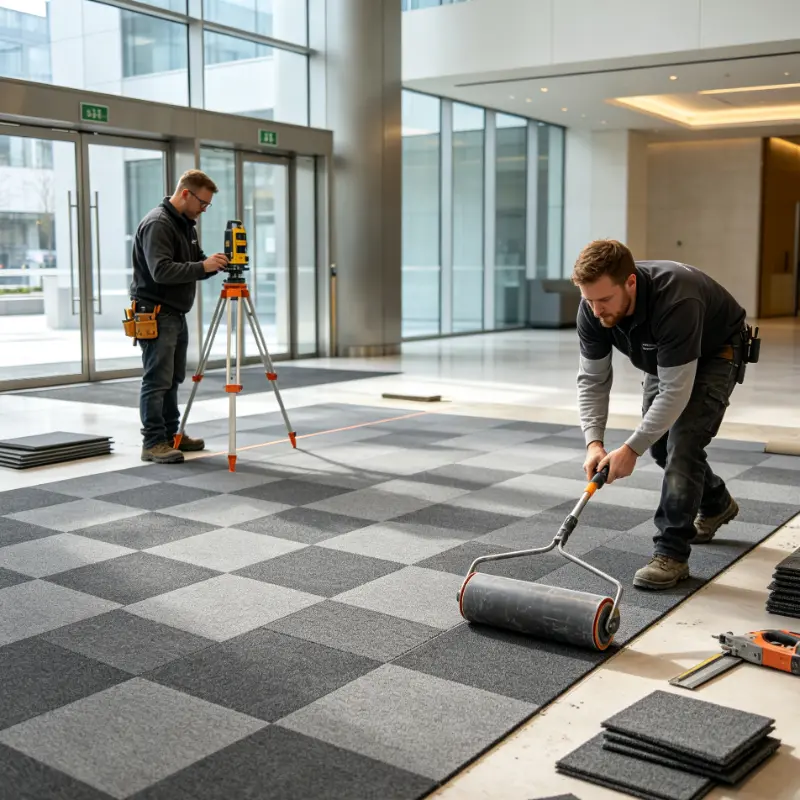
The tile is not the floor. Levelling compound, grinding, crack repair and moisture mitigation run fifty cents to three dollars per square foot. On a bad slab, the mitigation alone can cost more than the carpet. Labour follows the slab. Flat and dry, a two-person crew lays 150 to 250 square feet an hour. Wavy, and that rate halves. Then add removal and disposal at fifty cents to two dollars per square foot, furniture moving, after-hours phasing in an occupied building, and five percent attic stock. My working rule: the advertised price is about two thirds of the final one. The other third is site condition, and it gets decided long before anybody picks a colour.
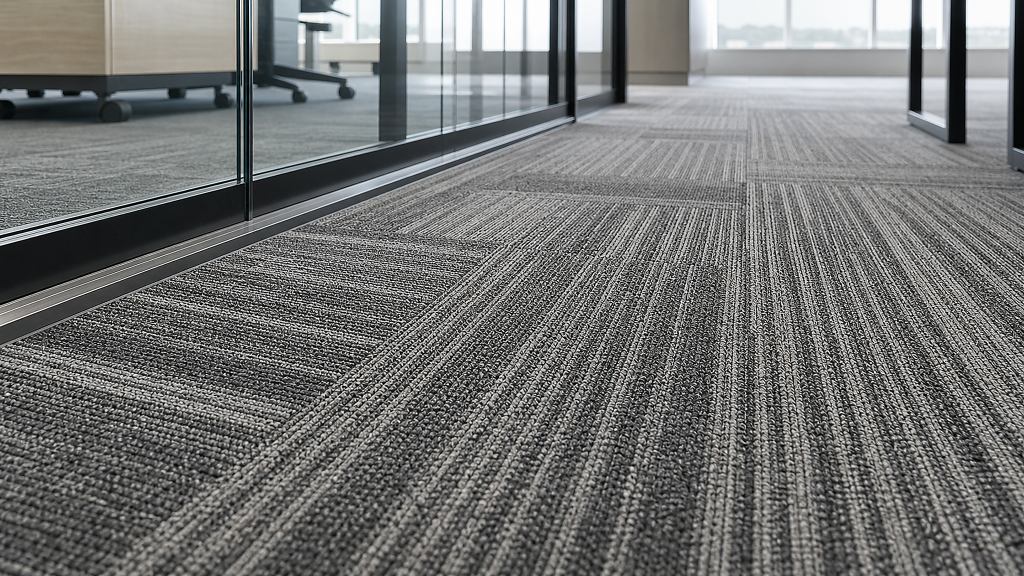
Read the yarn column first, then check the traffic class against the room you are actually flooring. Most bad specifications fail on that second step.
| Tier | Yarn | Face weight | Material / sq ft | Installed / sq ft | Where it belongs |
| Budget | Polypropylene | 15-18 oz | $1.50-$2.50 | $3.00-$4.50 | Class 31, storage, back of house |
| Mid | Solution-dyed PET | 18-24 oz | $2.00-$3.20 | $3.80-$5.80 | Class 32 offices, classrooms |
| High | Solution-dyed nylon 6,6 | 24-32 oz | $3.00-$4.50 | $4.80-$8.00 | Class 33 corridors, lobbies |
| Cushion back | Solution-dyed nylon 6,6 | 24-32 oz | $3.50-$5.50 | $5.50-$9.00 | Class 33, noise-critical |
Multiply by nine for the per square yard figure, which is how most wholesale suppliers outside North America quote. These are 2026 planning ranges. Freight, minimum order quantity and local labour can move a final quote twenty percent either way.
For solution-dyed nylon on a mid-range backing over a sound subfloor, yes. Four fifty to six dollars is normal. If you are quoted two dollars installed, you are being quoted a different tile than the one you specified.
Multiply by nine. Installed work usually lands between $27 and $72 per square yard, and most commercial jobs I price sit at $40 to $54.
Yarn, face weight, then subfloor. That order, nearly every time. The low bid is usually assuming a perfect slab that does not exist, and a light-duty tile in a heavy-duty space.
On material, yes. On your time, no. You take on freight, minimum quantities, attic stock planning and the interface with the installer. Above roughly five thousand square feet it usually pays. Below that, a good local supplier earns their margin.
Fifty cents to three dollars per square foot, and do not accept a figure without a moisture test result first. Moisture mitigation is the one line that can double a flooring budget, and it stays invisible until the adhesive fails.
Alistair Leung
Carpet engineer, five years in commercial flooring, working with a manufacturer and wholesale supplier on specification and installation support. The price bands below come from quotations and post-installation reviews on office, hotel and education projects. The warning about subfloor costs comes from the jobs where that line was missing.
Send a floor plan and square footage and you will get a specification and a sample box, not a brochure. Every quote we issue names the yarn, face weight, backing, traffic class, fire rating and warranty in writing, so you can lay it beside any other bid line by line.
| Ask for | What arrives | How long |
| Sample box | Up to six tiles in your shortlisted yarns and colours | 3-5 working days |
| Spec sheet | Yarn, face weight, backing, traffic class, E648 and E662 data | Same day |
| Project quote | Material, subfloor allowance, installation and attic stock, itemised | 2-3 working days |
| Wholesale list | Pallet and container pricing for contractors and distributors | 2-3 working days |
Email the plan to sales@example.com and put free sample request in the subject line. If you would rather talk first, ask for fifteen minutes and we will tell you which traffic class the space needs before you spend anything.
Copyright © 2026 Zhaoqing Yunle International Trade Co., Ltd. All Rights Reserved.