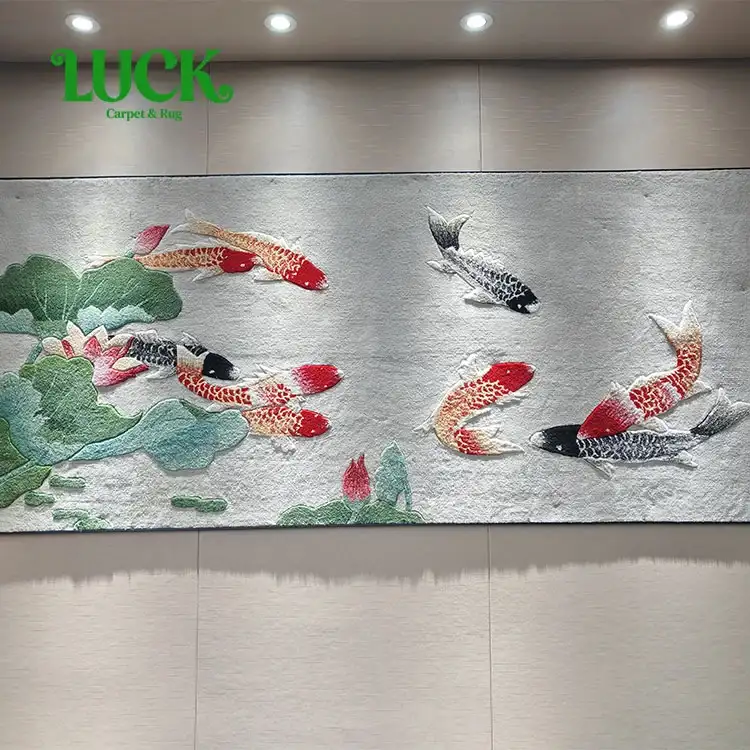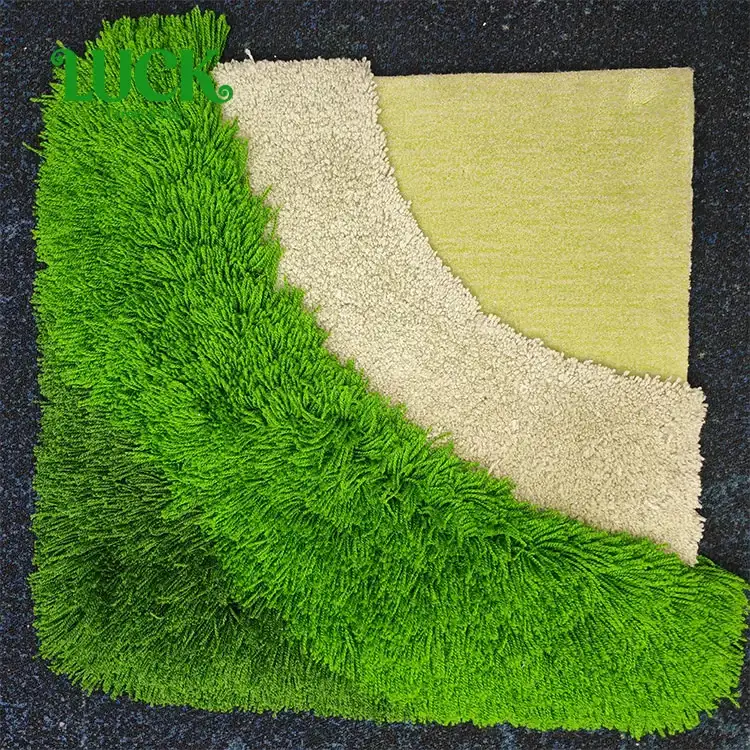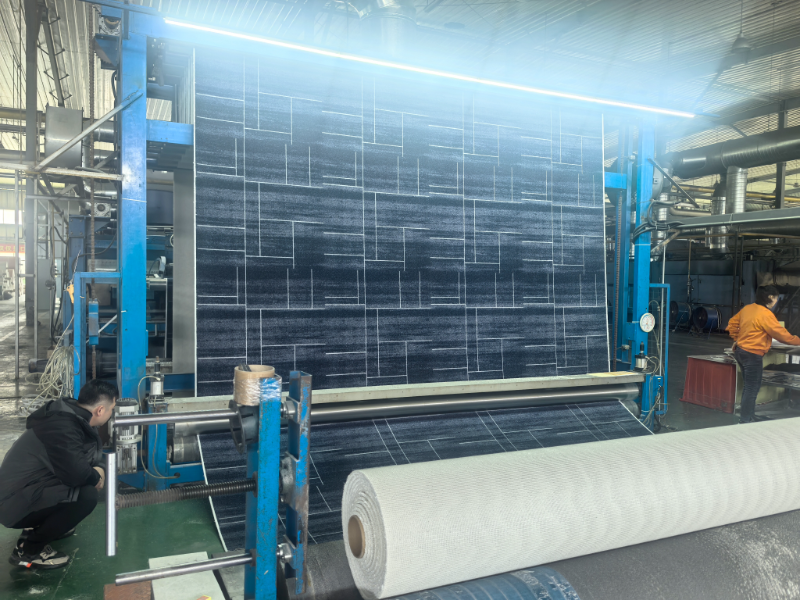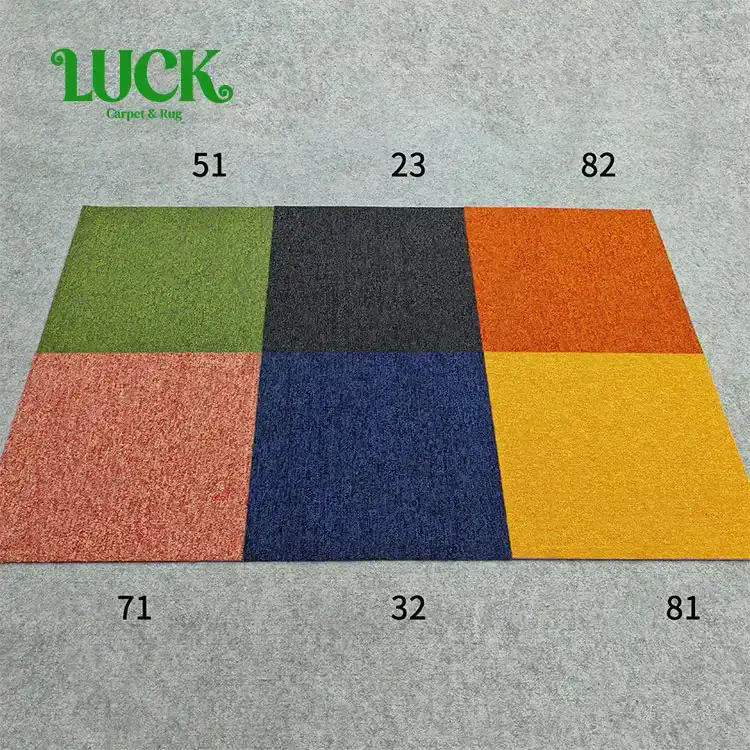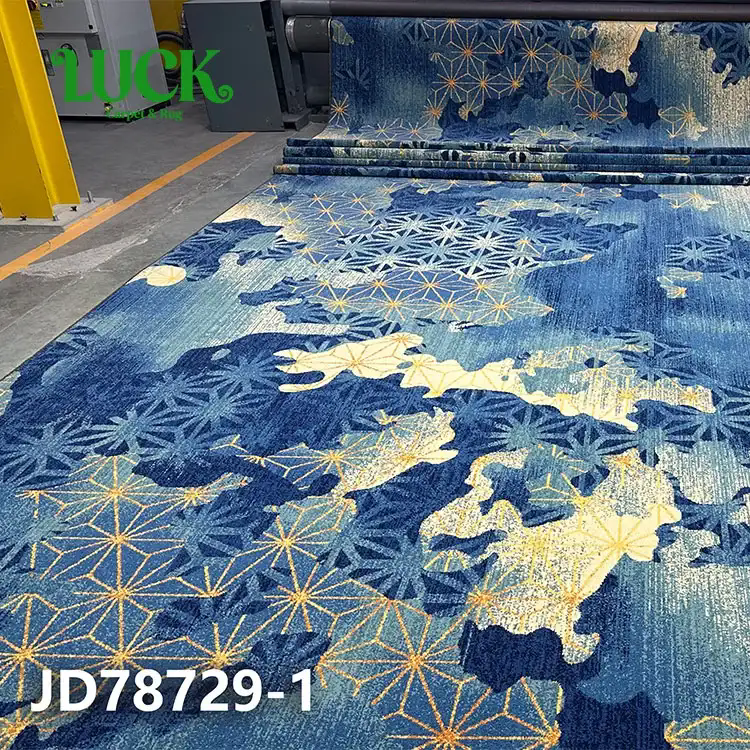
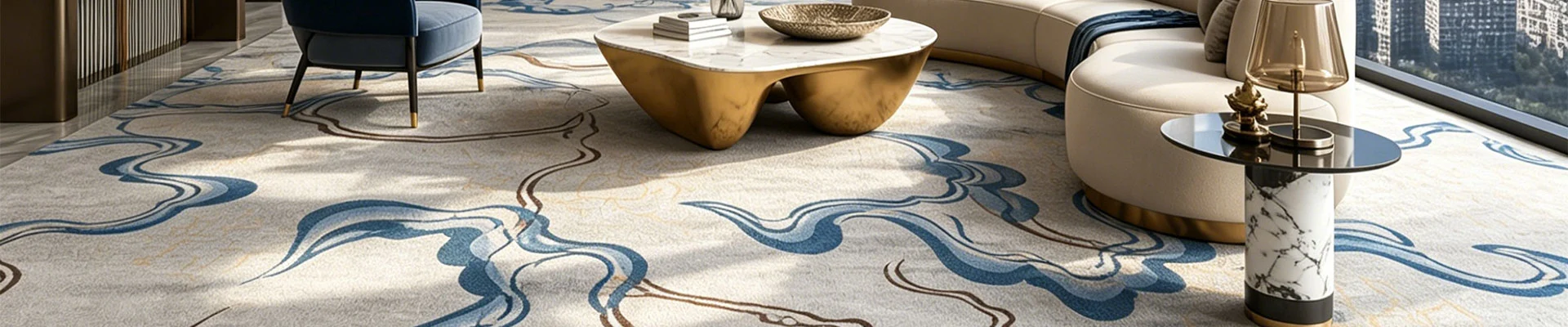
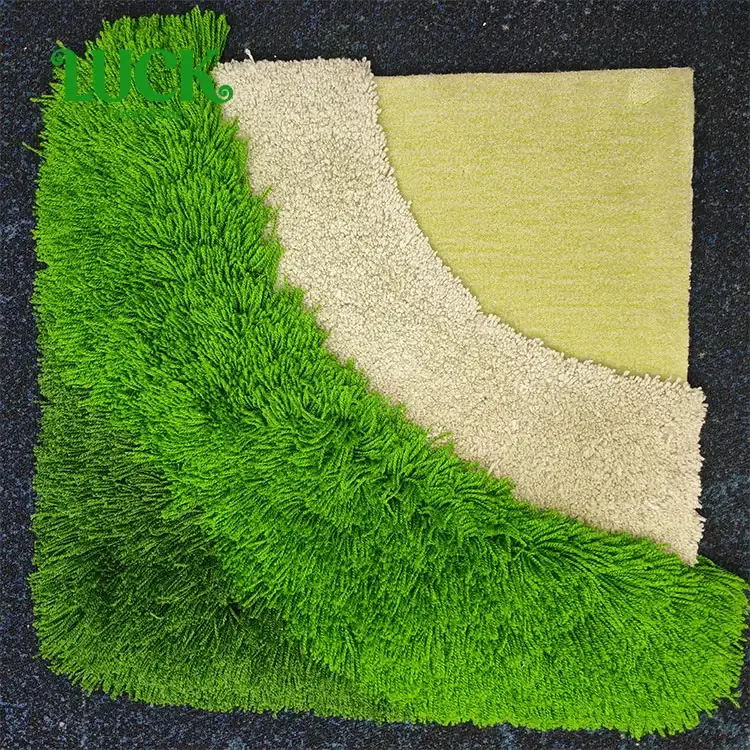
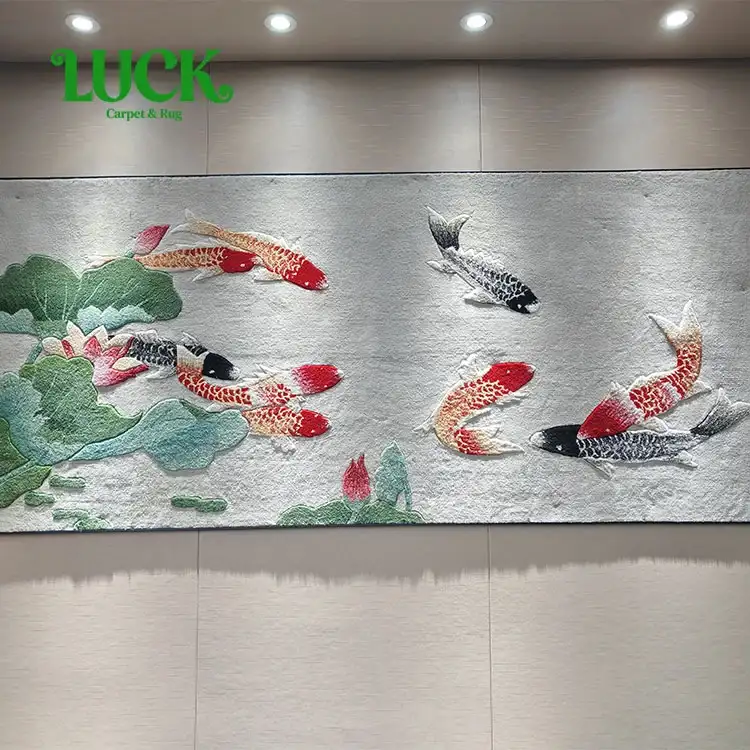
Hand-knotting the New Zealand Wool Hand made Area Rug(2) happens in our own plant in Foshan, Guangdong, one knot at a time. The face is 100 % New Zealand wool at a 12 mm pile and 1800 g/m2 over a cotton canvas back, with hand-finished, squared edges. Long-staple fibre suits projects where a medallion has to stay sharp and a field of colour even. This page explains knot density and what it does for detail.
New Zealand wool comes from crossbred sheep bred for carpet rather than apparel, with a long staple compared with the short wools in cheap blends. Long fibre spins into a yarn with fewer joins and loose ends, so a knotted pile sheds less in year one and holds together under a shoe sole. It also carries a crimp memory, so the pile springs back when a chair moves.
Dye uptake is the second advantage, about colour rather than softness. New Zealand fleece arrives with a pale, even base tone, so a dyelot absorbs colour uniformly and a ten-colour design keeps its balance across the rug. Light fastness sits at Grade 5 to ISO 105-B02, so a knotted rug behind glass needs a rotation plan.
Building a knotted rug starts from the ground up. Warp threads are strung on a vertical frame, the weaver ties each knot by hand, and a weft shot locks the row before the next begins. Nothing here is fast, and nothing can be rushed without showing: a missed knot appears as a pinhole, and an uneven row as a wavy line across the pattern.
Density decides how fine a drawing this technique can carry. Standard production runs at 100 knots per square inch, which holds a small medallion, a fine border and a legible monogram; above that the pile comes down as cost climbs. After knotting, the face is clipped to 12 mm, the piece is washed, and the edges are hand-finished and squared to plus or minus 1 mm.
Numbers below are the released specification for the New Zealand Wool Hand made Area Rug(2), measured on the finished piece. Read the size row as made to order: the two standard rectangles are a convenience, but shape and dimensions come from your drawing.
| Style | New Zealand Wool Hand made Area Rug |
| Yarn type | 100 % New Zealand Wool |
| Pile Height | 12 mm |
| Pile Weight | 1800 g/m2 |
| Backing | Cotton canvas |
| Fire Resistance | Bfl-s1 (EN 13501-1) |
| Application | Hotel, Villa, Lounge, Suite, Club, Reception Area, High-End Residential Interior |
| Width / Size | Made to order; standard 1.6 m x 2.3 m, 2.0 m x 3.0 m and custom sizes |
| Pattern | Custom design available (artwork supplied by buyer, strike-off approved before production) |
| Surface / Technique | Hand-tufted |
Consider a private majlis, a hotel presidential suite, a villa reception hall, a club library. The floor carries the design, guests stand on it barefoot, and the piece is cleaned, not replaced. A knotted New Zealand wool rug is built for that, and it is slower and dearer to make.
Knot density sets the resolution of a design. At 100 knots per square inch a curve in a medallion has enough points to look round, while at 40 knots the same curve becomes a staircase, a difference a designer sees at once. Denser knotting packs more wool into the same area, so the pile stands firmer.
Gauging is how we hold that density honest: our QC room measures pile height at nine points per square metre, and the widest spread on the last order was 0.6 mm. Cost works the same way: doubling knot density roughly doubles the weaving hours, and finer knots need finer yarn. For most briefs, that density is where a border, a small repeat and a monogram read cleanly from two metres.
Rooms that justify the price are the ones where the rug is part of the architecture: a presidential suite, a villa reception hall, a private majlis. These are floors with a fixed furniture plan and a client who sees the piece daily. Because it is knotted to order, a 3.0 m x 4.0 m field can fit a room that is out of square.
Climate matters as much as traffic here. A villa running air conditioning at low humidity for most of the year will dry out a cheap latex-backed rug until the corners lift, one reason we bond a cotton canvas back. The Kuwait City suite below was specified around it.
Three complaints follow knotted rugs in year one. Loose ends appear where a knot was finished and the tail left long; the fix is a snip level with the pile, never a pull, which tightens the row beside it. Shedding is normal while short fibres work out of the yarn, and it drops after a few weeks.
Foundation creep is the one to watch. A knotted rug on polished stone will walk if nothing holds it, and one that migrates under a sofa distorts its border. A felt pad plus a periodic check of the corners settles most rooms, though a long corridor runner needs a tackifier. Where a leg has compressed the pile, steam and a soft brush lift it.
The reception suite of a private villa in Kuwait City was rebuilt in 2022: a majlis, a dining room and three salons, 260 m². The commission was eleven knotted pieces, the largest a 4.0 m x 6.0 m majlis rug in crimson and antique gold. The brief called for a classical medallion, a border drawn to the room's proportions, and a surface the family could sit on.
We knotted the order in 100 % New Zealand wool, clipped the pile to the specified height and cut the borders to the architect's drawing after a strike-off. Eleven pieces shipped in two containers, labelled by room. Twenty months later the villa reports no foundation creep and no compression marks under the dining chairs, and wet cleaning on one rug held dimensional change to 0.3 %.
Inspection is piece by piece, not by roll. Every piece is measured for size and the pile is held to plus or minus 1 mm, and each rug is squared by hand. Our lab records 28,000 rubs to ISO 12947-2 at 5 kPa, light fastness Grade 5 on ISO 105-B02 and rubbing Grade 4 on ISO 105-X12. Wet cleaning changes the length by 0.3 %, inside the 0.4 % ceiling of ISO 2551. Reaction to fire is classified Bfl-s1 under EN 13501-1, supported by radiant panel and small flame tests to EN ISO 9239-1 and EN ISO 11925-2, and the build meets GB 18587-2001 Class A for emissions. Construction carries a 10-year warranty, and SGS, Intertek or BV inspection is available.
How long does a hand-knotted rug take, and what is the minimum order?
Allow six to eight weeks in production after artwork approval. There is no minimum quantity: we will knot a single rug for a VIP room. Sea freight adds two to three weeks to Europe or the Gulf, and we show at The Canton Fair.
Why is New Zealand wool different from other wool in a knotted rug?
Longer staple, tighter fibre diameter consistency and a paler base tone. Together those give a yarn with fewer joins, better recovery and a cleaner dye result, which shows most in a design with six or more colours. It costs more than a mixed wool lot, and in a plain runner that premium buys little.
Can a knotted rug be made in a round or irregular shape?
Rectangles, rounds, ovals and shaped pieces all work, because a knotted rug is built to a drawing rather than cut from a roll. Send a vector outline for anything outside a rectangle so we can check border width and knot direction. Rounds usually run at 2.0 m or 2.5 m diameter.
How is a client's artwork approved before knotting starts?
Your drawing is scaled to the finished size, colours are matched to Pantone references or material samples, and we knot a strike-off by hand. Nothing goes on the frame until you approve it in writing. Keep it: it is the reference for any matching piece ordered later.
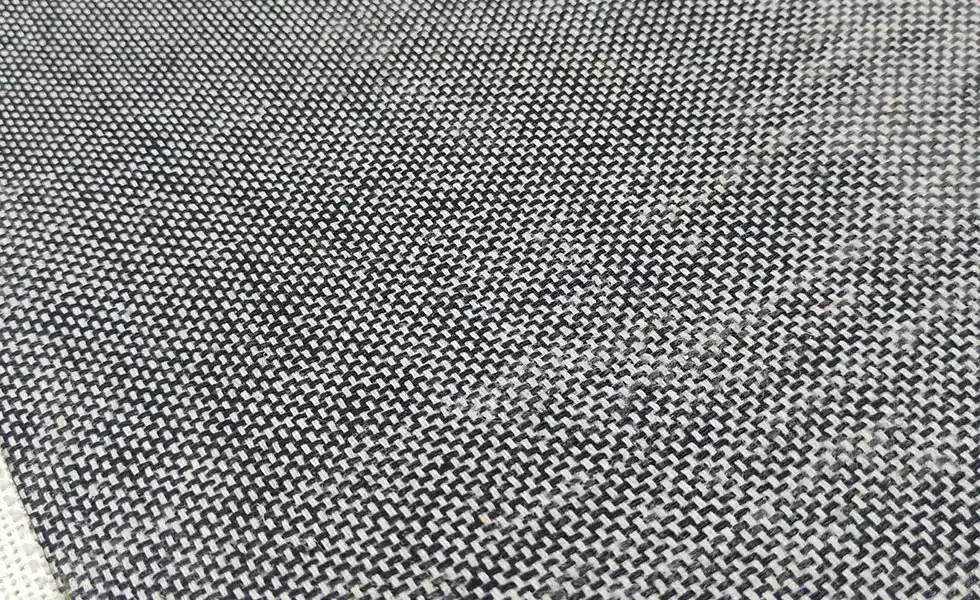
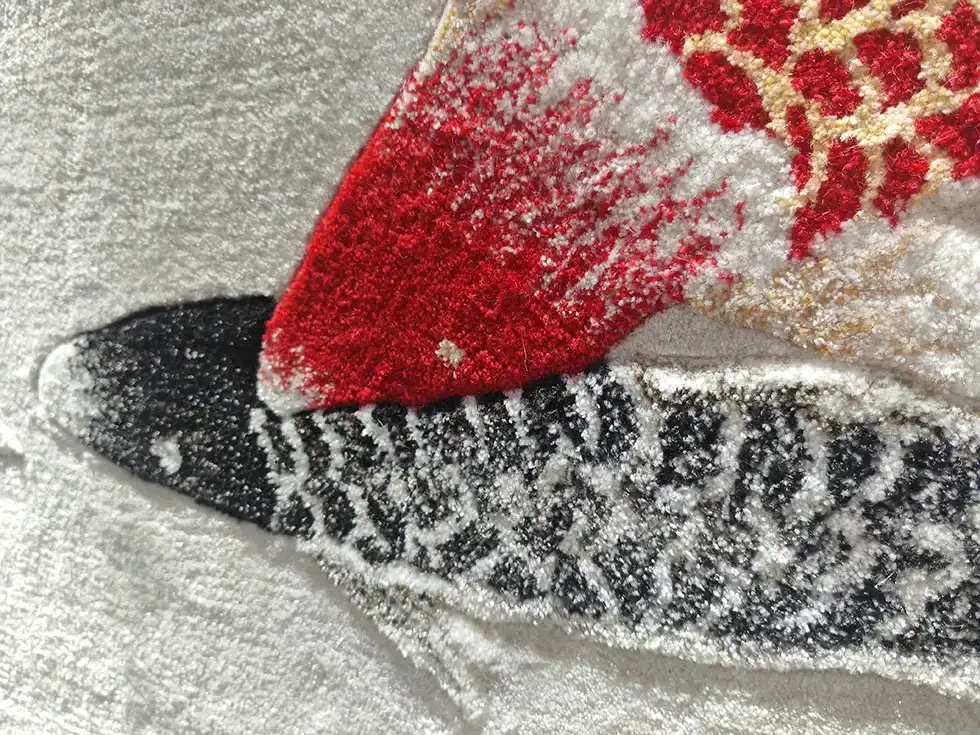
Underfoot, a knotted rug reads differently: denser pile, a firmer surface, and a back that shows the woven foundation. Colour has depth because the yarn is dyed in the fleece lot and the knots pack it tightly, so crimson stays crimson in shadow. Borders and medallions follow your artwork.
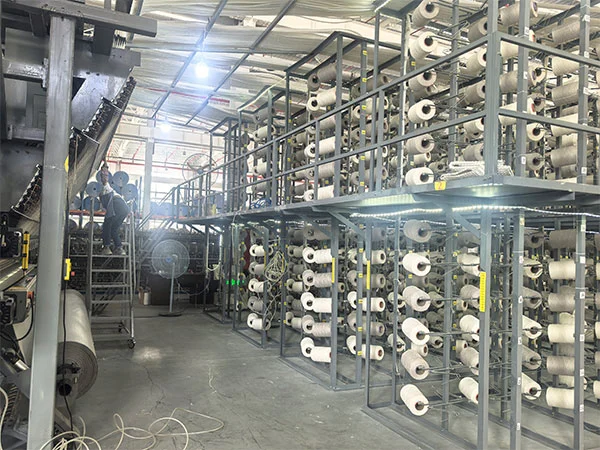
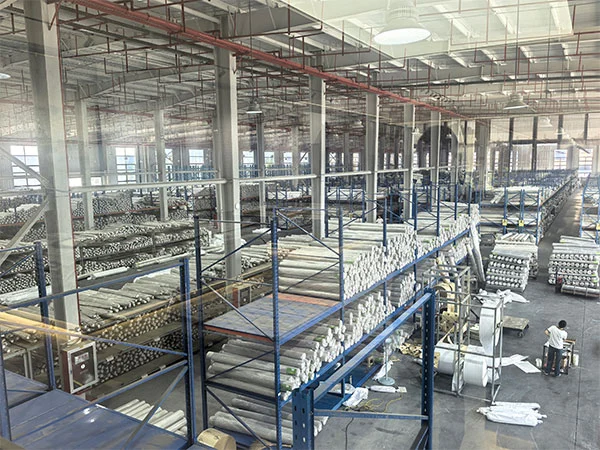
Each piece leaves Foshan rolled on a core inside a woven export bag, labelled with room, size and colour code. On polished stone we recommend a thin felt pad and no adhesive. Send the drawing and colour references for a quotation on knot density, size and lead time. LUCK Carpet has made hand-made carpet in Foshan, Guangdong, for 14 years, with 26,000 m² of plant and 180 staff.
Address
Shidaigongguan Building No.5 Office 1212, Haicheng east road, Duanzhou District, Zhaoqing City, Guangdong Province, China
Tel
Copyright © 2026 Zhaoqing Yunle International Trade Co., Ltd. All Rights Reserved.