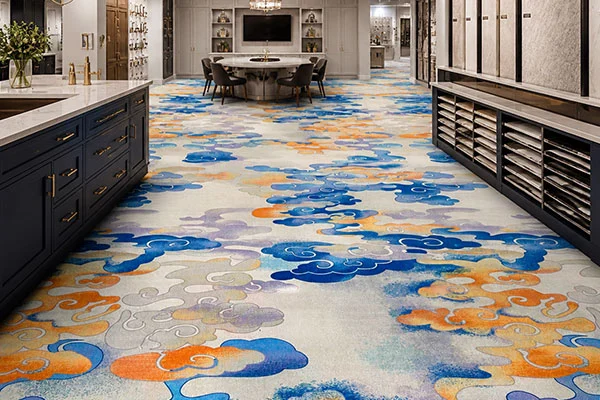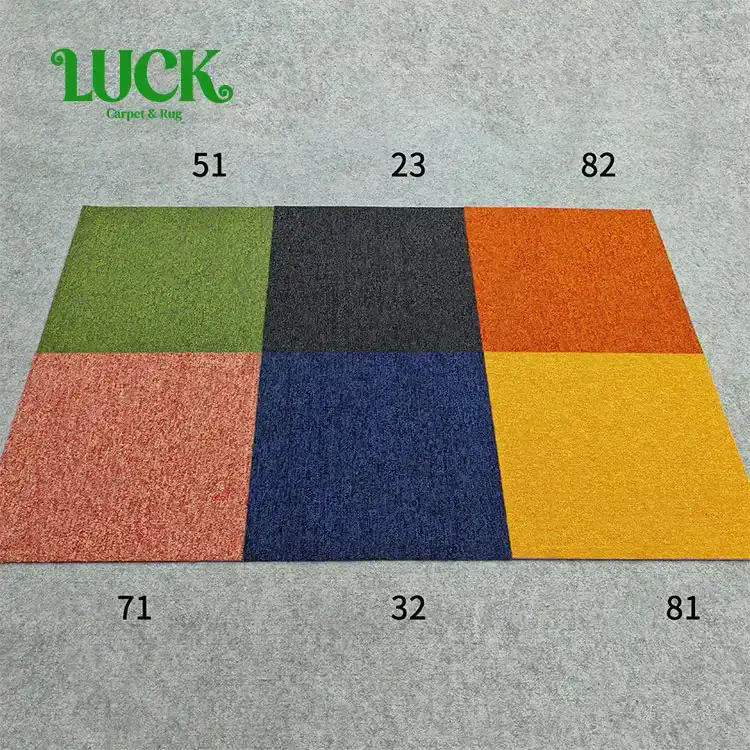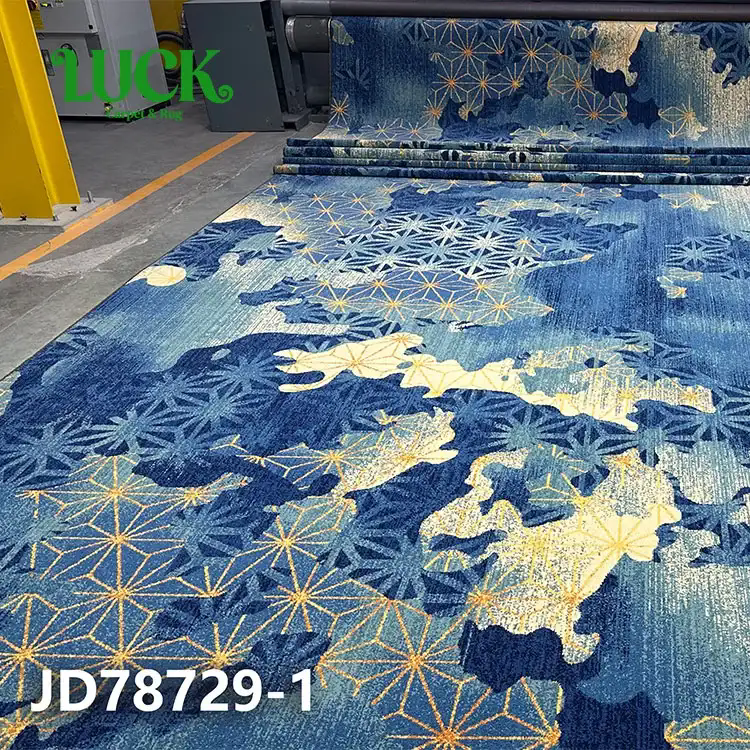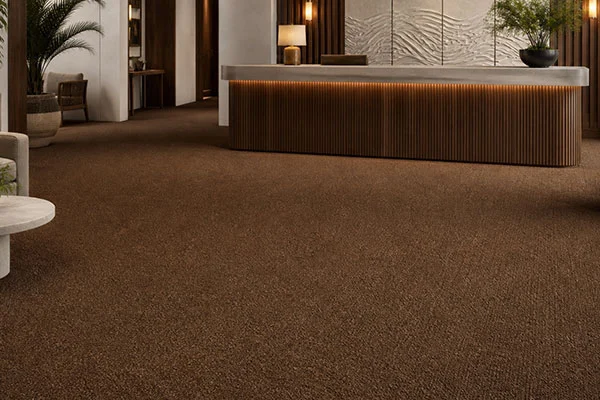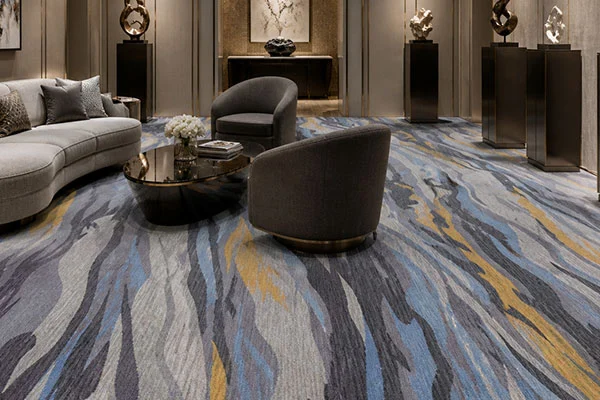
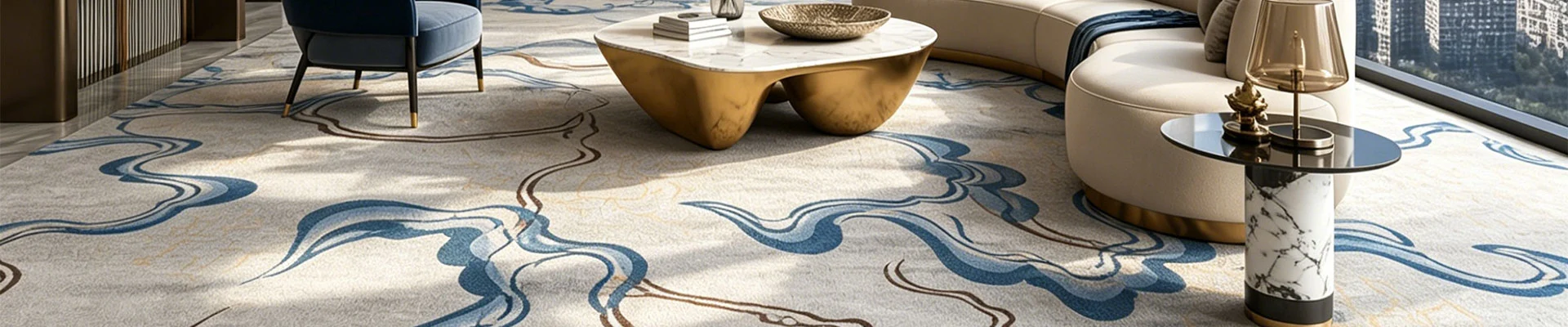
Unlike area rugs that leave borders exposed or carpet tiles that create modular joints, wall-to-wall carpet covers the subfloor completely from skirting to skirting. The result is a monolithic surface that eliminates trip hazards, reduces impact noise by up to 23 decibels compared to hard flooring, and locks in thermal comfort. Luck Carpet technicians achieve this by stretching the broadloom over a high-density underlay and securing it onto tack strips around the perimeter, creating a drum-tight, wrinkle-free surface that can handle heavy foot traffic without shifting.
Fraying occurs when cut edges are left untreated. Luck Carpet seal all perimeter cuts with a thermosetting polymer applied through an edge-sealing machine before dispatch. During installation, the edge that gets tucked into the gripper gully receives an additional coating of quick-dry latex binder. For doorways where the carpet meets a different floor, our fitters screw down a metal Z-bar profile that clamps the cut edge between its teeth and protects the pile from abrasion. In high-wear commercial installations, we overcast-stitch the edge with heavy nylon thread using a handheld binding machine, creating a permanent lock that withstands lateral forces.
Does wall to wall carpet worsen allergies?Contrary to an old myth, properly maintained carpet improves indoor air quality by trapping allergens within the pile until they are vacuumed away. A 2018 study by the German Asthma and Allergy Association (DAAB) found that airborne particle concentration in a carpeted room was 50% lower than in a hard-floored room after standardised walking activities. The key is selecting a low-pile, loop construction that prevents deep penetration and using a HEPA-filter vacuum. Luck Carpet’s short-loop polypropylene styles are specifically designed for allergy-sensitive environments and have no volatile organic compound emissions exceeding 100 µg/m³ after 24 hours (tested per ISO 16000).
Can a wall to wall carpet be repaired if it gets damaged?Yes, and the repair can be invisible if executed by a trained technician. For small burns or permanent stains under 50 mm diameter, we perform a plug cut: the damaged area is cored out using a cookie-cutter tool, and a donor plug of identical fibre from a leftover offcut is inserted with high-strength hot-melt adhesive. The pile direction is matched precisely, and the seam is brushed with a brass bristle comb. For tears or seam ruptures, a power iron re-melts the original seam tape, and fresh latex is injected. In the worst-case scenario, an entire section can be replaced between two nearest natural seams. We always recommend clients retain at least 2 m² of leftover carpet from the original batch for such contingencies.
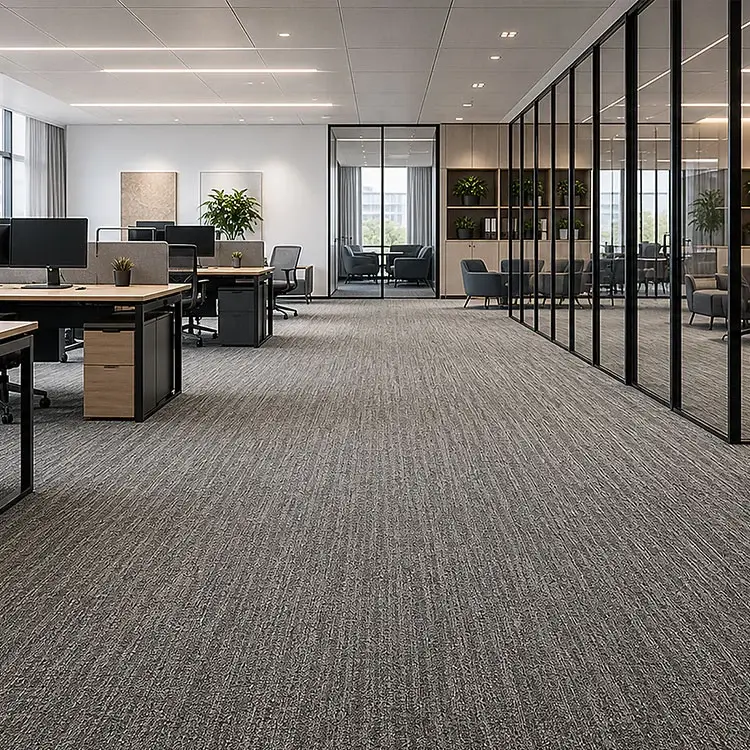
How long does a Luck Carpet wall to wall installation last?The lifespan ranges from 12 to over 25 years depending on fibre quality, traffic load, and underlay condition. A nylon high-twist pile in a heavy domestic setting typically retains acceptable appearance for 15 years, while a wool Berber in a spare bedroom can look fresh after 25 years. Underlay degrades faster, often requiring replacement at the 10–12 year mark, which also presents the ideal opportunity for a deep subfloor inspection. Luck Carpet’s commercial-grade carpets in offices routinely exceed 8 years before pile reversal becomes noticeable, which is double the industry average for general contract carpeting.
Copyright © 2026 Zhaoqing Yunle International Trade Co., Ltd. All Rights Reserved.