Products

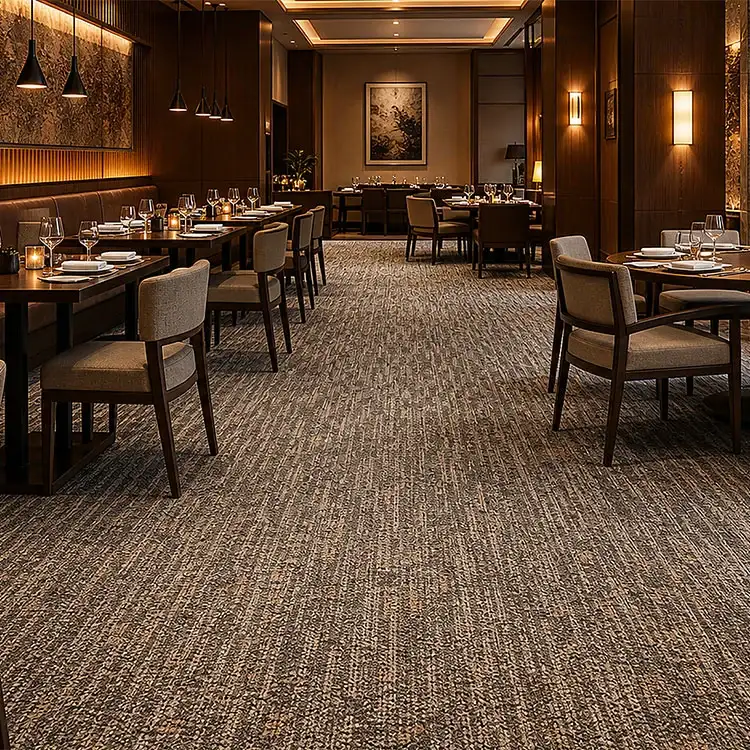
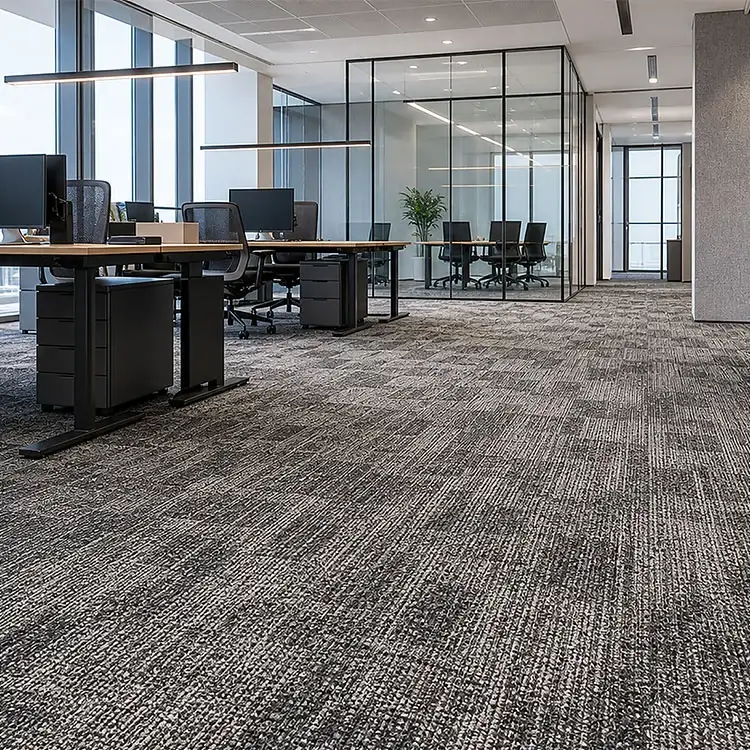
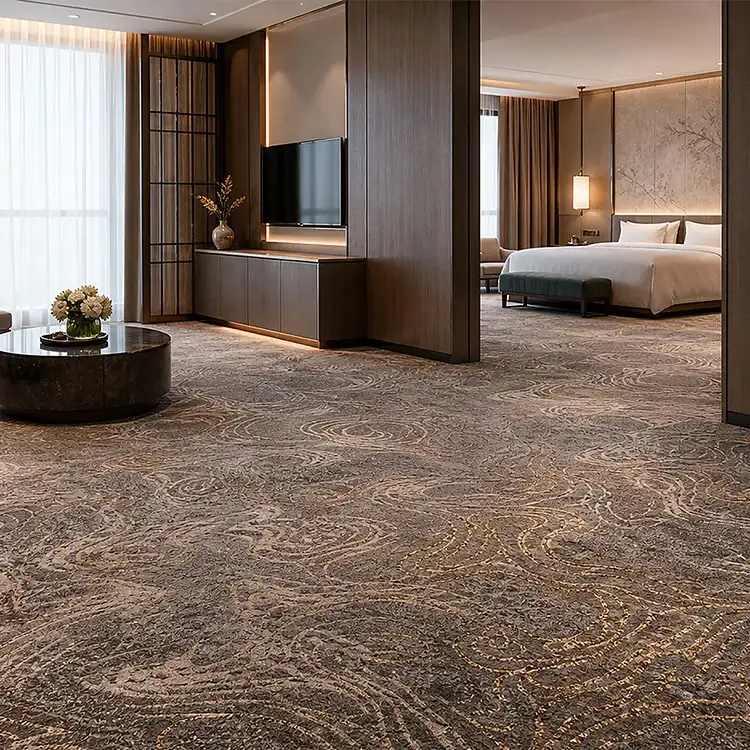
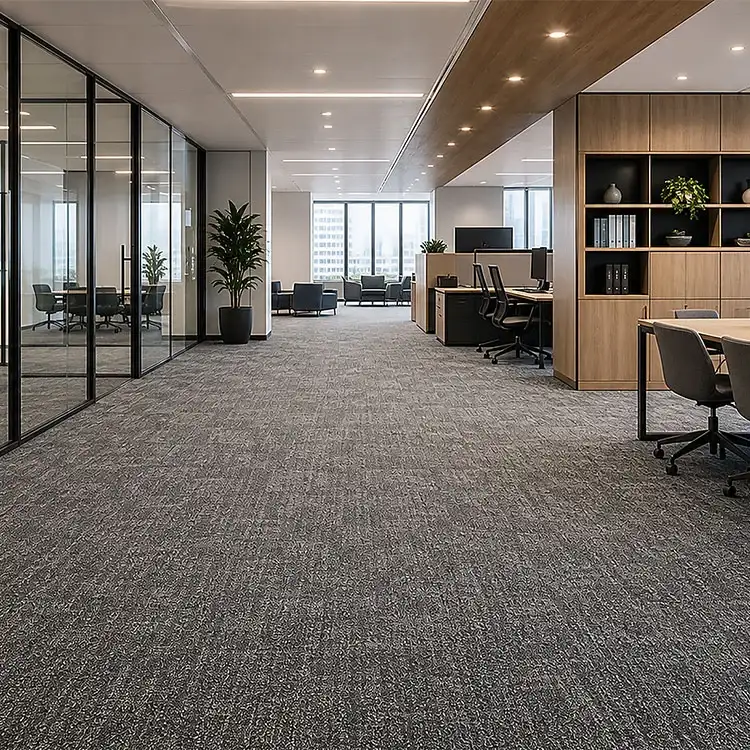
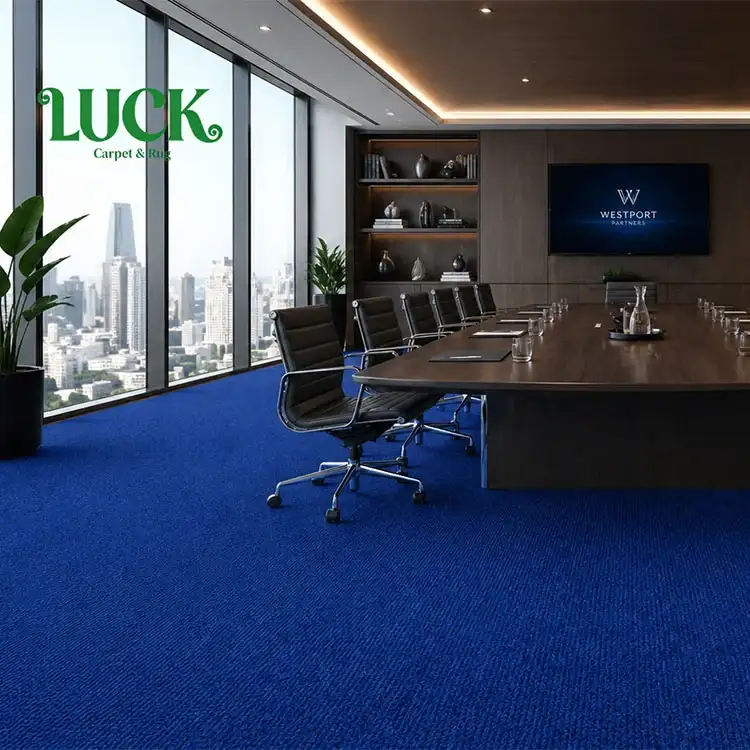
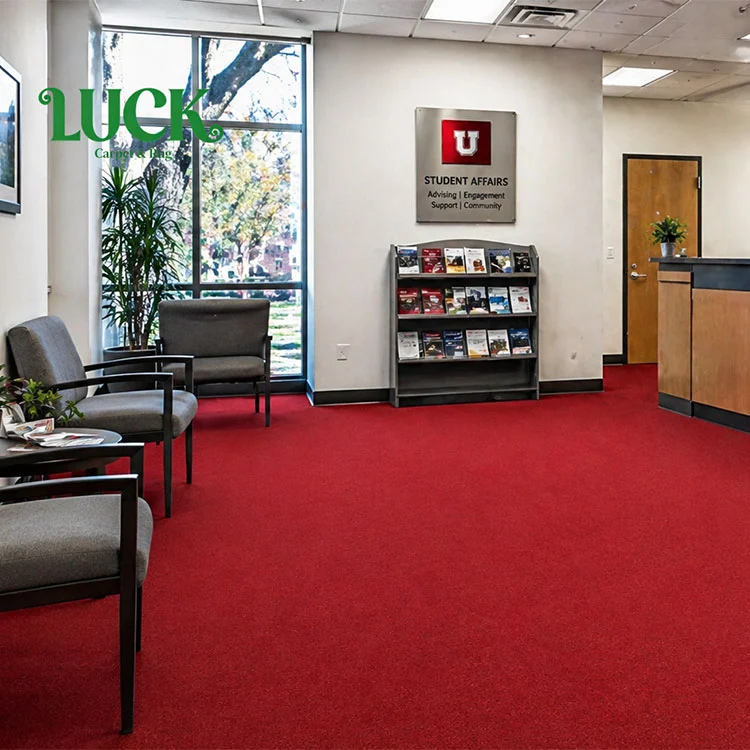
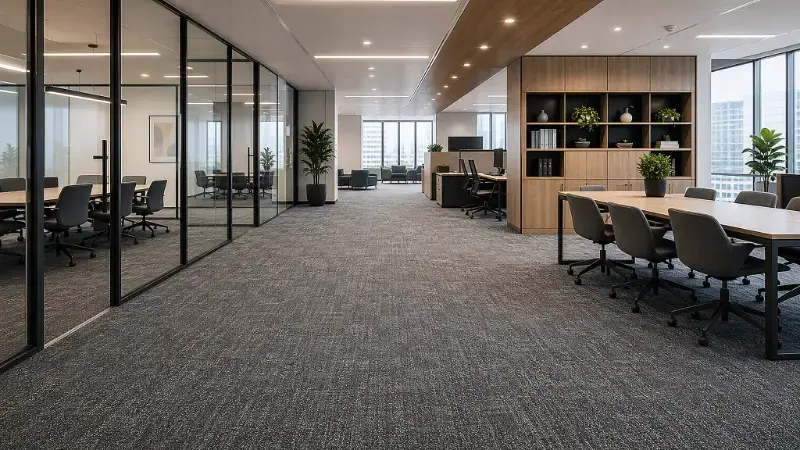
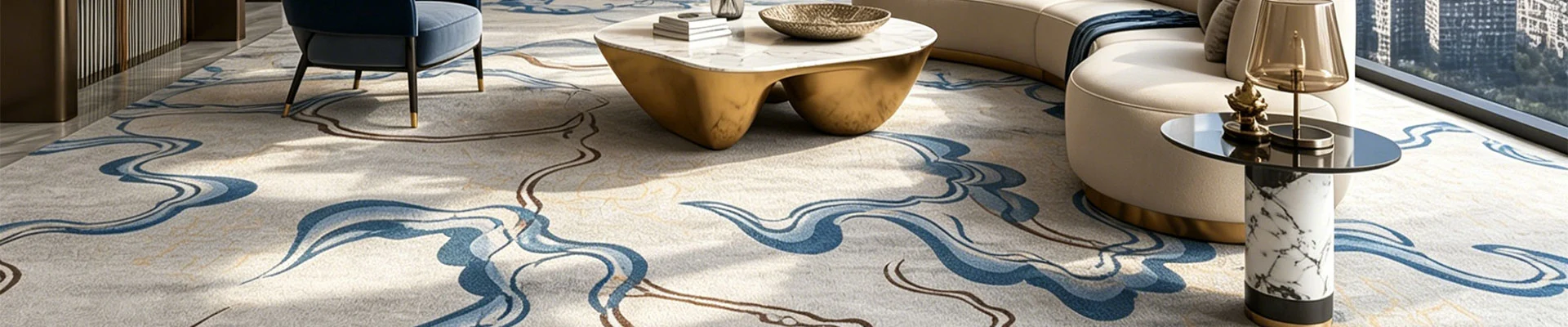
LUCK Carpet manufactures this nylon tufted wall to wall carpet in Foshan, Guangdong, on cut pile tufting lines we own and run. The face is 100 % nylon at 8 mm pile height on an anti-slip textile backing, built for hotel guest floors, lift lobbies and public corridors. Whether such a carpet is still flat and still one colour in year six depends on two decisions: whether the yarn can be traced back to its polymer batch, and whether the backing suits the climate of the building.
Nylon BCF yarn arrives with a lot number tying it to a polymer batch and a spinning date, and that number follows the yarn through tufting to the finished roll. Each run logs creel position, stitch rate and machine, and every roll carries a label with that run code. We keep a retained sample per run, about one A4 piece per 500 linear metres, in a dark store.
Hotel floors get done one or two at a time, often 18 months apart, and the second phase is where shade drift appears. Because we hold the original yarn lot data and the retained sample, a re-order is matched against real production rather than a photograph. Light fastness here runs Grade 5 to 7 to ISO 105-B02, so installed carpet has moved very little by then. Ask for the retained sample, not a screen image.
Choosing that backing deserves more than a glance at the price list. This one is an anti-slip textile construction, and in a Koh Samui resort it does a different job than in a dry-climate city hotel. Tropical properties sit at high relative humidity for months, and the secondary backing plus the adhesive are what stop the carpet rippling and lifting at the skirting. Our lab tests dimensional stability after wet cleaning to ISO 2551, and this face stays under 0.25 % length change.
Thickness loss under static load is measured to ISO 3416, and this face records a recovery deficit of 8 to 14 %. That figure matters more in a hotel than abrasion does, because beds, luggage and housekeeping trolleys stand still for hours instead of rubbing. Rolls come off the line at 4 m usable width, so a 1.9 m guest corridor is covered by one length. For a pool deck or an outdoor terrace, this is the wrong product.
All values below were measured on the finished roll in our Foshan plant, not on a showroom sample. Read pile weight and pile height together: a dense short face is not a deep luxurious one, and that is the point.
| Style | Nylon Tufted Wall to Wall Carpet for Hotel |
| Yarn type | 100 % Nylon |
| Pile Height | 8 mm |
| Pile Weight | 1000 g/m2 |
| Backing | Anti-slip textile backing |
| Fire Resistance | Bfl-s1 (EN 13501-1) |
| Application | Hotel |
| Width / Size | 4 m (13.1 ft) usable width |
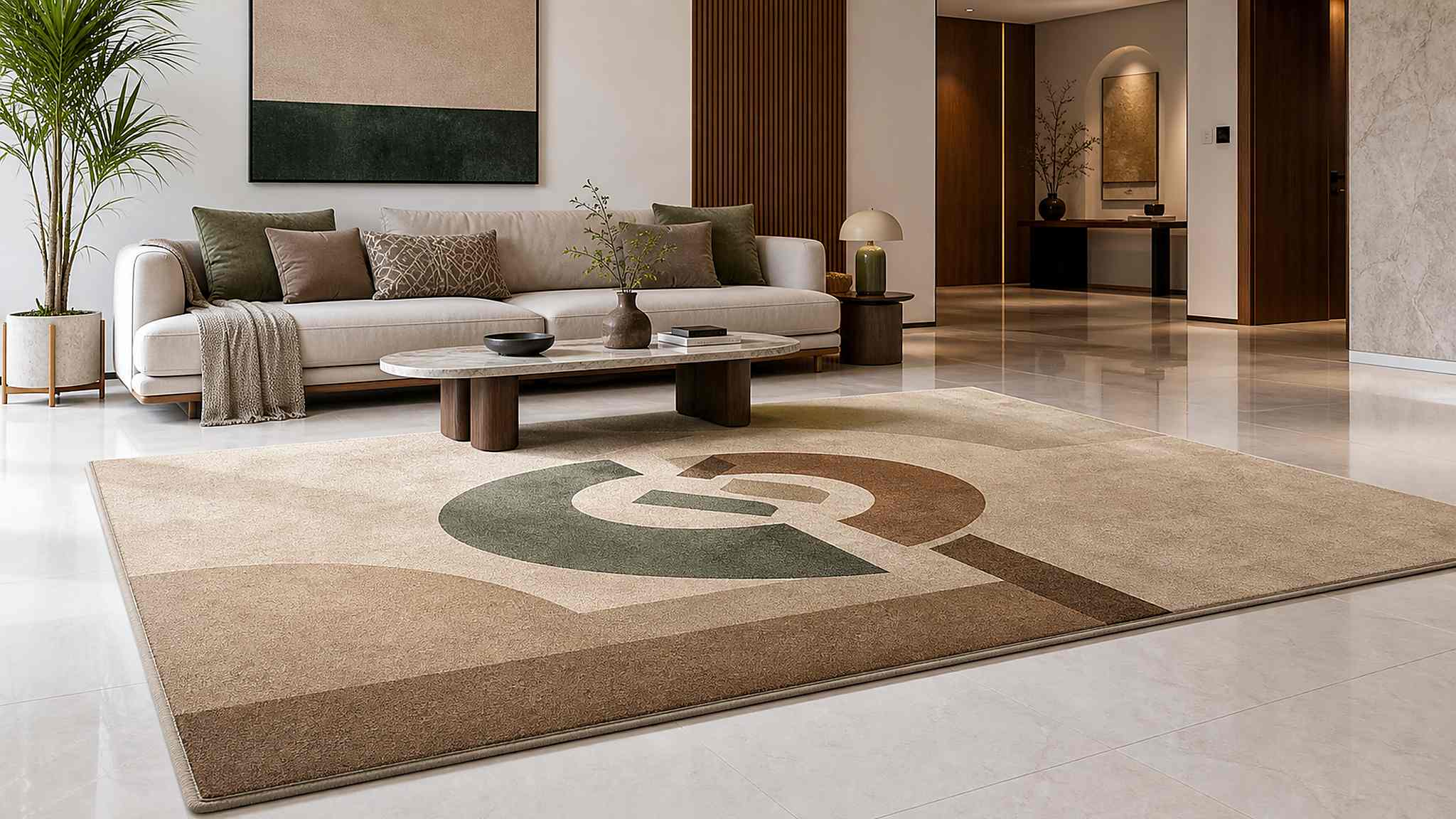
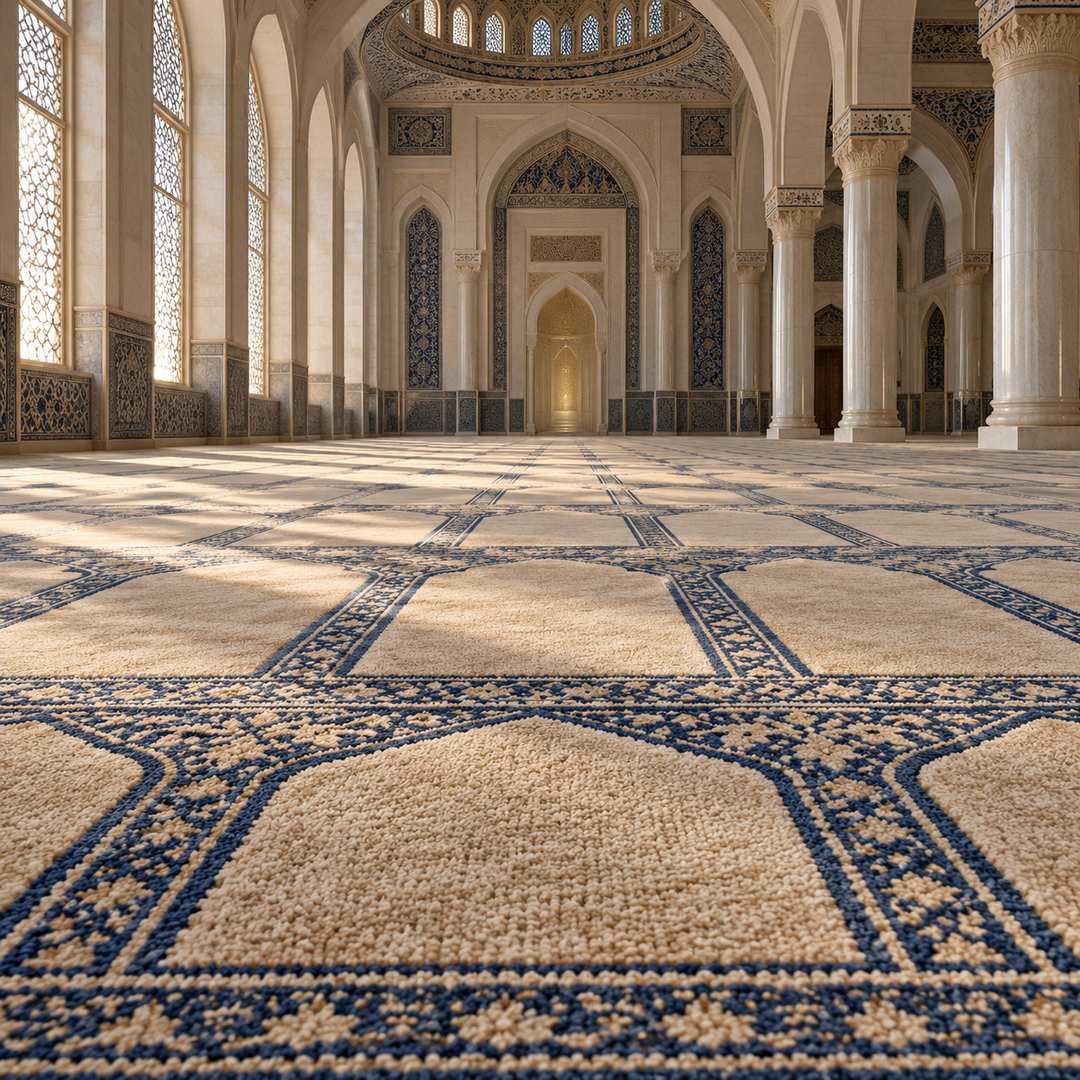
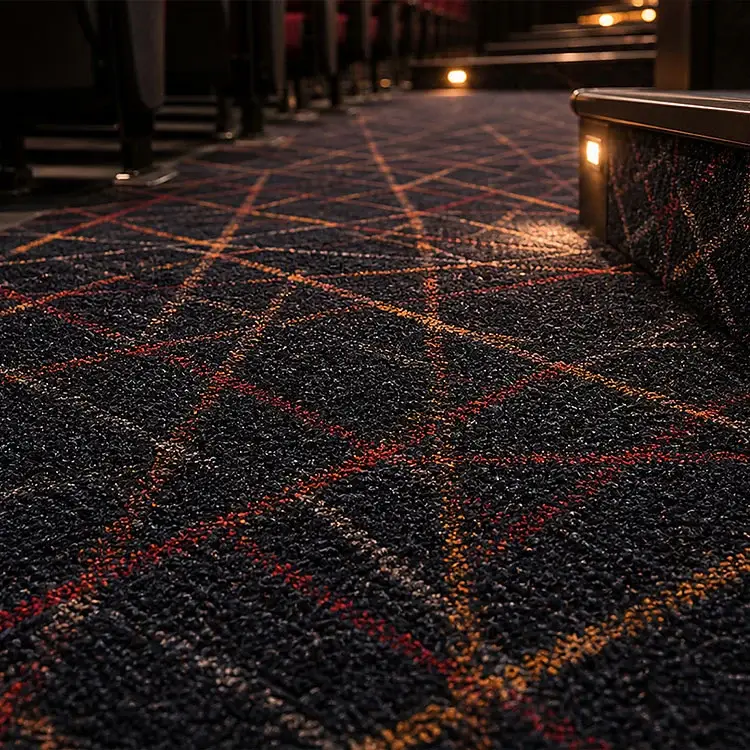
| Pattern | Custom design available (artwork supplied by buyer, strike-off approved before production) |
| Surface / Technique | Cut pile |
No two hotel floors work the same way. A lift lobby takes 900 trolley passes a day, a guest corridor takes footfall and little else, a breakfast room takes spilled coffee at seven in the morning, and a back corridor takes housekeeping carts on a fixed line. One 4 m roll serves all of them, but backing, underlay and seam plan should differ by zone.
Each roll we ship carries a run code, and that code opens a file: yarn lot, tufting machine, stitch rate, backing dye lot and production date. If a guest floor shows an unexpected wear patch two years in, we can name the run and say where the rest of it went. Tuft bind measures 36 to 44 N to ISO 4919, and abrasion runs 34,000 to 46,000 rubs to ISO 12947-2 at 5 kPa.
Put the roll code on your as-built drawing and keep one roll of attic stock from the same run in a dry store, not a plant room. The face pile carries our 8-year warranty, and a claim is settled faster when the roll can be traced. Third-party inspection at our plant is available through SGS, Intertek or BV. Traceability here is a shelf of labelled boxes in Foshan.
Guest rooms want quiet and take almost no abrasive traffic. Corridors take millions of steps along one narrow track. Lift lobbies take concentrated pivot load. Breakfast rooms take food, wine and chair legs. Stair landings take a shearing force nothing else in the building produces. Anti-slip textile backing suits all of them, but underlay and seam direction should change zone by zone.
We priced and delivered that split for a 96-key resort in Koh Samui, Thailand: 1,850 m2 of guest floor, corridor and lobby cut from 19 rolls at 4 m width, with a heavier underlay for the two lift lobbies. The brief asked us to match the shade of carpet installed in 2019 and keep the floor quiet for the spa next door. The measured outcome is in the case study below.
Humid coastal hotels fail differently from dry-climate ones. The slab stays cool, the air sits at 80 % relative humidity, and moisture condenses under the carpet. Adhesive softens, the backing laminate creeps, and by the second season you find ridges across the corridor and open edges at the skirting. Delamination is measured as peel strength, and under 30 N/50 mm is trouble in that climate.
Three things prevent it. Test the slab for moisture before anything is laid, use an adhesive specified for the substrate and the local humidity, and let the rolls acclimatise indoors for 24 hours before cutting. Our anti-slip backing with a full-spread adhesive handles 80 % relative humidity without movement, and ISO 2551 wet cleaning holds this face under a quarter of one percent length change.
Ninety-six keys on the north coast of Koh Samui, re-carpeted inside an 11-day low-season window. The package was 1,850 m2 of guest floor, corridor and lift lobby cut from 19 rolls at the 4 m usable width, with both lift lobbies on a 6 mm rubber crumb underlay. Work ran floor by floor while the hotel stayed open and trading.
Original carpet from 2019 was still down, and the resort wanted the same shade again. We traced the yarn lot, produced a strike-off, and tufted the order in two runs from one lot to hold the colour tight. Our QC lab measured the new roll against the retained sample at Delta E 0.8 under D65. After two monsoon seasons the property reports no edge lifting, no ridge lines, and thickness loss of 9 % against the ISO 3416 baseline.


Abrasion on this face is measured to ISO 12947-2 at 5 kPa, and our last eight production runs averaged 41,200 rubs to defined change. Light fastness returns Grade 6 to ISO 105-B02, and rub fastness holds Grade 4 to 5 wet and dry to ISO 105-X12. Tuft bind comes back at 41 N to ISO 4919, and backing laminate peel at 34 N/50 mm. Reaction to fire is Bfl-s1 to EN 13501-1, supported by EN ISO 9239-1 and EN ISO 11925-2. Indoor air quality reaches Class A to GB 18587-2001. Ask any supplier for the report rather than the certificate, and check that the sample identification on it matches the roll you are buying.
Usually. Cut a 100 mm square from an inconspicuous corner and send it with the original order number if you have one. We compare it against retained samples and the yarn lot file. If that lot has gone, we tuft a fresh strike-off for your approval before any yarn is ordered.
One roll. This construction runs at 4 m usable width, and a single roll covers about 100 m2, enough for a small guest floor or a repair programme. Custom colours start at 500 m2, the minimum that lets us control a dye lot properly.
Not in corridors, guest rooms or public areas. Full-spread adhesive direct to a sound substrate is enough and keeps floor height low. We do recommend a 6 mm rubber crumb underlay in lift lobbies and on stair landings. Send a slab moisture reading and we will confirm the build-up in writing.
Surface texture is cut pile, short and tight. It feels firm underfoot rather than plush, and it shows colour as depth rather than gloss, because light falls into the cut ends instead of bouncing off them. Rolls are 4 m (13.1 ft) usable width and about 25 linear metres long, wrapped in PE film on a cardboard core.
Specify a full-spread adhesive over a dry, sound, dust-free substrate, and lay with the pile direction running the length of the corridor so vacuum marks stay consistent. Custom design is available: send artwork, we produce a strike-off, nothing enters production until you approve it. LUCK Carpet has tufted carpet in Foshan for 14 years, with 180 staff across a 26,000 m2 plant.


Address
Shidaigongguan Building No.5 Office 1212, Haicheng east road, Duanzhou District, Zhaoqing City, Guangdong Province, China
Tel
Copyright © 2026 Zhaoqing Yunle International Trade Co., Ltd. All Rights Reserved.