News
Author: Young Lin | Role: Export & Project Planning Lead, Oneluck Carpet Factory | Updated: October 2026
Verified by our carpet weaving team, Zhaoqing | Axminster broadloom & wall to wall carpet | Woven at 7 rows per inch
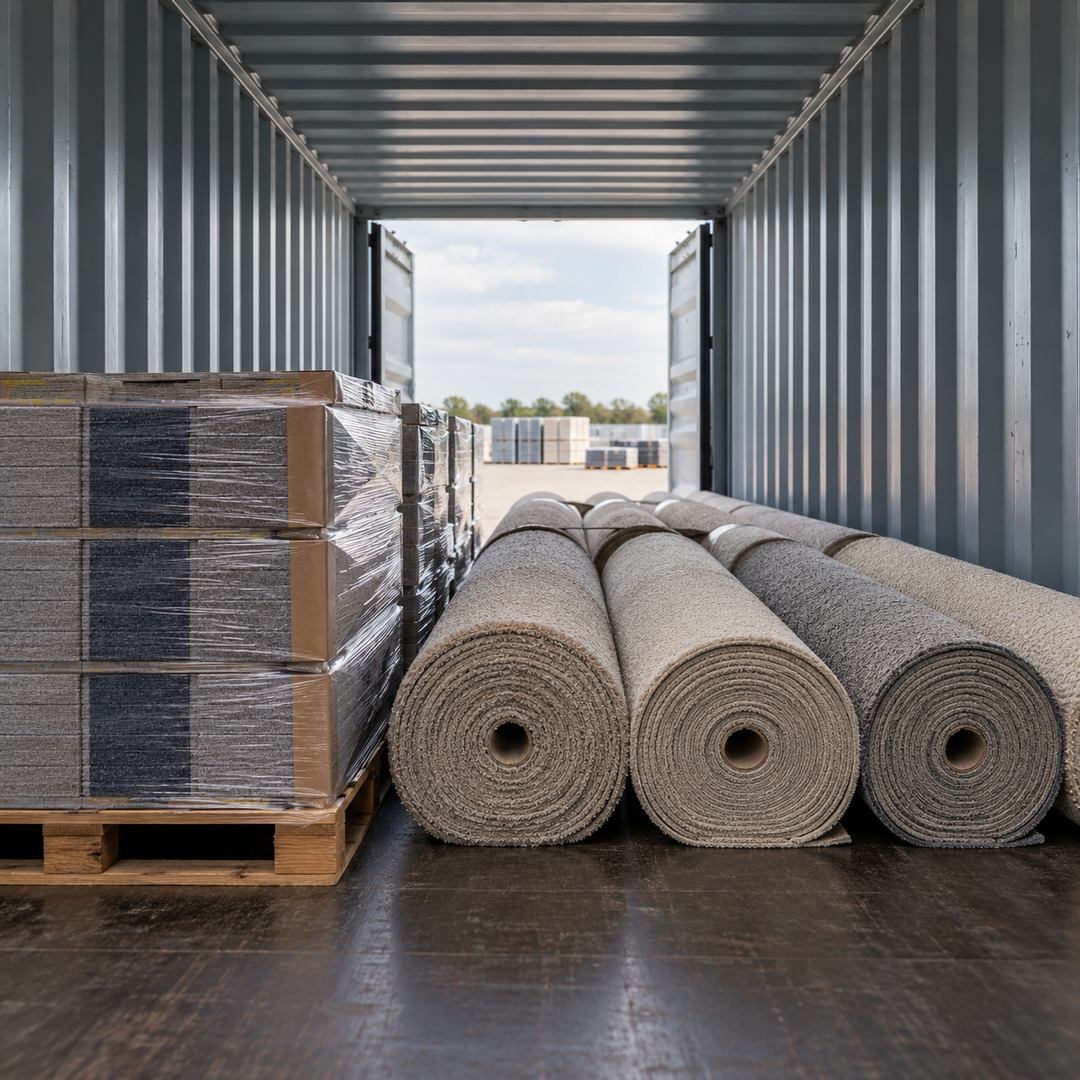
Mosque carpet has to serve one large continuous floor, heavy concentrated use at prayer times and a cleaning routine that involves water, so roll width and backing stability matter more than they do in a partitioned office. Our Axminster woven broadloom is produced in 3.66m or 4m widths, and the 4m width reduces on-site seaming across a wide prayer hall. The construction is woven at 7 rows per inch with approximately 85,000 to 100,000 tufts per square meter, with each tuft locked into the backing fabric, and it is produced in 80% New Zealand Wool 20% Nylon. In our experience the roll layout, not the pattern, is what decides whether the finished floor looks calm.
Mosque carpet has to carry a very specific combination of demands: a large continuous floor, concentrated use at prayer times, repeated cleaning, and a visual character that suits the architecture. Buyers often order a standard contract carpet and then find that the roll width leaves excessive seaming across the prayer hall, or that the backing moves where the floor is washed regularly. Both problems are decided at specification stage, long before anyone sees the finished installation.
This guide explains how we specify carpet for mosques and prayer halls, and which parameters should be fixed before ordering. It covers roll width and seam planning, the woven construction that suits concentrated use, and the fiber and backing combination that copes with frequent cleaning. It does not cover prayer rug formats or printed directional markers, which are produced to their own dimensions rather than as broadloom.
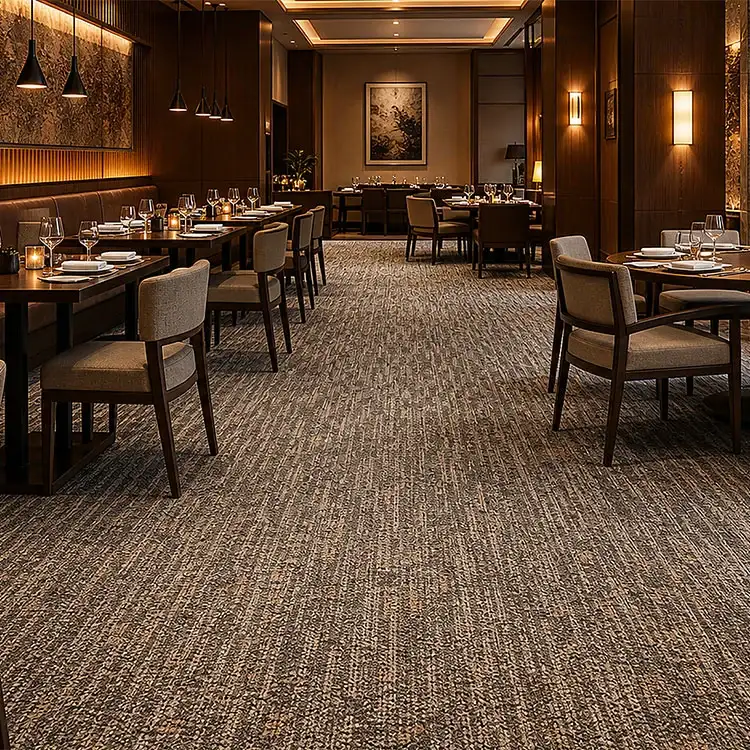
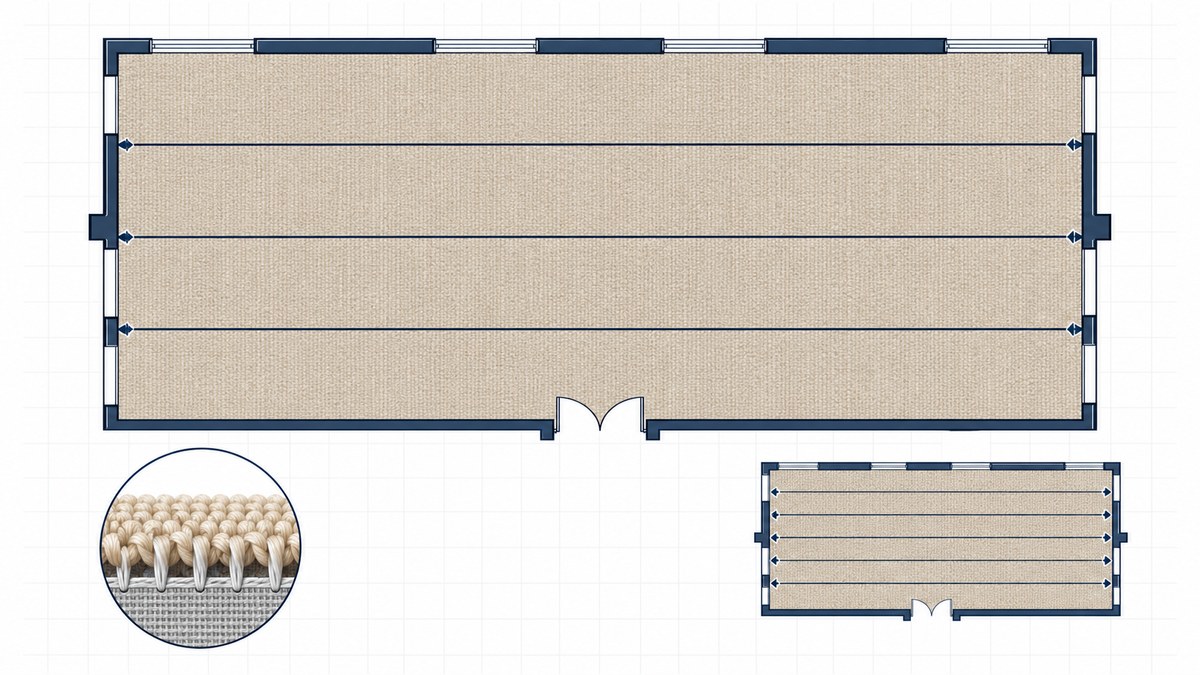
Figure 1: Roll width, construction and backing options for prayer hall carpet. Source: Oneluck Carpet mosque carpet specification records, 2026.
Every prayer hall specification we quote is assembled from the same options. The comparison below sets out our standard choice for each line, and the condition that would move a project away from it:
| Specification Item | Our Standard Option | Consider When | Practical Effect |
| Roll width | 3.66m or 4m | Prayer hall width and layout | Fewer seams across open floors |
| Construction | Woven Axminster, 7 rows per inch | Continuous concentrated use | Tufts locked against lateral force |
| Fiber | 80% New Zealand Wool 20% Nylon | Large public interiors | Natural fire resistance |
| Tuft density | 85,000 to 100,000 tufts per m² | Heavy footfall zones | Better appearance retention |
| Backing | Jute or synthetic woven | Frequent floor cleaning | Synthetic option adds moisture resistance |
| Fire class | B1 / Bfl-s1 under EN 13501 | Projects requiring a stated class | Documented classification |
Send us the hall dimensions and the entry positions. Oneluck Carpet will return a roll layout showing where the seams fall, with a specification matched to your cleaning routine.
Request a Free Mosque Carpet Roll Layout
Roll width should be chosen so that the number of seams across the hall is minimized, and on a wide open prayer floor that single decision affects both appearance and maintenance. We produce Axminster woven broadloom in widths of 3.66m or 4m, and our electronic jacquard looms weave broadloom in 4-meter widths with pattern registration that remains accurate from the first meter to the last. On a wide open prayer floor, the 4m width reduces on-site seaming considerably compared with narrower formats, and it also reduces the number of places where dust and cleaning water can collect along a joint.
Width planning is not only about the carpet. Prayer halls usually have a clear orientation, and the way the pile direction runs relative to the entry affects how the floor reads under light. We plan the roll layout against the room dimensions and the entrance first, then confirm the pattern repeat, so a design that looks correct on a sample board still lines up across the full hall. Where a hall is unusually wide, we would rather plan one additional seam on a controlled line than accept a layout that leaves a narrow strip running down one side.
There is also a practical limit on how much a single drop should carry. A 4m wide drop is heavy enough that it takes several people to position, and on a very long hall the roll length needed for one continuous drop may exceed what we can weave and handle as a single piece. In that situation we plan a deliberate cross seam on a line that the room's own architecture supports, such as where a colonnade or a level change already divides the floor. Planning it that way keeps the seam from becoming the first thing a visitor notices when they walk in.
A woven construction suits concentrated use because the tufts are mechanically locked into the backing rather than punched through it. Our Axminster broadloom is woven at 7 rows per inch with approximately 85,000 to 100,000 individual tufts per square meter, and each tuft is gripped at its base and locked into a woven backing fabric. That structure resists the lateral forces created by many people rising and kneeling in the same area repeatedly, which is the wear pattern a prayer hall produces and a corridor does not.
Wool rich fiber and a moisture tolerant backing suit prayer halls, because the backing has to cope with regular cleaning as well as foot traffic. Our Axminster broadloom is produced in 80% New Zealand Wool 20% Nylon, with options of jute backing or synthetic woven backing, and the synthetic woven option provides enhanced moisture resistance where the floor is washed frequently. Carpets produced with 80% wool 20% nylon meet B1 and Bfl-s1 classifications under EN 13501 without requiring topical flame retardant treatments due to wool's inherent fire resistance, which simplifies compliance documentation for large public interiors. For prayer halls with specific local code requirements, we discuss additional testing or treatment options at the specification stage.
Two practical points decide how the finished floor performs over the first year. Wool rich carpet can shed loose fiber for a short period after installation, which is normal and settles with vacuuming rather than indicating a fault, so a cleaning team that expects it will not raise a claim. The second is underfoot comfort during prolonged standing and kneeling: a woven construction with a dense tuft count distributes pressure better than a loose pile of the same weight, which is why we keep tuft density in the specification alongside pile weight rather than quoting weight alone. Where a hall is in use daily, both points should be written into the handover notes for the cleaning contractor rather than left to be discovered on site.
1. Confirm the hall dimensions and entry points: Send a measured plan rather than an area figure, because the room proportions decide the roll layout and the number of seams far more than the total square meters do.
2. Fix the roll width before the pattern: Choose 3.66m or 4m against the hall width first, then confirm the pattern repeat against that width, so the design still registers across every drop.
3. Name the backing for the cleaning routine: Select jute backing for traditional installations or synthetic woven backing where the floor is washed frequently, and state the choice in the specification rather than leaving it to supply.
4. Record the fire class and the spare allowance: State B1 and Bfl-s1 under EN 13501 where the project requires a class, and keep 3% to 5% attic stock from the same production batch for later repairs.
What width does mosque carpet come in?
Our Axminster woven broadloom is produced in widths of 3.66m or 4m, and we recommend the 4m width for large open prayer halls. Narrower rooms are sometimes better served by 3.66m, because it reduces the amount of cutting waste along one edge and keeps the seam line where the architect expected it.
How is mosque carpet priced per roll?
Price depends on construction, pile weight, fiber content, roll width and total quantity, so we quote from the hall dimensions and required specification. Two halls with the same area can price differently if one needs a custom pattern and the other uses a stock design, because the pattern has to be set up on the loom before weaving starts.
Does mosque carpet need flame retardant treatment?
Wool rich constructions such as 80% wool 20% nylon meet B1 and Bfl-s1 under EN 13501 without topical treatment because of wool's inherent fire resistance. Where a local code requires a different test method, we discuss additional testing at specification stage so the requirement is priced and scheduled before the order rather than after it.
Can you supply a matching carpet for corridors and entrances?
Yes. We can produce coordinated constructions for prayer halls, corridors, entrances and administration areas within one project specification. Corridors usually take a denser, lower pile than the hall so the two areas wear at a similar rate, and entrance areas can be cut from the same pattern so the transition is deliberate rather than incidental.
Is custom pattern design available?
Yes. Custom designs are available up to 12 colors per design, and we produce a design draft for approval before sampling begins. We recommend approving the drawing before the sample, because changing the layout after sampling means repeating both stages and moves every later date in the programme.
Roll widths and 4-meter loom registration from our own carpet weaving documentation.
Tuft counts and rows per inch measured on our Axminster broadloom.
Fire classification B1 and Bfl-s1 under EN 13501 for 80% wool 20% nylon constructions.
Backing options: jute backing and synthetic woven backing with enhanced moisture resistance.
What Should a Carpet Specification Sheet Include? : how to write pile weight, backing and tolerance as measurable requirements for a tender.
What Carpet Fire Rating Does Your Project Require? : which constructions hold B1 and Bfl-s1, and where a local code needs a different method.
What Should GCC Buyers Confirm Before Ordering Hotel Carpet? : sampling, lead times and documentation planning for Gulf hospitality projects.
Axminster Broadloom Collection : woven wall to wall carpet in 3.66m and 4m widths, up to 12 colors per design.
Oneluck Carpet weaves Axminster broadloom in 4m widths with pattern registration held from the first meter to the last, in 80% New Zealand Wool 20% Nylon. Send your hall plan and we will lay out the rolls.
Send Your Prayer Hall Plan for a Roll Layout
Copyright © 2026 Zhaoqing Yunle International Trade Co., Ltd. All Rights Reserved.