News
Author: Young Lin | Role: Export & Project Planning Lead, Oneluck Carpet Factory | Updated: October 2026
Verified by our carpet tile production team, Zhaoqing | Healthcare carpet tile & broadloom | Loose Lay Approved
Healthcare flooring has to satisfy requirements that rarely appear together elsewhere: continuous traffic, frequent chemical cleaning, spillage, and an environment where noise affects patient comfort. Fiber choice follows the cleaning protocol rather than the color range, and backing choice follows the floor level and the refurbishment sequence. Our stain resistant healthcare polypropylene carpet tile uses 100% Solution-Dyed Polypropylene with inherent fiber level stain resistance, resists acids, alkalis and solvents, and holds moisture regain below 0.1%. In our experience the floors that fail early in a hospital are the ones specified for appearance rather than for the disinfectant they will actually meet.
Healthcare flooring has to satisfy requirements that rarely appear together in other sectors: continuous traffic, frequent chemical cleaning, spillage, and an environment where noise affects patient comfort. Carpet that performs well in an office can fail quickly in a hospital corridor once disinfectant cleaning and wheelchair movement are added to the daily routine. The failure is rarely dramatic; it usually shows up as a color that drains out of the traffic lane or a joint that opens where trolley wheels pass.
This guide explains how we specify carpet for hospitals, clinics and care facilities, and which parameters should be fixed before ordering. It covers fiber selection against the cleaning protocol, the different requirements of corridors and patient areas, and the backing and installation choices that suit an occupied building. It does not cover clinical infection control policy, which is set by the facility rather than by the flooring supplier.
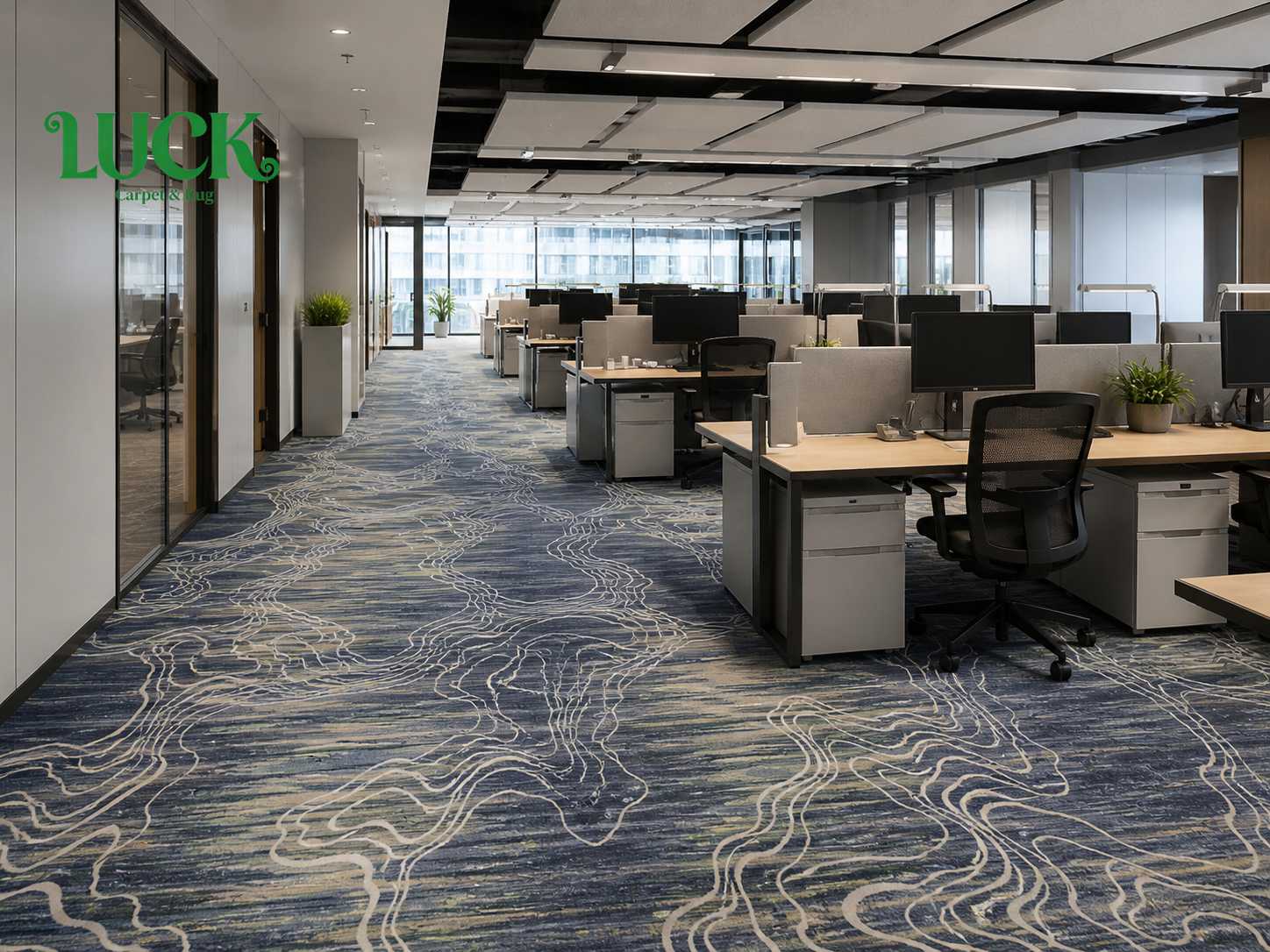
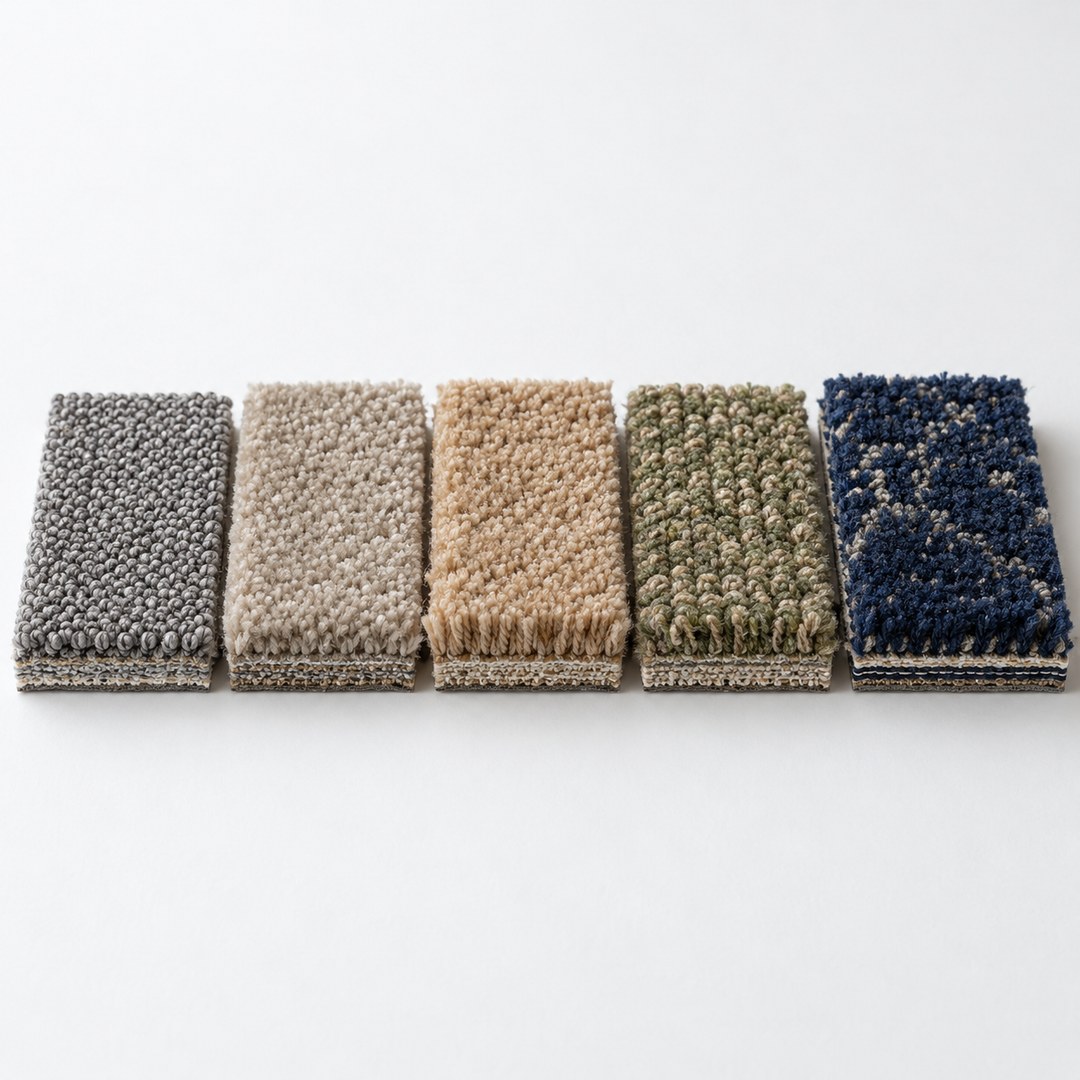
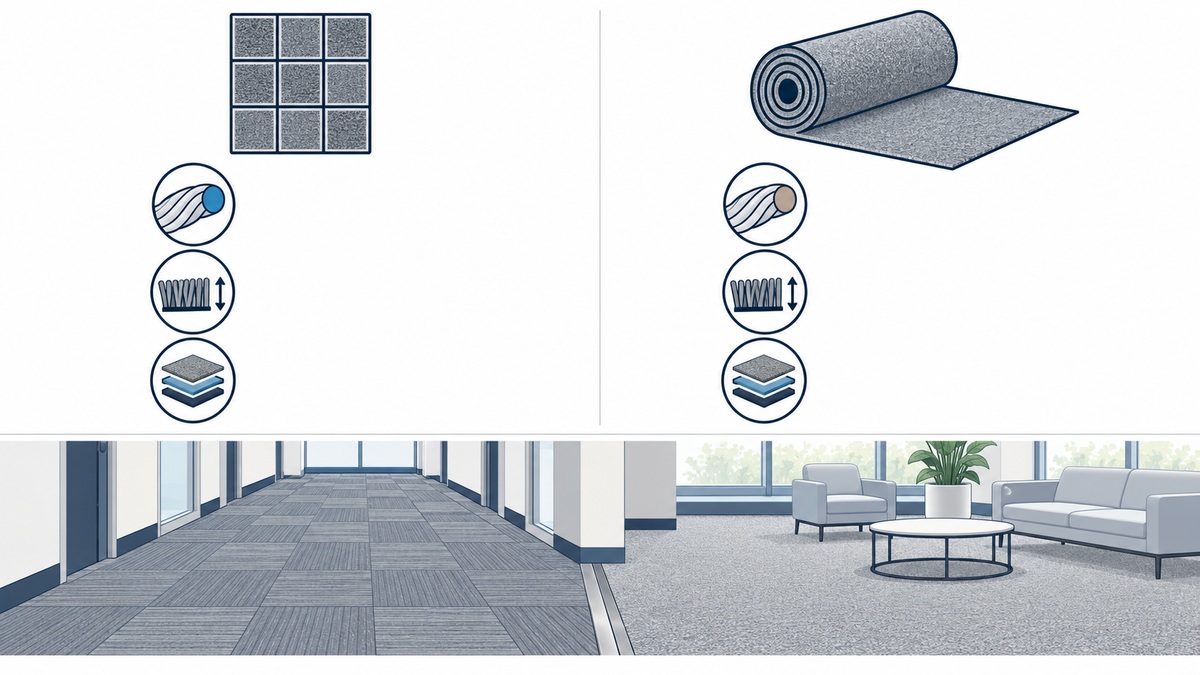
Figure 1: Healthcare carpet tile and broadloom compared across fiber, pile and backing. Source: Oneluck Carpet healthcare specification records, 2026.
Every healthcare specification we review is decided by two inputs: the cleaning protocol and the traffic pattern. The comparison below sets out how our two healthcare constructions differ and what each one changes on the ward:
| Specification Item | Healthcare PP Carpet Tile | Healthcare Nylon Broadloom | Effect on Healthcare Use |
| Fiber | 100% Solution-Dyed Polypropylene | 100% Commercial Grade Nylon | Stain behavior and heat response differ |
| Pile weight | 400 to 650 g/m² | 32 to 50 ounces per square yard | Affects density under trolley traffic |
| Pile height | 3.5 to 6 mm | 6 to 8 mm | Lower pile cleans more easily |
| Backing | Bitumen or PVC with fiberglass scrim | Action Back, Felt Back, Double Back | Stability and cleaning tolerance |
| Stain resistance | Inherent at fiber level | Protected surface | Determines cleaning routine |
| Typical application | Clinic, care facility, corridor | Hospital corridor, patient room, waiting area | Zone specific selection |
The two constructions are not competing for the same floor. A clinic or care facility that is cleaned with aggressive disinfectant several times a day is usually better served by the polypropylene tile, while a patient room or waiting area that needs a quieter, softer surface is usually better served by the nylon broadloom. Where a hospital needs both, we specify both rather than compromising on one.
Send us the cleaning protocol and the traffic pattern for each area. Oneluck Carpet will recommend fiber, pile and backing per zone, and confirm the installation method for an occupied building.
Request a Free Healthcare Carpet Specification
The fiber should be chosen for stain behavior under repeated cleaning, and we offer both polypropylene and nylon constructions for healthcare use. Our stain resistant healthcare polypropylene carpet tile uses 100% Solution-Dyed Polypropylene with inherent fiber level stain resistance, and it resists acids, alkalis and solvents. Its moisture regain is less than 0.1%, which limits the effect of frequent wet cleaning, and polypropylene melts at approximately 160 to 170 degrees Celsius, notably lower than nylon's 220 to 260 degrees Celsius. Solution dyeing also means the color runs through the fiber rather than sitting on the surface, so the appearance survives the cleaning chemicals that strip a surface dyed yarn over time.
Corridors receive continuous linear traffic, so we specify a denser construction and a more stain resistant fiber there. Hospital corridors are among the most common installation areas because they receive continuous pedestrian traffic while requiring a calm and welcoming appearance, and the same floor must tolerate regular disinfection without losing color or texture. Where a project requires a stated fire class, we confirm the applicable classification at the specification stage, and where it requires specific local testing we discuss that route rather than assuming a European classification covers it. Our fire retardant hospital nylon wall to wall carpet is designed for hospital corridors, patient rooms and waiting areas, and it reduces flame spread through the careful selection of materials and manufacturing processes.
Noise is the other reason carpet survives in healthcare at all. A hard floor in a corridor reflects trolley wheels, footsteps and equipment alarms, and the resulting background level affects how easily patients rest and how clearly staff can hear each other. Carpet absorbs a share of that impact noise at source, which is why the material is normally retained in corridors and patient areas even where hygiene requirements push other zones toward sheet vinyl. The acoustic benefit comes from the construction as a whole, so backing mass and pile density are both part of the specification rather than optional extras. Where a project has a measured acoustic target, send it with the enquiry and we will confirm the construction that supports it rather than quoting the heaviest backing available.
Corridors and patient areas should be specified differently, because one receives concentrated linear traffic and the other requires a quiet, comfortable surface. Along a corridor, the wear pattern is a narrow band down the center, so carpet density and stain resistance matter more than pile height. In a patient room or waiting area, the floor is walked on more evenly and the priority shifts toward comfort and appearance, which is where a nylon broadloom earns its place. We would rather specify two constructions for one building than accept a single compromise that underperforms in both zones.
Backing affects hygiene, stability under rolling equipment and the installation method, which matters where wards are refurbished in stages. For healthcare floors we specify bitumen or PVC compound with fiberglass scrim, which holds its dimensions within 0.2% of nominal size across temperature and humidity fluctuations. Because hospitals are often occupied during refurbishment, the adhesive-free loose lay method is useful, as it reduces installation time and eliminates wet adhesive emissions. We recommend keeping 3% to 5% attic stock from the original batch for repairs and replacements, because a hospital floor is repaired in small sections rather than replaced, and a later production run may not match the original dye lot.
1. Match the fiber to the cleaning protocol: Solution-dyed polypropylene where acids, alkalis and solvents are used routinely, or nylon where comfort and appearance carry more weight, decided by the disinfectant rather than by the color.
2. Specify corridors and patient areas separately: Use a denser, lower pile construction for linear corridor traffic and a softer nylon broadloom for patient rooms and waiting areas, so neither zone is over or under specified.
3. Confirm the backing and the installation method: Bitumen or PVC compound with fiberglass scrim holds dimensions within 0.2% of nominal, and adhesive-free loose lay suits wards that must stay in use during refurbishment.
4. Record the fire classification and the spare allowance: Confirm the applicable classification for the specified product at specification stage, and keep 3% to 5% attic stock from the same batch for sectional repairs.
Is carpet suitable for hospitals?
Yes. Carpet is widely used in hospital corridors, patient rooms and waiting areas where noise reduction and a calm appearance are required. It is normally specified alongside hard flooring rather than instead of it, with each material used where its properties fit the zone, so a healthcare project usually carries both and the transition between them is planned rather than improvised at the doorway.
Which carpet is best for a hospital corridor?
A dense construction with a stain resistant fiber suits corridors, and we specify polypropylene or nylon according to the cleaning protocol. A lower pile cleans more easily, which matters where spillage is cleaned up several times a day, and it also dries faster so the corridor is out of service for less time after cleaning.
How does carpet handle frequent cleaning?
Solution-dyed polypropylene resists acids, alkalis and solvents, and its moisture regain is less than 0.1%, so frequent wet cleaning has limited effect. Color runs through the fiber rather than sitting on the surface, which is why the appearance survives repeated disinfection better than a surface dyed yarn of the same color. On a ward cleaned several times a day, that single property usually decides how the floor looks after two years.
Can carpet be installed in an occupied hospital building?
Yes. Our tiles support adhesive-free loose lay, which shortens installation time and avoids wet adhesive emissions in occupied areas. Refurbishment can then proceed ward by ward without closing the department or scheduling around an adhesive cure, and individual tiles can be lifted later for repair along a wear line.
Do you supply carpet with a stated fire classification?
We confirm the applicable classification for the specified product at the specification stage, and we discuss additional testing where a local code requires it. We will not attach a class to a healthcare construction that has not been tested for that class.
Fiber and stain resistance data from our own healthcare carpet tile documentation.
Moisture regain below 0.1% on 100% Solution-Dyed Polypropylene tile.
Pile weight, pile height and backing specifications from our healthcare range records.
Dimensional stability held within 0.2% of nominal size with fiberglass scrim backing.
Which Carpet Tile Backing Does Your Project Need? : how backing choice controls moisture tolerance and installation method on clinical floors.
What Carpet Fire Rating Does Your Project Require? : where a stated class is available and how to confirm it for a healthcare construction.
Does Carpet Pile Weight Determine How Long It Lasts? : why density and fiber recover better than pile weight alone under trolley traffic.
Healthcare Carpet Collection : stain resistant tile and nylon broadloom for corridors, patient rooms and waiting areas.
Oneluck Carpet produces stain resistant polypropylene carpet tile with moisture regain below 0.1% and nylon broadloom for patient areas. Send your cleaning protocol and we will specify each zone.
Send Your Cleaning Protocol for a Zone Specification
Copyright © 2026 Zhaoqing Yunle International Trade Co., Ltd. All Rights Reserved.