News
Article Summary: Choosing the right commercial flooring involves more than selecting an attractive surface. Durability, dimensional stability, maintenance requirements, installation flexibility, and long-term operating costs all influence the final decision. A Nylon Tufted Carpet Tile with PVC Backing combines resilient nylon loop pile with a reinforced backing system to address the demands of busy commercial environments. Manufactured by LUCK, this flooring solution is designed for offices, corridors, meeting rooms, and other areas exposed to frequent foot traffic, rolling chairs, and routine cleaning. This guide explores its material structure, technical specifications, performance advantages, applications, and purchasing considerations to help project owners and flooring distributors make informed decisions.
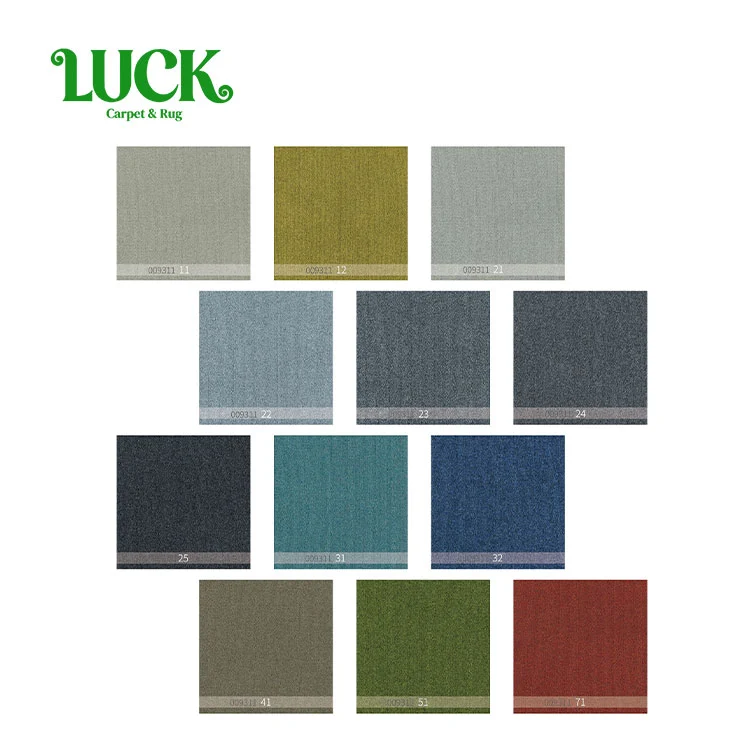
Commercial flooring must withstand continuous use while maintaining a professional appearance. In environments such as corporate offices, financial institutions, hotels, and public facilities, conventional decorative flooring may struggle with repeated friction, furniture movement, and concentrated rolling loads.
Nylon Tufted Carpet Tile with PVC Backing addresses these requirements through a combination of nylon face yarn and a stable PVC backing structure. Unlike traditional broadloom carpeting, carpet tiles are manufactured as individual modules, making transportation, installation, replacement, and future renovation more manageable.
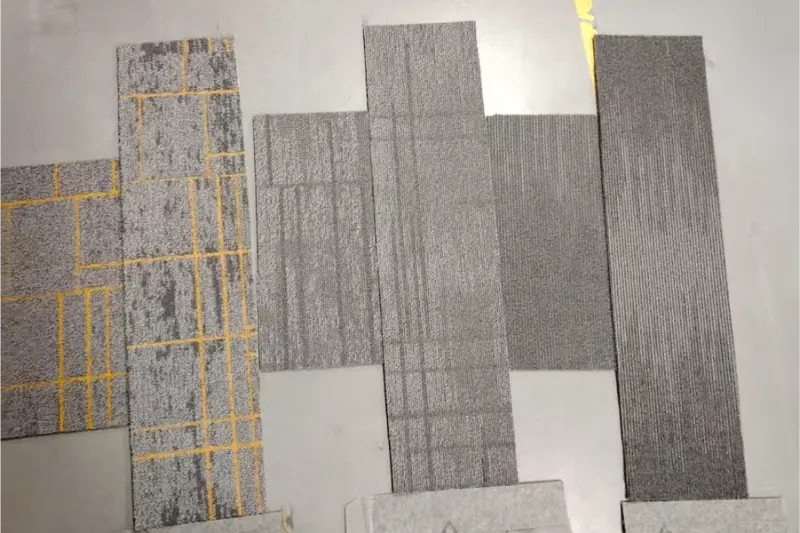
The LUCK product features a 100% nylon loop-pile surface with a 5 mm pile height and a pile weight of 550 g/m². Its PVC backing incorporates glass-fiber reinforcement to improve dimensional stability. Standard formats include 50 cm × 50 cm square tiles and 25 cm × 100 cm carpet planks, with custom sizes also available.
This construction is particularly suitable for projects where flooring needs to balance practical performance, appearance consistency, and convenient maintenance.
The performance of commercial carpet tiles depends on the interaction between their surface fibers and backing materials. Each component serves a specific purpose.
Nylon is widely used in commercial carpeting because of its resilience, abrasion resistance, and ability to recover after compression. Its fiber structure helps the carpet maintain a consistent appearance under repeated foot traffic.
The low-profile loop construction also offers practical advantages:
The backing is an important factor in determining whether carpet tiles remain flat and properly aligned after installation. LUCK uses a PVC backing reinforced with a glass-fiber mat.
PVC provides a substantial backing platform, while the glass-fiber reinforcement helps control dimensional changes caused by environmental fluctuations and repeated cleaning. This construction is designed to reduce the risk of tile movement, curling, and joint separation when the floor is correctly prepared and installed.
During production, nylon yarn is tufted into the primary carpet structure to create a consistent loop surface. The face construction is then combined with the reinforced PVC backing through a lamination process.
Important manufacturing considerations include:
For architects, contractors, distributors, and commercial flooring buyers, reviewing technical specifications is essential before placing an order. The following table summarizes the main characteristics of LUCK's nylon tufted carpet tile with PVC backing.
| Specification | Product Details |
|---|---|
| Product Name | Nylon Tufted Carpet Tile with PVC Backing |
| Brand | LUCK |
| Yarn Material | 100% Nylon |
| Surface Construction | Tufted Loop Pile |
| Pile Height | 5 mm |
| Pile Weight | 550 g/m² |
| Backing Material | PVC with Glass-Fiber Reinforcement |
| Standard Tile Size | 50 cm × 50 cm |
| Plank Size | 25 cm × 100 cm |
| Other Sizes | Custom Sizes Available |
| Fire Classification | Bfl-s1 under EN 13501-1 |
| Abrasion Resistance | 34,000–46,000 rubs under ISO 12947-2 at 5 kPa |
| Tuft Bind | 36–44 N under ISO 4919 |
| Laminate Peel Strength | 30–38 N/50 mm |
| Dimensional Stability | Less than 0.25% length change after repeated wet cleaning under ISO 2551 |
| Typical Application | High-Traffic Commercial Offices |
These specifications provide a practical starting point for project evaluation. Buyers should request the latest product test reports, samples, and project-specific compliance documentation before final approval, particularly when local fire regulations or building certification requirements apply.
Commercial floors experience different types of stress throughout the day. Walking creates repeated friction, while chair casters and service trolleys apply concentrated pressure to small areas.
The nylon loop-pile construction provides a compact, resilient surface designed for these conditions. Its tuft bind performance of 36–44 N under ISO 4919 helps indicate how securely the yarn is held within the backing.
Carpet tiles that expand, shrink, or curl can create uneven joints and affect the overall appearance of a commercial floor. The glass-fiber-reinforced PVC backing is designed to help control dimensional movement.
For facilities with frequent cleaning schedules or changing indoor conditions, this characteristic is an important consideration when selecting flooring materials.
Carpet tiles offer greater layout flexibility than many traditional flooring systems. Square modules can be installed in quarter-turn, monolithic, or directional arrangements, while rectangular planks provide additional design possibilities.
Project designers can use different colors and installation directions to:
One of the practical benefits of modular flooring is that maintenance can be focused on individual sections. If a tile becomes permanently stained or damaged, the affected module can be removed and replaced with a compatible spare.
For commercial property managers, this approach can reduce the disruption associated with large-scale flooring repairs.
Different commercial spaces have different flooring requirements. The combination of nylon loop pile and reinforced PVC backing makes this product particularly relevant to the following environments.
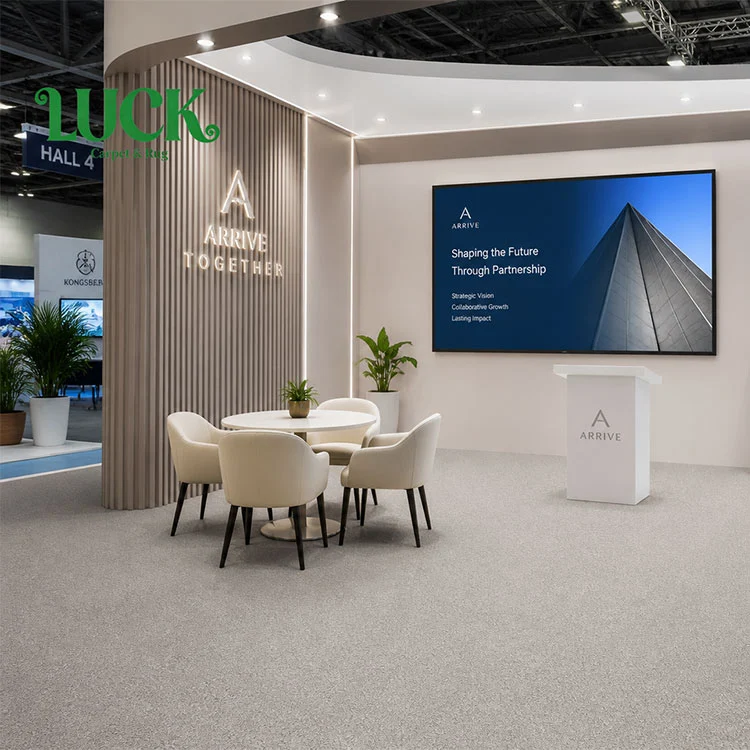
Open-plan offices require flooring that can accommodate continuous pedestrian traffic, rolling chairs, desks, and frequently rearranged workstations. Carpet tiles also make it easier to maintain consistent flooring across different office zones.
Professional environments often prioritize a clean, coordinated appearance. Neutral colors and modular layouts can create an organized interior while allowing localized replacement when necessary.
Entrance areas and corridors receive concentrated pedestrian traffic. Proper entrance matting, regular vacuuming, and appropriate tile orientation can help manage dirt accumulation and uneven wear.
Administrative offices, staff rooms, and selected institutional spaces can benefit from modular carpet flooring. However, buyers should evaluate the required fire classification, cleaning methods, and traffic conditions before specification.
Not every carpet tile is manufactured for the same purpose. Comparing face fibers, backing structures, and maintenance requirements helps buyers select the most appropriate product for their projects.
| Comparison Factor | Nylon Tufted Carpet Tile with PVC Backing | PP Tufted Carpet Tile | Conventional Broadloom Carpet |
|---|---|---|---|
| Surface Material | Nylon | Polypropylene | Various Fibers |
| Modular Installation | Yes | Yes, depending on product | Generally No |
| Local Replacement | Convenient | Convenient | More Difficult |
| Rolling-Load Suitability | Designed for commercial applications | Depends on construction | Depends on construction |
| Backing Options | PVC with glass-fiber reinforcement | Product-dependent | Product-dependent |
| Design Flexibility | High | High | Moderate |
| Typical Applications | Offices and commercial interiors | Selected commercial spaces | Large continuous floor areas |
Although nylon is often selected for its resilience and wear performance, the best flooring choice ultimately depends on the project's budget, traffic intensity, maintenance arrangements, and required service life. Buyers should compare complete product specifications rather than relying on fiber names alone.
Even a high-quality carpet tile requires proper installation to achieve its intended performance. Subfloor preparation, adhesive selection, and layout planning are particularly important for commercial applications.
For suitable office projects, pressure-sensitive tackifier can provide a practical installation option. Depending on the subfloor and traffic requirements, it may be applied around the perimeter and at planned intervals rather than using full-spread adhesive.
The installation method must be selected according to the flooring manufacturer's instructions and site conditions. Completely loose-laid installation should not be assumed suitable for areas exposed to repeated trolley or caster traffic.
Consistent maintenance helps preserve surface appearance and reduces the accumulation of abrasive dirt between carpet fibers.
When purchasing commercial carpet tiles in bulk, buyers should evaluate manufacturing consistency as carefully as the product's initial appearance. Small differences in pile height, backing thickness, color, or tile dimensions can become noticeable across large installations.
LUCK manufactures carpet products at its 26,000 m² production facility in Foshan, Guangdong, China. Its quality-control process includes testing relevant product properties against recognized standards.
Important testing areas include:
Before confirming a commercial order, buyers should consider the following checklist:
For additional product options, buyers can explore tufted carpet tiles, loop pile carpet tiles, and other commercial flooring solutions from LUCK.
Nylon offers good resilience and abrasion resistance, making it suitable for environments with frequent pedestrian traffic and rolling office chairs. The loop-pile construction also provides a compact surface that supports practical maintenance and consistent appearance.
PVC provides a stable backing structure, while glass-fiber reinforcement helps control dimensional movement. This combination is designed to reduce expansion, shrinkage, and curling under appropriate installation and operating conditions.
The standard formats include 50 cm × 50 cm square tiles and 25 cm × 100 cm rectangular planks. Custom sizes may also be available depending on project requirements and production arrangements.
Yes. One of the main advantages of modular carpet flooring is that individual damaged or stained tiles can be removed and replaced. Keeping spare tiles from the original production batch helps maintain color consistency during future repairs.
It is designed for commercial applications such as offices and circulation areas where regular foot traffic and rolling loads occur. However, suitability depends on the actual traffic intensity, installation quality, maintenance schedule, and project-specific performance requirements.
Regular vacuuming is recommended to remove dust and grit. Spills should be treated promptly, while periodic professional cleaning can help maintain the surface. Cleaning chemicals and equipment should always be compatible with the carpet and its backing system.
Yes. LUCK offers custom design options based on buyer-supplied artwork and approved samples. Custom color production generally requires 25–35 working days after strike-off approval, with a typical production minimum of 500 m². Smaller trial quantities may be discussed separately.
Buyers should confirm the technical specifications, physical samples, fire classification, backing construction, quantity requirements, installation method, production lead time, and shipping arrangements. Requesting relevant test reports before mass production is also recommended.
Selecting the right commercial carpet tile requires a balance of material performance, installation flexibility, appearance, and long-term maintenance considerations. With its 100% nylon loop-pile surface, 5 mm pile height, 550 g/m² pile weight, and glass-fiber-reinforced PVC backing, Nylon Tufted Carpet Tile with PVC Backing offers a practical flooring solution for demanding office and commercial environments. Its modular formats also make localized replacement and future space renovation more manageable. For architects, contractors, flooring distributors, and project procurement teams looking for a dependable manufacturing partner, LUCK provides product customization and technical support to help meet different project requirements. Explore the product specifications, request samples, and contact us today to discuss your commercial flooring project, obtain a factory quotation, and find a suitable carpet tile solution for your application.
-
Copyright © 2026 Zhaoqing Yunle International Trade Co., Ltd. All Rights Reserved.