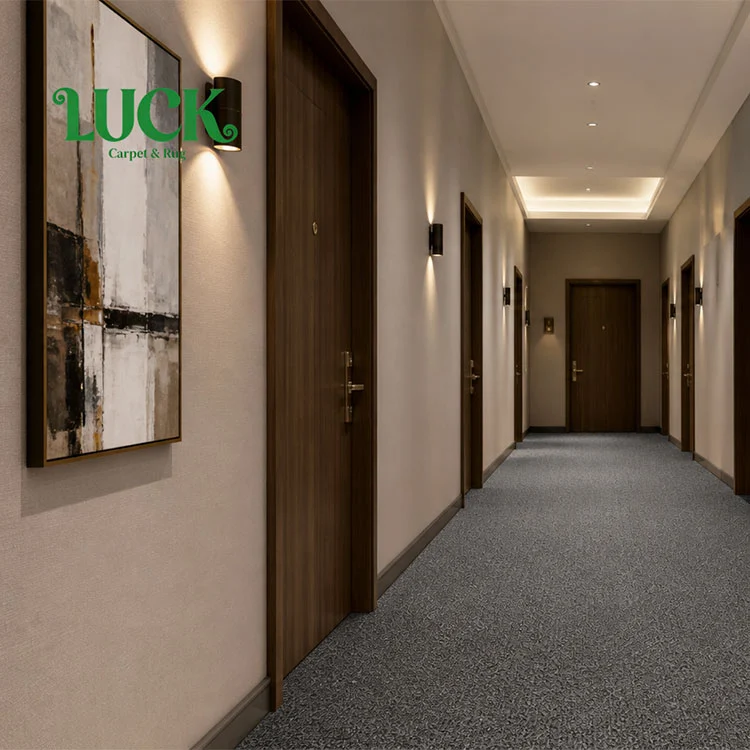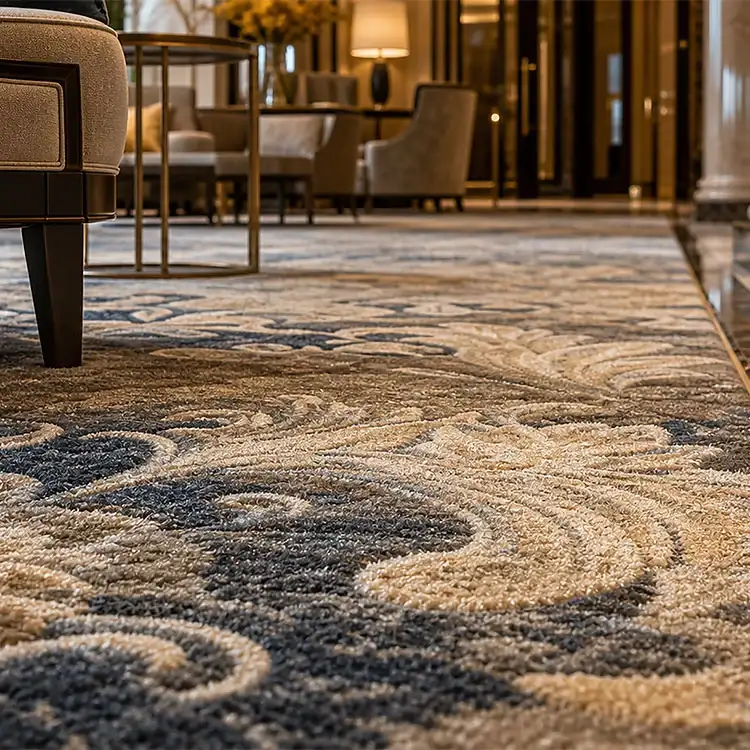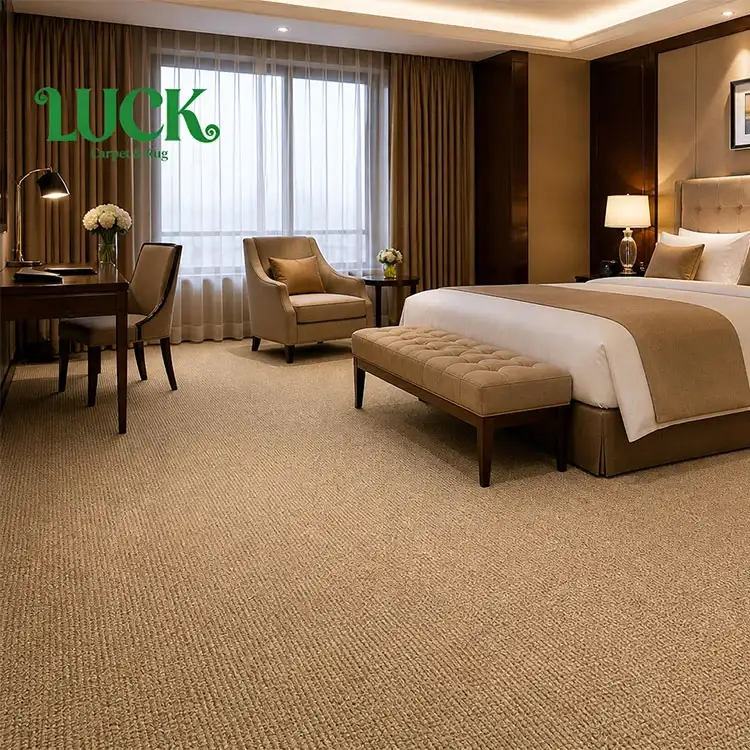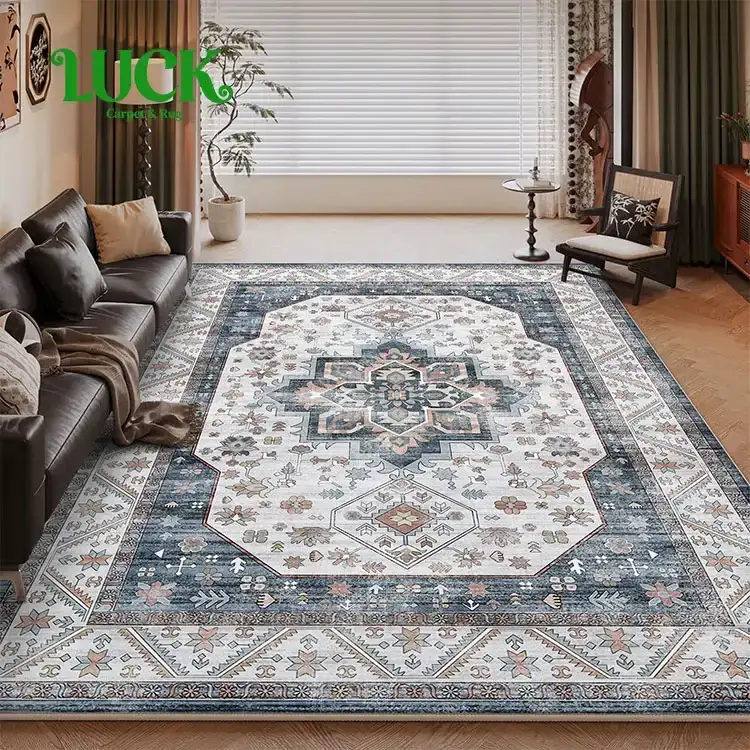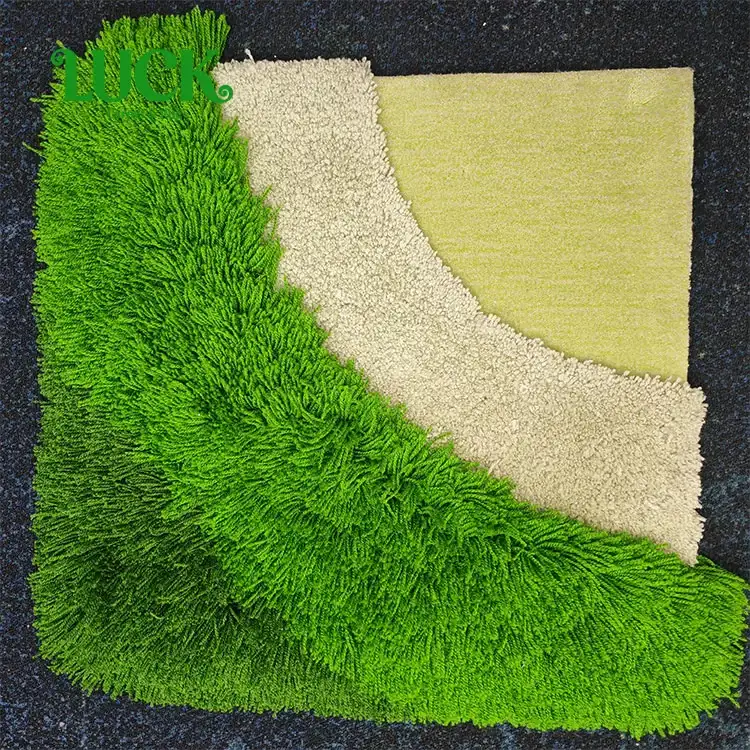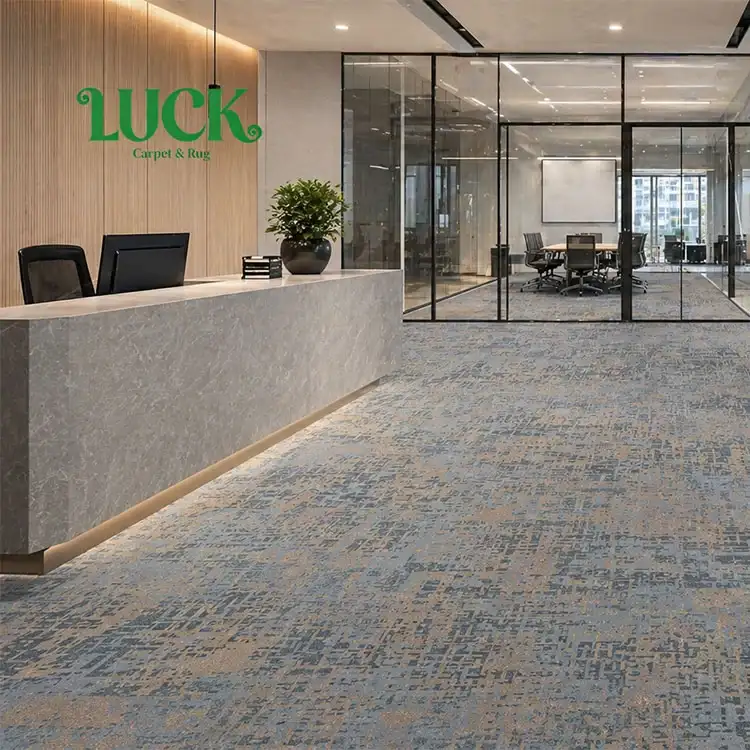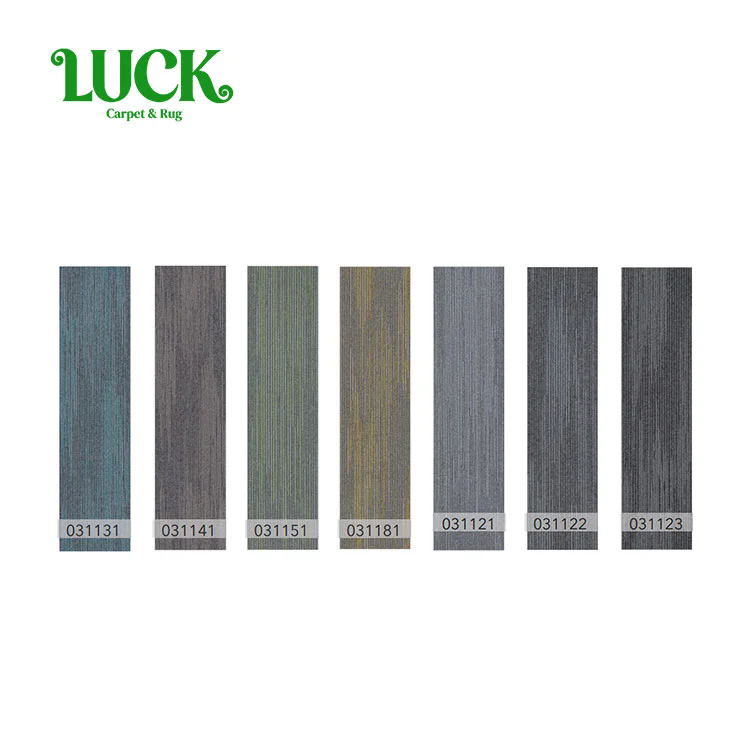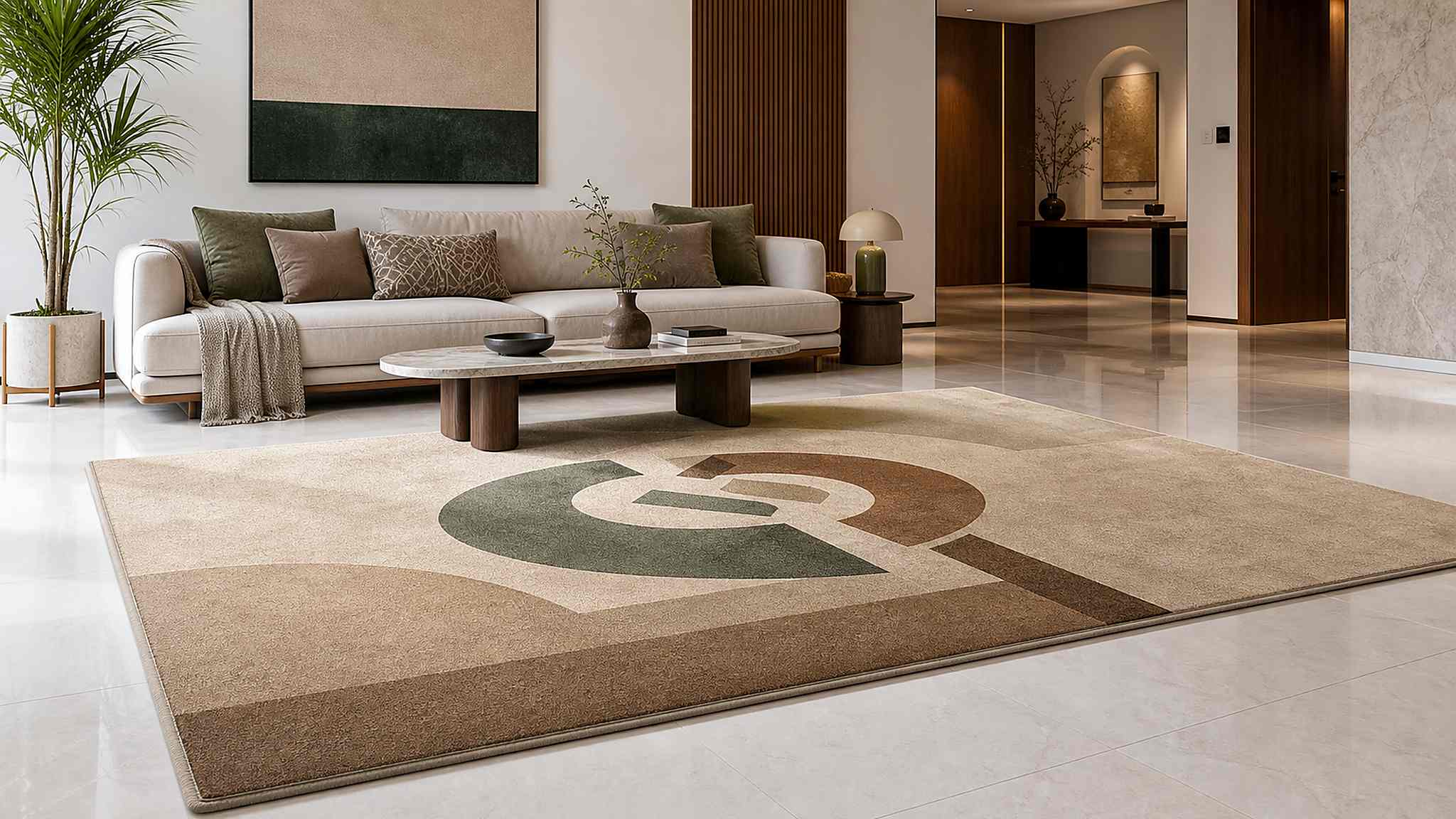
Durable Restaurant PP Wall to Wall Carpet is a practical flooring choice for high-traffic dining environments, and LUCK Carpet manufactures customized commercial solutions using polypropylene fibers, tufted construction, and multiple backing options. Designed for restaurants, cafés, banquet halls, and hospitality spaces, this flooring balances stain resistance, maintenance convenience, comfort, acoustic performance, and project cost.
Restaurant flooring must withstand continuous foot traffic, accidental spills, frequent cleaning, chair movement, and long working hours while maintaining a professional appearance. Polypropylene carpet provides low moisture absorption and good stain resistance, while wall-to-wall installation creates a visually continuous floor across large dining areas. LUCK Carpet offers customized pile structures, colors, patterns, backing systems, and roll widths for commercial projects. Typical specifications include 650–1100 g/m² pile weight, 6–8 mm total thickness, 3.66 m or 4 m roll width, and full glue-down installation. These characteristics make PP broadloom carpet suitable for demanding restaurant and hospitality applications where durability, comfort, noise reduction, and maintenance efficiency all matter.
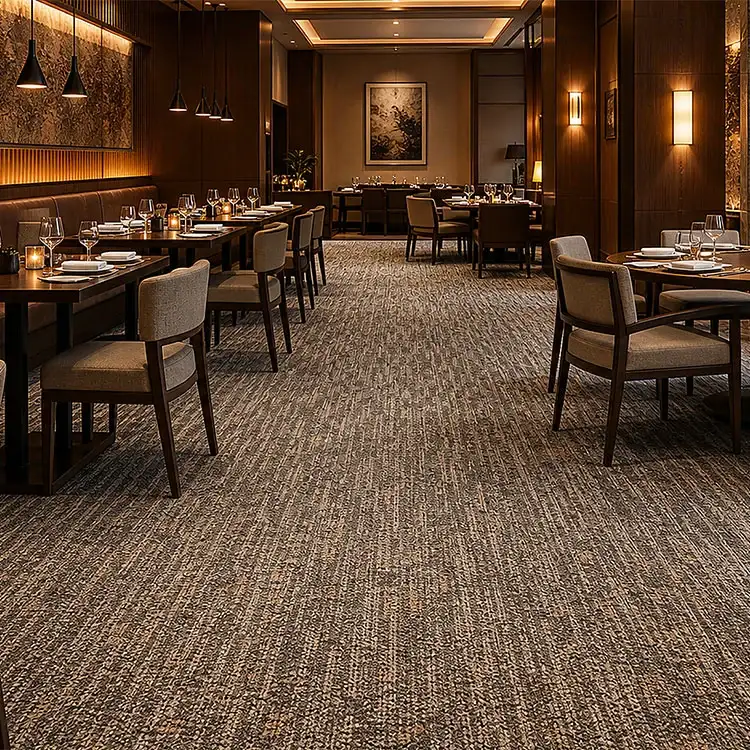
Table of Contents
Why Does Restaurant Flooring Require Specialized Performance?
What Makes Polypropylene Suitable for Restaurant Carpet?
What Are the Key Technical Specifications?
How Does Wall-to-Wall PP Carpet Improve Restaurant Performance?
Where Can Restaurant PP Wall-to-Wall Carpet Be Used?
How Should Buyers Select Commercial Restaurant Carpet?
How Can Restaurant Carpet Be Maintained?
Why Does Restaurant Flooring Require Specialized Performance?
Restaurant floors operate under conditions that are considerably different from those in low-traffic residential interiors. Customers enter and leave continuously, employees may remain on their feet for hours, chairs are moved repeatedly, and food or beverages can be spilled during daily operation.
For these environments, flooring should provide a combination of practical characteristics rather than focusing on appearance alone. A suitable commercial carpet should be comfortable underfoot, relatively easy to maintain, resistant to routine staining, and structurally appropriate for heavy pedestrian traffic.
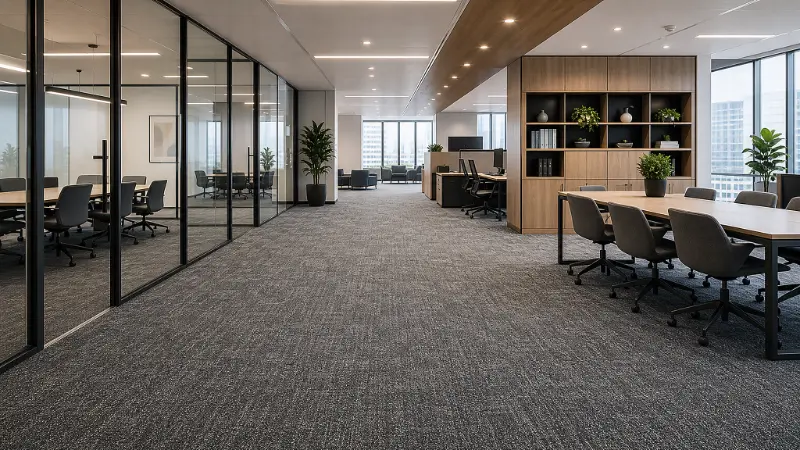
Wall-to-wall carpet also provides a continuous visual surface. Instead of dividing a dining area into numerous small flooring sections, broadloom installation can create a unified appearance that supports restaurant interior design.
- Continuous coverage for large dining spaces
- Comfortable underfoot performance for staff and customers
- Noise reduction from footsteps and chair movement
- Practical maintenance for everyday commercial use
- Flexible colors and patterns for interior design coordination
- Commercially suitable construction for high pedestrian traffic
What Makes Polypropylene Suitable for Restaurant Carpet?
Polypropylene, commonly abbreviated as PP, is widely used in commercial carpet manufacturing because of its useful balance between performance and cost. Its low moisture absorption helps reduce the tendency of spilled liquids to penetrate the fiber quickly, which is particularly useful in food-service environments.
Stain resistance is another important consideration. Restaurants frequently deal with food particles, sauces, beverages, and other substances that can affect flooring appearance. PP fibers can simplify routine cleaning and help maintain a presentable floor when an appropriate cleaning program is followed.
From a manufacturing perspective, PP also allows different carpet constructions and visual effects. Depending on the project, buyers can select loop pile or cut pile structures and coordinate colors, patterns, pile weight, backing, and roll dimensions with the overall interior design.
Key Advantages of PP Fiber
- Moisture resistance: Low moisture absorption supports easier routine care.
- Stain resistance: The fiber is well suited to environments where accidental spills are common.
- Cost efficiency: PP provides a practical option for projects with commercial-scale flooring requirements.
- Design flexibility: Different colors, patterns, and pile constructions can be specified.
- Comfort: Carpet provides a softer walking surface than many hard flooring alternatives.
What Are the Key Technical Specifications?
Technical parameters are important when selecting commercial flooring because appearance alone does not indicate whether a carpet is suitable for a demanding restaurant environment. The following specifications represent the typical configuration offered for this type of commercial PP wall-to-wall carpet.
| Item | Typical Specification | Commercial Significance |
|---|---|---|
| Application | Restaurants, cafés, dining halls, banquet halls | Designed for commercial interiors |
| Construction | Tufted loop pile or cut pile | Supports different appearance and performance requirements |
| Fiber | 100% Polypropylene | Low moisture absorption and practical stain resistance |
| Pile Weight | 650–1100 g/m² | Can be matched to project traffic requirements |
| Total Thickness | 6–8 mm | Balances comfort and commercial application needs |
| Gauge | 1/10 or 1/12 | Supports controlled tufting construction |
| Stitch Rate | 8–10 stitches/inch | Contributes to carpet structure and density |
| Backing | Action Back, Felt Back, PVC Back | Allows different installation and project requirements |
| Roll Width | 3.66 m or 4 m | Helps reduce unnecessary installation joints |
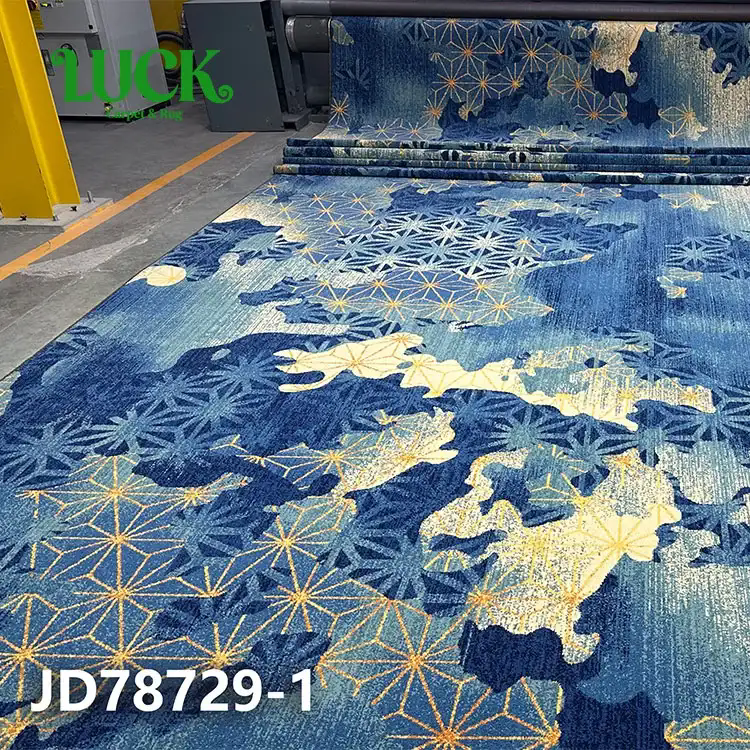
| Pattern | Customized | Supports restaurant-specific interior concepts |
| Color | Customized | Coordinates with furniture and interior finishes |
| Installation | Full Glue Down | Provides stable installation for commercial spaces |
| Recommended Traffic | Heavy Commercial | Suitable for busy pedestrian environments |
For large-scale projects, specifications should be confirmed according to the actual site, expected traffic intensity, cleaning procedures, design requirements, and installation conditions rather than selecting a carpet based on one parameter alone.
How Does Wall-to-Wall PP Carpet Improve Restaurant Performance?
1. Supports High-Traffic Areas
A restaurant may experience hundreds of customer movements and repeated employee traffic during a normal operating day. A dense tufted structure can provide the physical foundation needed for continuous pedestrian use. Selecting an appropriate pile weight and construction is especially important for entrances, dining areas, buffet zones, and circulation paths.
2. Creates a More Comfortable Walking Surface
Restaurant employees can spend many hours standing and walking during each shift. Carpet provides a softer surface compared with ceramic tile, stone, or other hard flooring materials. This can contribute to a more comfortable environment for employees and guests.
3. Helps Control Interior Noise
Restaurant acoustics can be affected by footsteps, conversations, chair movement, and general customer activity. Carpet absorbs part of the sound generated within a room, helping reduce the hard-surface reflection that can make busy dining spaces feel excessively noisy.
4. Supports Interior Design
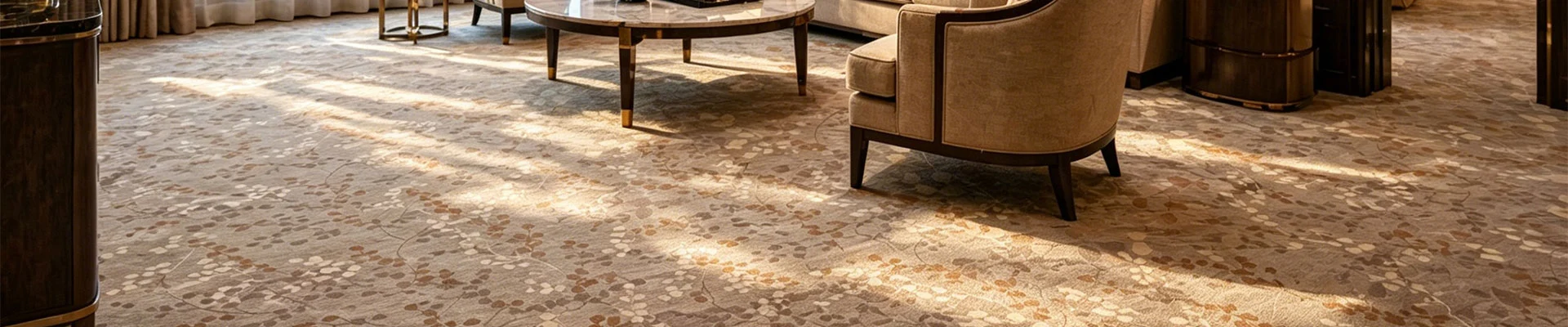
Flooring is a major visual component of a restaurant. Customized colors and patterns can be coordinated with furniture, wall finishes, lighting, and the restaurant's overall concept. For multi-zone hospitality projects, coordinated carpet designs can also help create visual consistency between dining rooms, reception spaces, and banquet areas.
5. Offers Practical Maintenance
Restaurants need cleaning routines that fit around daily operations. PP carpet's moisture resistance and stain-resistant characteristics make it practical for regular vacuuming and scheduled deep cleaning when appropriate commercial cleaning procedures are followed.
Where Can Restaurant PP Wall-to-Wall Carpet Be Used?
Although designed around restaurant requirements, commercial polypropylene broadloom carpet can be applied across a wide range of hospitality and commercial interiors.
- Restaurant dining rooms
- Hotel restaurants
- Cafés and coffee shops
- Banquet halls
- Private dining rooms
- Food courts
- Conference centers
- Reception areas
- Lounges and clubs
- Exhibition spaces
- Cinemas
- Office cafeterias
- Retail waiting areas
- Education facilities
For each application, carpet construction should be matched with expected traffic, cleaning frequency, room function, design requirements, and installation conditions. A dining room with continuous traffic may require a different configuration from a low-traffic private room.
How Should Buyers Select Commercial Restaurant Carpet?
For contractors, distributors, interior designers, and restaurant project buyers, selecting the right carpet requires looking beyond color and price. A practical purchasing process should evaluate both technical and project-specific requirements.
- Define the traffic level. Identify whether the carpet will be installed in a high-traffic dining area, circulation route, private room, or another commercial zone.
- Select the construction. Compare loop pile and cut pile according to appearance, texture, maintenance, and expected usage.
- Determine the backing. Action Back, Felt Back, and PVC Back can be considered according to the installation environment and project requirements.
- Confirm dimensions. Larger roll widths can help reduce seams and support a more continuous appearance.
- Coordinate colors and patterns. Request samples or drawings before production to ensure the flooring matches the intended interior design.
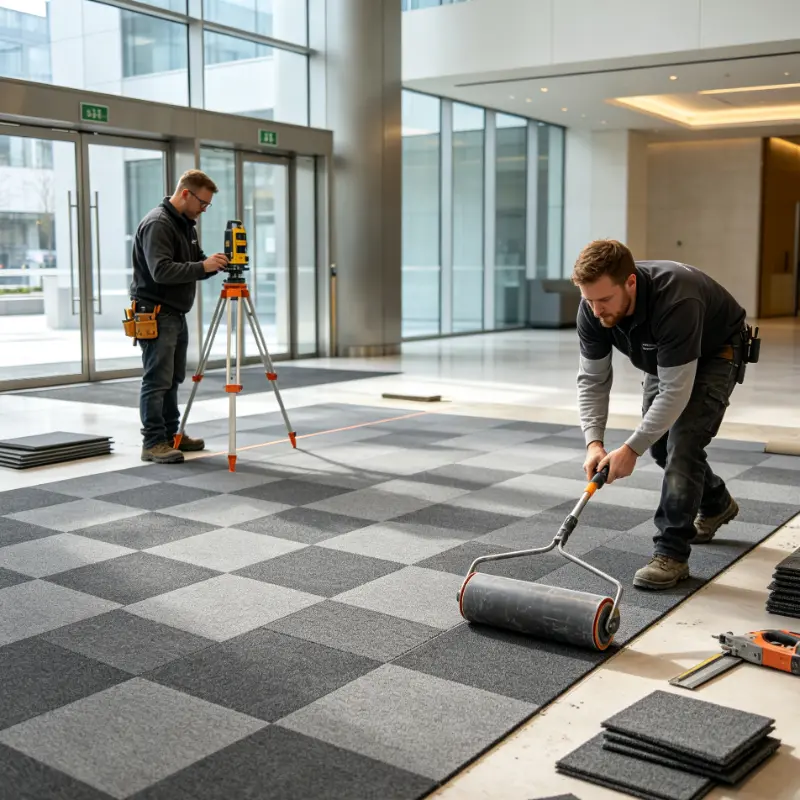
- Plan installation. Full glue-down installation should be coordinated with the site conditions and qualified installers.
- Establish maintenance procedures. Consider routine vacuuming, spot treatment, and periodic deep cleaning before finalizing the flooring specification.
For customized projects, working directly with a carpet manufacturer can also simplify communication about roll widths, backing systems, colors, patterns, and production requirements. Buyers can review wall-to-wall carpet solutions to compare related commercial flooring options.
How Can Restaurant Carpet Be Maintained?
Even a durable commercial carpet requires an appropriate maintenance program. The objective is to remove loose debris regularly, address spills quickly, and prevent accumulated dirt from becoming embedded in the pile.
Recommended Routine
- Vacuum high-traffic areas frequently to remove loose particles.
- Clean spills as soon as possible using procedures suitable for the carpet.
- Use commercial cleaning products compatible with the selected carpet construction.
- Schedule periodic deep cleaning according to traffic and operating conditions.
- Pay additional attention to entrances, service routes, and high-use dining zones.
- Follow the carpet manufacturer's cleaning and installation recommendations.
Maintenance frequency should be adapted to actual restaurant traffic. A busy food court, for example, may require a more frequent cleaning schedule than a private dining room.
FAQ
Q1: Why is polypropylene suitable for restaurant carpet?
A: Polypropylene offers low moisture absorption, practical stain resistance, and cost efficiency. These properties make it suitable for commercial dining environments where spills and frequent cleaning are common.
Q2: Can restaurant wall-to-wall carpet be customized?
A: Yes. Commercial carpet can be customized in areas such as color, pattern, pile construction, backing system, pile weight, and roll width according to project requirements.
Q3: What roll widths are available?
A: Standard widths for this product range include 3.66 m and 4 m. Roll length can be coordinated with project requirements.
Q4: Is PP wall-to-wall carpet easy to maintain?
A: PP carpet is practical for routine commercial maintenance. Regular vacuuming, prompt spill treatment, and scheduled deep cleaning can help preserve appearance and extend service life.
Q5: What backing options can be selected?
A: Available backing options include Action Back, Felt Back, and PVC Back. The appropriate choice depends on project specifications and installation requirements.
Q6: Can LUCK Carpet provide custom colors and patterns?
A: Yes. LUCK Carpet supports customized colors, patterns, textures, backing systems, and roll sizes for restaurant, hospitality, and other commercial projects.
Conclusion
A well-designed commercial restaurant floor needs to balance durability, appearance, comfort, maintenance, acoustics, and installation efficiency. Polypropylene wall-to-wall carpet provides a practical combination of low moisture absorption, stain resistance, customizable design, and comfortable underfoot performance. With options such as 650–1100 g/m² pile weight, 6–8 mm thickness, multiple backing systems, and 3.66 m or 4 m roll widths, the solution can be adapted to different heavy-commercial environments.
LUCK Carpet supports customized commercial carpet production for restaurants, cafés, hotels, banquet halls, and other high-traffic interiors. If you are planning a new restaurant flooring project or sourcing customized broadloom carpet, contact us to discuss your required dimensions, colors, patterns, backing, application, and project specifications and request a suitable factory quotation.