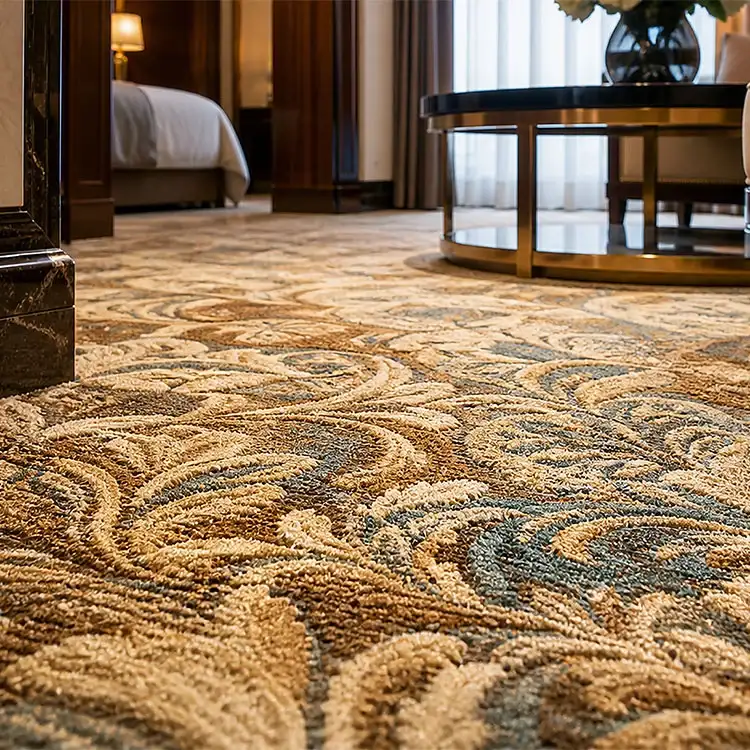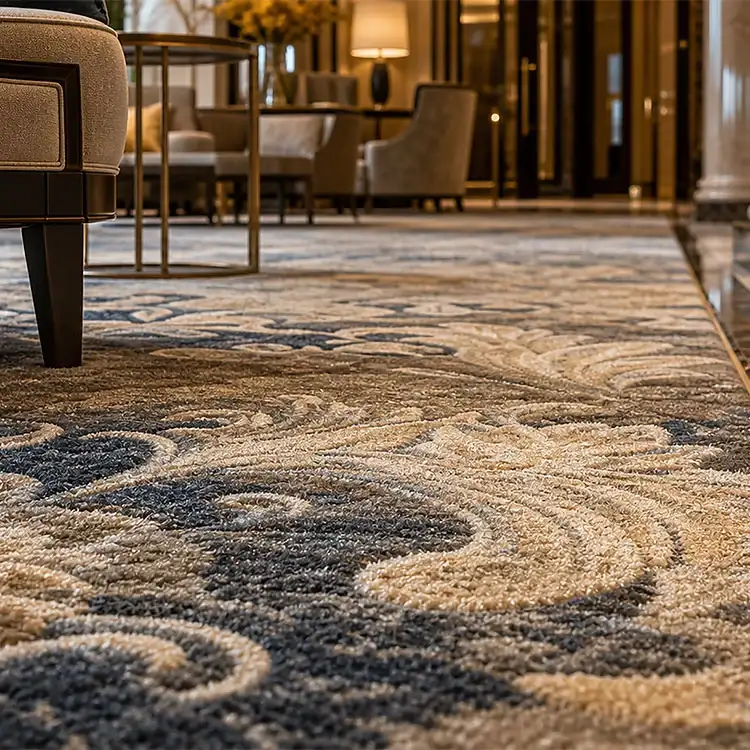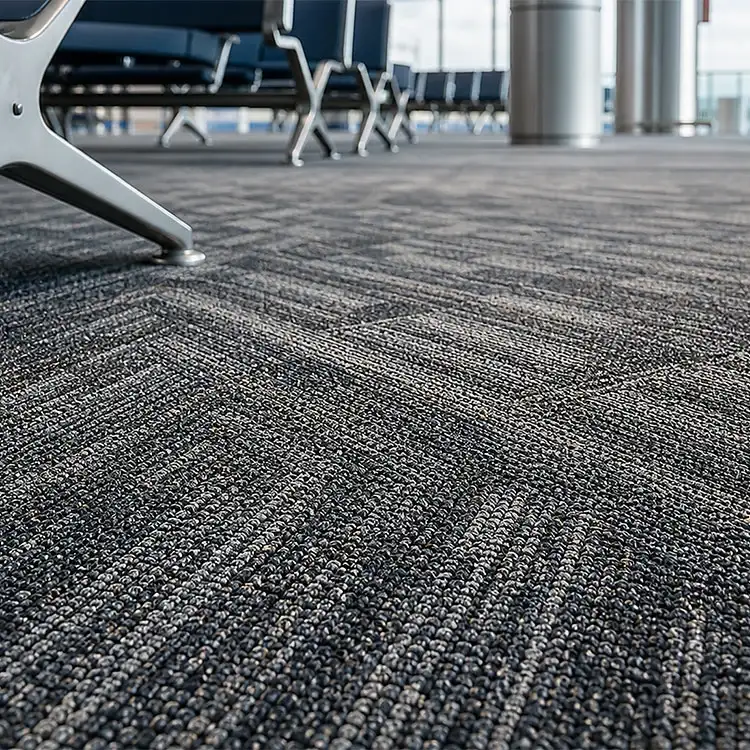
Do printed rugs fade? Indoors, usually not, provided the ink is UV stable and the base fibre is solution dyed. What actually kills colour is direct sunlight, repeated high temperature steam cleaning, and bleach. Every fading case I have been called out to investigate had a specific cause, and it was more often the cleaning method than the window. Below are the five real causes, the one laboratory number to demand from any supplier, how printed compares with woven and handmade rugs, and the maintenance rules I write into hotel and retail specifications to keep print sharp for a decade.
Alistair Leung
Carpet engineer, five years in commercial flooring, and technical support for a carpet manufacturer and wholesale supplier. He specifies and audits printed carpet in hotels, shops and event spaces, and has spent more time than he would like tracing colour loss back to a cleaning machine set too hot.
Fading is not a slow inevitability. In every case I have looked at, something specific caused it.
Ultraviolet light comes first. It breaks down the dye molecules in the printed surface, and a rug in direct sun through a south or west window will fade faster than the same rug in a shaded room. Rotation is the cheapest defence there is. High temperature steam cleaning is second and, in commercial buildings, the most destructive. Heat plus moisture drives dye migration, and a surface printed product cleaned repeatedly at high temperature goes dull across the whole floor rather than in one patch. Bleach and oxygen boosters third, because they strip pigment chemically, and a spotter that is perfectly safe on a solution dyed woven carpet can lift print from a surface printed one. Abrasion fourth, from beater bars and tracked-in grit, which is why suction-only vacuuming is written into every printed carpet specification I issue. Repeated over-wetting fifth, since saturating a printed product more often than its soil level requires dulls the surface gradually. Against all five, one number matters more than the rest. AATCC 16 is the standard lightfastness test, scored one to five where five means no fade, at a stated exposure time. I will not sign off a printed product for a sunlit or contract space below four at forty hours. I ask for AATCC 165 crocking at the same time, including wet crocking if the rug will be washed. A supplier who cannot produce those two numbers does not know how their own product behaves, and that is a reason to walk away whatever the price.
There is a widespread belief that printed always fades faster than woven. At the top of the market that is wrong. At the bottom it is right. Solution dyed printed carpet, where the colour lives in the polymer and is printed into the fibre rather than sitting on the surface, holds colour as well as most woven carpet. Injection printed nylon broadloom, where dye penetrates the pile, is very good indoors. Dye sublimation printed rugs are good indoors but become heat sensitive after printing, so cleaning temperature matters more than sunlight. UV printed mats sit at the surface, where abrasion is a bigger risk than ultraviolet. Hand knotted wool with chrome dyes is very good and stable. Hand knotted wool with natural dyes is beautiful and genuinely variable, and can shift with light in a way owners either love or regret. At the cheap end, surface printed decor rugs fade quickly, and that is where the reputation comes from. Construction and ink system decide fade resistance. Price band is only a rough proxy for both, so if colour retention matters, ask about the base fibre before you discuss the design.
On hotel, retail and event projects I put five rules in the specification and hand them to whoever holds the cleaning contract. Rotate or reposition rugs every three to six months so exposure is even, and on broadloom rotate the cleaning pattern rather than the carpet. Fit blinds or ultraviolet film wherever there is south or west glazing, because a printed floor in direct sun will fade no matter how good the ink is. Never steam clean above the manufacturer stated temperature limit, and get that limit in writing at order stage rather than during the first maintenance visit. Vacuum with suction only, since beater bars abrade printed pile. And blot spills instead of scrubbing, because rubbing physically removes print from the surface. One more point for buyers. Print fading is normally covered separately from pile wear, and the fading cover is frequently voided by improper cleaning. That makes the maintenance record a commercial document rather than paperwork. I have watched a claim get refused purely because a contractor ran a high temperature truck mount down a printed corridor. Keep the approved spotter list and the cleaning log with the warranty file.
Use this when a client asks whether printed is safe next to a window. The answer depends on the row, not the category.
| Construction | Fade resistance | Main risk | Minimum spec | Colour life |
| Solution dyed printed carpet | Excellent | Abrasion in traffic lanes | AATCC 16 rating 5 at 40 hrs | 8-12 yrs contract |
| Injection printed nylon broadloom | Very good | Cleaning temperature | AATCC 16 rating 4-5 plus max clean temp | 5-12 yrs contract |
| Dye sublimation printed rug | Good indoors | Heat after printing | AATCC 16 rating 4, no tumble dry | 3-8 yrs |
| UV printed mat | Good | Surface abrasion | AATCC 165 crocking data | 2-5 yrs |
| Surface printed decor rug | Poor to moderate | UV and washing heat | AATCC 16 rating 3 or better | 1-3 yrs in sun |
| Hand knotted wool, chrome dyes | Very good | Physical wear | Knot density and dye type stated | 20 yrs and beyond |
| Hand knotted wool, natural dyes | Variable | Light exposure | Dye type stated, avoid direct sun | 5-20 yrs, may shift |
In short, printed is not automatically the fading category. Cheap is. Specify a solution dyed base with a lightfastness rating of four or above and a printed rug will hold colour longer than most people expect, and a great deal longer than the surface printed rug it gets confused with.
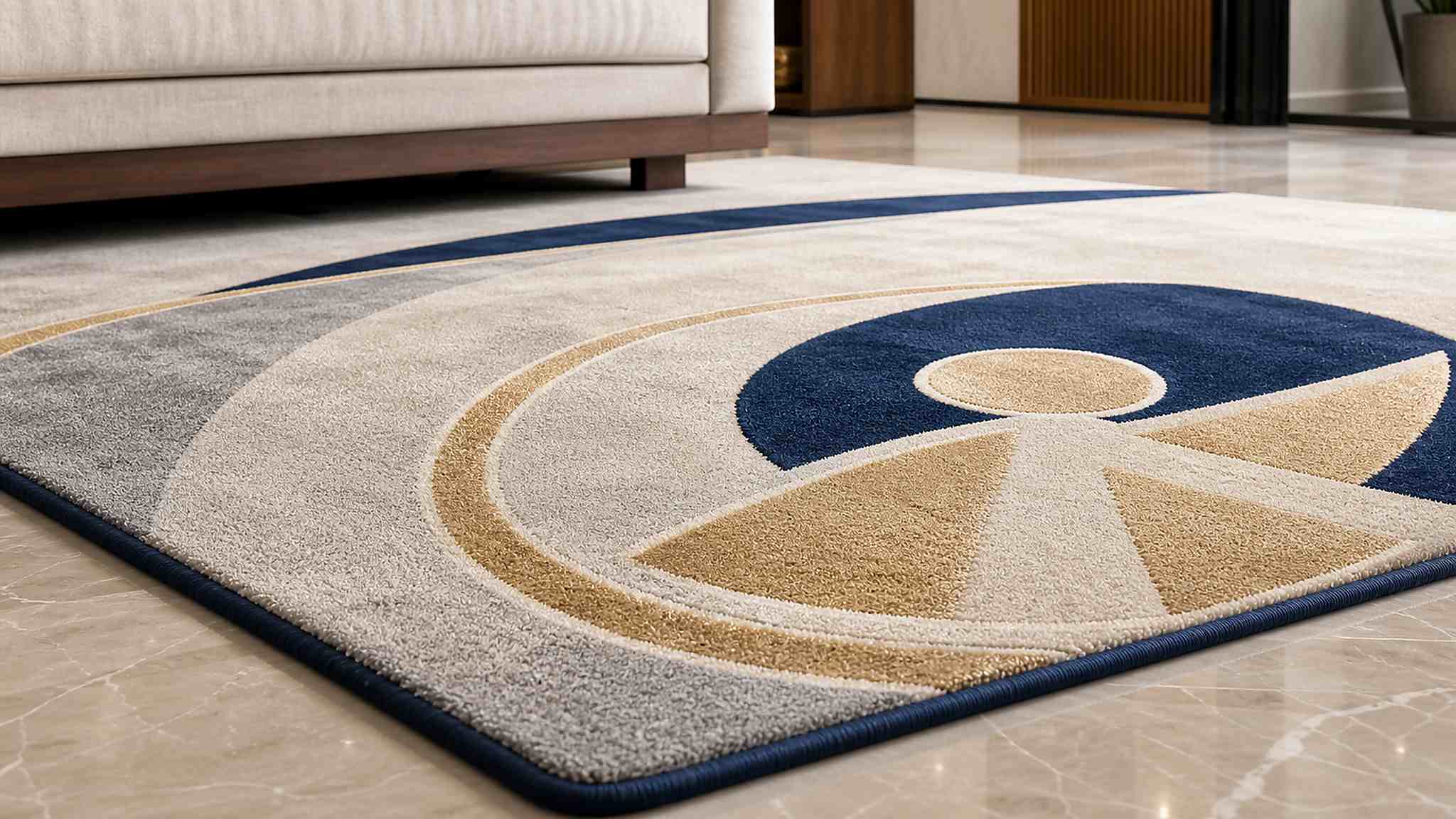
Every printed surface shifts slightly over decades, but with a lightfastness rating of four or five at forty hours and no direct sunlight, the change will not be visible within the life of the rug.
Yes, ultraviolet is the main cause. A rug in direct sun fades far faster than the same rug in shade, so rotate it periodically and use blinds or UV film on south and west glazing.
Not necessarily. Good printed carpet on a solution dyed base holds colour as well as most woven carpet. Cheap surface printed decor rugs fade faster, and they are the reason the whole category has a poor reputation.
Typically three to eight years residentially and five to twelve years in contract settings, depending on sun exposure, cleaning method and base construction. Rotation and correct cleaning matter more than what you paid.
Print fading is usually covered separately from pile wear, and that cover is often voided by improper cleaning such as high temperature steam, bleach or a non-approved spotter. Keep the spotter list and the cleaning log with the warranty documents.
Alistair Leung
Carpet engineer, five years in commercial flooring, working with a manufacturer and wholesale supplier on specification and installation support. This article is based on printed carpet installations he has specified and audited in hotels, retail and event spaces, and on the fading investigations that traced most colour loss back to cleaning temperature rather than the print.
Before specifying printed carpet next to a window, ask for the lightfastness data and a physical strike off. A screen image will not tell you how the ink behaves under your light, and the strike off plus the AATCC numbers is the only honest way to compare two printed products.
| Ask for | What arrives | How long |
| Sample pack | Printed swatches on solution dyed and surface printed bases, side by side | 3-5 working days |
| Colourfastness sheet | AATCC 16 lightfastness, AATCC 165 crocking, maximum cleaning temperature | Same day |
| Strike off | Your design printed on the specified base for approval before production | 5-10 days |
| Wholesale list | Printed broadloom, tile and rug pricing for contractors and distributors | 2-3 working days |
Send your layout and a photograph of the glazing to sales@example.com with printed rug fading in the subject. Tell us how much direct sun the floor gets and who will maintain it, and the recommendation will be a base and a cleaning regime that still looks right in year ten rather than the design that photographs best today.
-
Copyright © 2026 Zhaoqing Yunle International Trade Co., Ltd. All Rights Reserved.