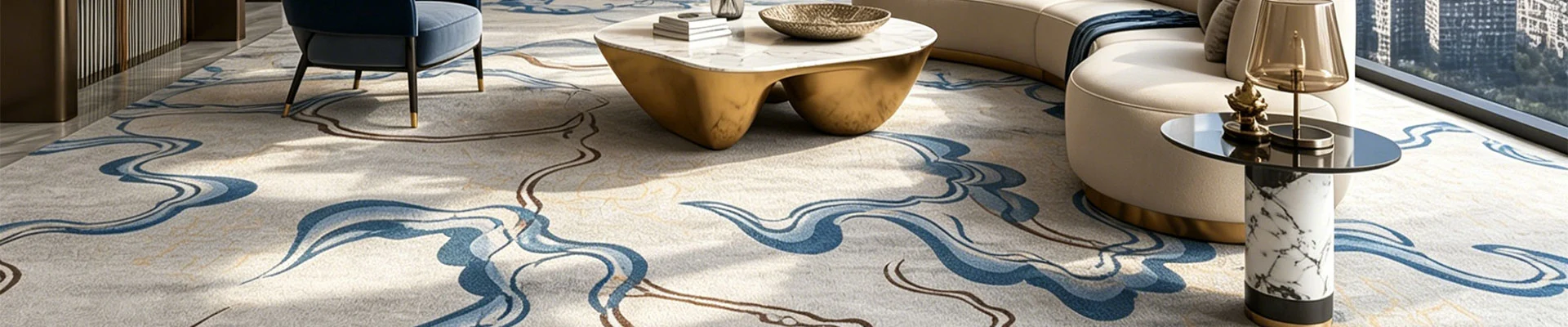
Products
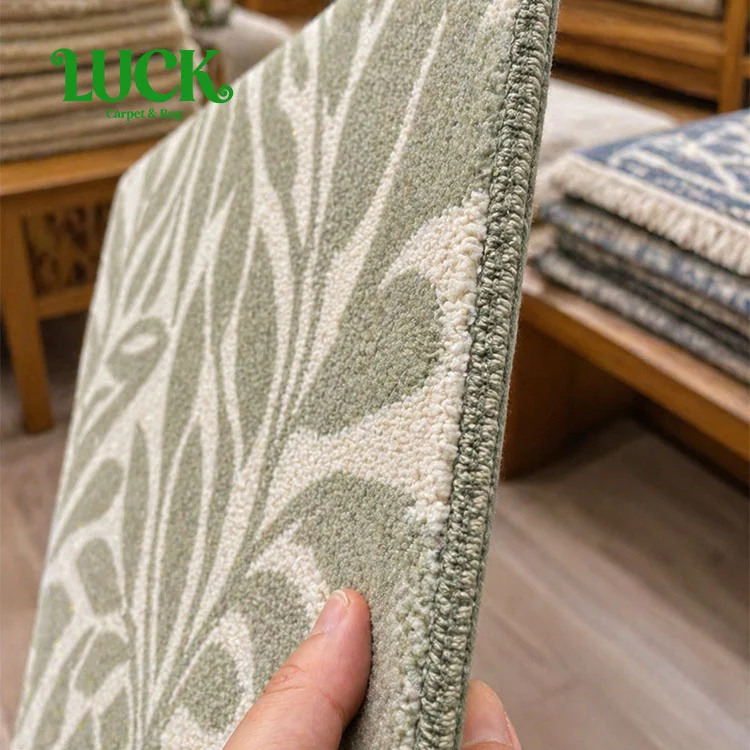
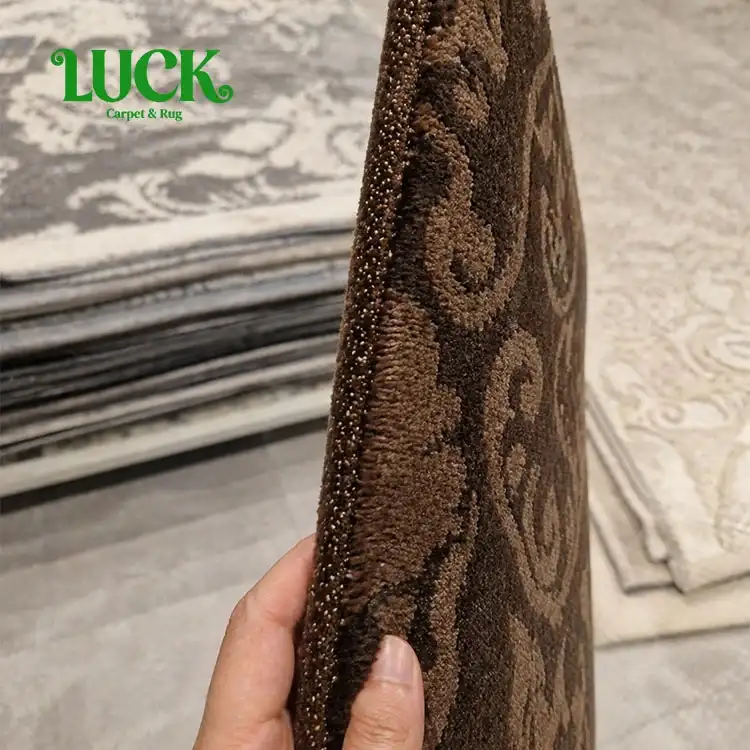
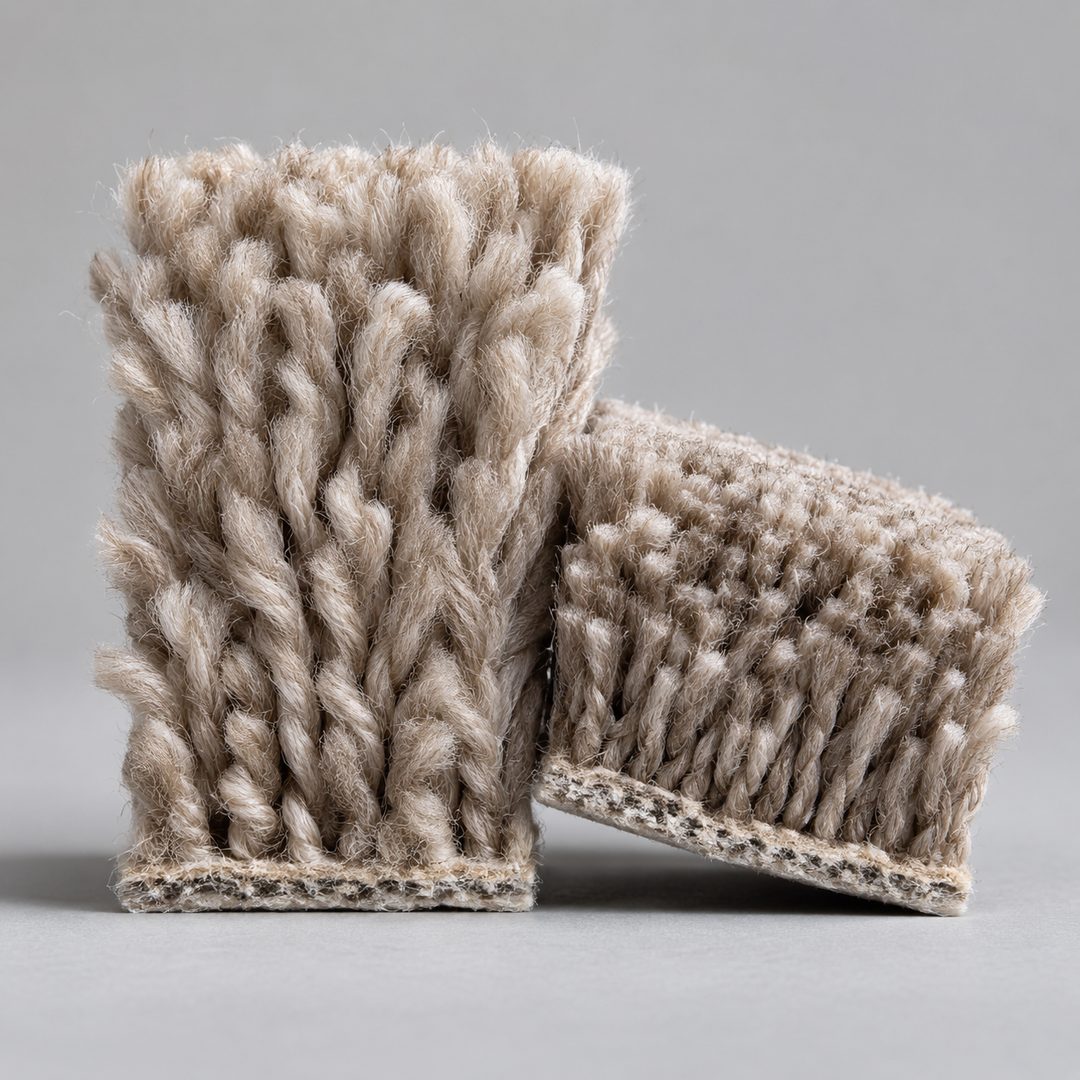
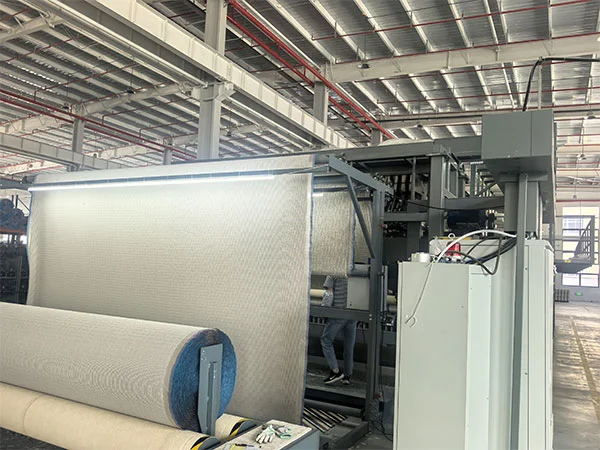
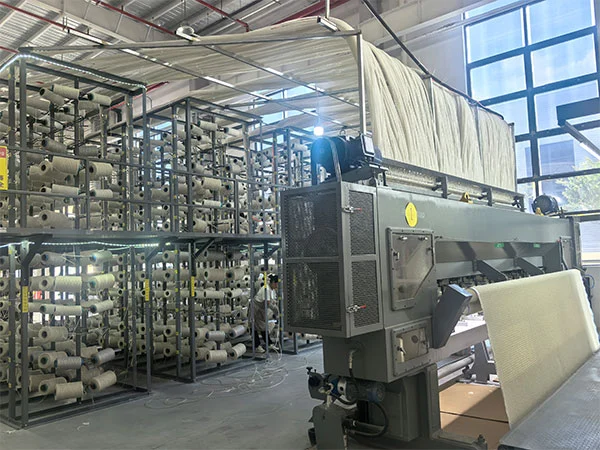
LUCK Carpet weaves this area rug on Wilton looms at our 26,000 m² plant in Foshan, Guangdong. The face is 100 % wool at 8 mm pile height and 1550 g/m², over a natural jute backing. Pile, warp and weft yarns are locked together during weaving, and the pattern is placed by the loom's Jacquard mechanism rather than printed on afterwards. Living rooms, family rooms, dining areas, studies and apartments are where this construction belongs.
Nothing sits loosely on top of a woven face, which is why it behaves differently from tufted and printed constructions. In a Wilton construction the pile yarn is carried into the foundation and held by the weft, so a chair drawn back across the rug pulls against anchored yarn instead of dragging tufts out of a backing cloth. Density does the rest: at this face weight the pile resists matting on the walking line between a sofa and a door.
Wool brings its own advantages to a room used by everyone. The fibre absorbs moisture vapour without feeling damp, so it buffers the humidity swings of a heated house and stays warm underfoot in winter. It also hides soil well, because light scatters across the fibre scales instead of reflecting off a flat printed surface. Abrasion testing to ISO 12947-2 at 5 kPa averaged 27,600 rubs on our last eight batches, above the 22,000 rub floor this family is rated to.
The Jacquard mechanism is the reason pattern edges stay sharp. Colours are carried as separate yarn positions and lifted to the surface where the drawing calls for them, so there is no ink layer to crack and no print registration to drift across a three metre rug. Colour runs through the depth of the pile, which is why a worn patch on a woven wool rug keeps its colour.
Some numbers explain why a woven rug holds its shape. Pile yarn withdrawal to ISO 4919 measures 33 N on this construction, the force needed to pull a pile tuft out of the foundation. Dimensional change after wet cleaning to ISO 2551 stays at or below 0.25 %. Rub fastness to ISO 105-X12 records Grade 4, light fastness to ISO 105-B02 records Grade 5, and the construction is classified Bfl-s1 under EN 13501-1.
Every value below was measured on finished rugs in our Foshan QC lab, not copied from a fibre supplier datasheet. Read Width / Size as the made-to-order row: the two standard formats cover most family rooms, and anything else is woven to your drawing.
| Style | Wilton Area Rug for Home |
| Yarn type | 100 % Wool |
| Pile Height | 8 mm |
| Pile Weight | 1550 g/m2 |
| Backing | Natural jute |
| Fire Resistance | Bfl-s1 (EN 13501-1) |
| Application | Living Room, Bedroom, Dining Area, Study, Apartment, Family Room |
| Width / Size | Made to order; standard 1.6 m x 2.3 m, 2.0 m x 3.0 m and custom sizes |
| Pattern | Custom design available (artwork supplied by buyer, strike-off approved before production) |
| Surface / Technique | Woven (Wilton) |
Family rooms are the hardest rooms in a house to specify for. They take food, pets, bare feet, board games and furniture that moves. This rug is built for that workload, and the three sections below explain what it does well and where it needs help from the buyer.
Two properties make a woven wool face right for a busy room. The first is recovery: wool fibre bends under a foot and springs back, so pile on a walking line returns to height instead of crushing flat the way a low printed surface does. The second is soil hiding, which is why a mid-tone woven rug looks presentable for years.
What the construction needs is a base. A natural jute backing gives structure and flatness rather than grip, so on smooth timber, tile or vinyl we ask buyers to add a felt underlay. A 6 mm felt pad under a rug of this weight adds cushioning, reduces footfall noise and keeps the rug from creeping when a child slides across the floor.
Room by room, the logic differs. A living room rug should reach the front legs of the sofa and both armchairs, so the seating group reads as one zone. A dining rug needs 60 cm of rug beyond every table edge, because that is how far a chair travels when somebody stands up. A study rug sits under the desk chair, and family rooms take the largest format the floor allows.
Traffic routes matter as much as furniture. Leave 80 cm of clear floor along the main path through a room, and keep 20 to 45 cm of exposed floor around the rug so the space reads as framed rather than covered. A rug that stops short of a doorway leaves a bare strip where everybody walks. Jute edges are squared to the drawing, so a border can be aligned with a sofa.
Spot cleaning a woven wool face is straightforward until somebody pours too much liquid onto it. The mistake is soaking the spot. Wool wicks moisture sideways and downwards, and the ring you see the next morning is dried detergent carried to the edge of the wet area rather than a stain. Blot from the outside in with a clean cloth and use a pH-neutral wool cleaner.
Jute is what limits how wet you can go. It is a natural fibre and does not enjoy standing water, so a spill should be blotted and then dried with air moving across both faces. For a serious spill, lift the rug, dry the floor, and dry the rug flat rather than hanging it over a line, which distorts the edge.
A family in Melbourne's inner east replaced a printed rug that had gone grey along the sofa line with a woven wool Wilton rug for a 46 m² living and dining space, plus four smaller rugs for a study and three bedrooms, 68 m² in total. The house holds two children, a labrador and a north-facing wall of glass. The brief asked for a mid-tone grey-green pattern that would not show paw marks.
We wove the five pieces in one dye lot so the living and dining rugs matched under the same light, squared each edge to the layout drawing and shipped everything rolled. A 6 mm felt underlay went under the two largest rugs. Twenty months later the owner sent measurements: pile height on the main walking line read 7.6 mm against the 8 mm specification, still inside the +/- 1 mm tolerance.
Our Foshan QC lab tests this construction on every production batch, and the reports name the method: abrasion to ISO 12947-2 at 5 kPa, pile yarn withdrawal to ISO 4919, wet and dry rub to ISO 105-X12, light fastness to ISO 105-B02, and dimensional change after wet cleaning to ISO 2551. Fire performance is classified Bfl-s1 to EN 13501-1. Where a buyer needs a third-party document, SGS, Intertek or BV can inspect at our plant. The construction travels with us to DOMOTEX Hannover and to Shanghai Hospitality Design Week each year. Construction is warranted for 10 years.
Is a wool Wilton rug practical in a house with a dog?
More practical than most. Wool hides soil, the woven face releases hair under a vacuum, and the pile is anchored rather than tufted, so claws do not pull yarn out. Two adjustments help: choose a mid-tone or patterned design instead of a pale solid, and blot muddy paw prints while they are damp rather than letting them dry into the pile.
Does this rug need an underlay?
On timber, tile, laminate or vinyl, yes. The jute backing provides structure and flatness but very little friction, so a felt pad keeps the rug in place, adds cushioning and reduces footfall noise. Over fitted carpet no pad is needed. Keep rubber pads away from freshly finished wood and from underfloor heating, where heat and plasticiser can mark the finish.
How long does a made-to-order woven rug take?
Allow 35 to 40 days of production after the strike-off is approved, plus 7 to 10 days for the strike-off itself. Designs using several loom colours take longer than repeats of an existing pattern. Minimum order is eight rugs per design, and mixed sizes from a single dye lot are the normal way to order for a whole house.
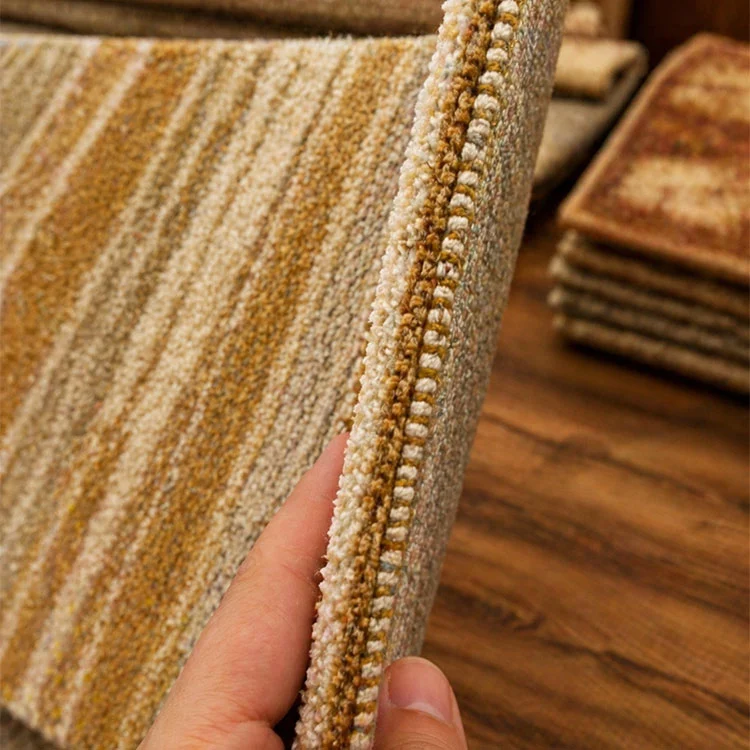
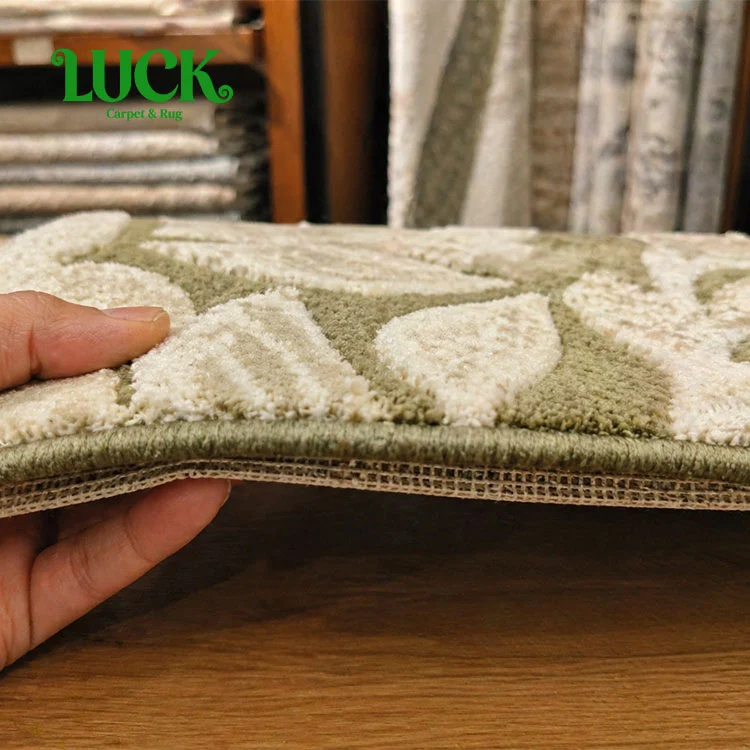
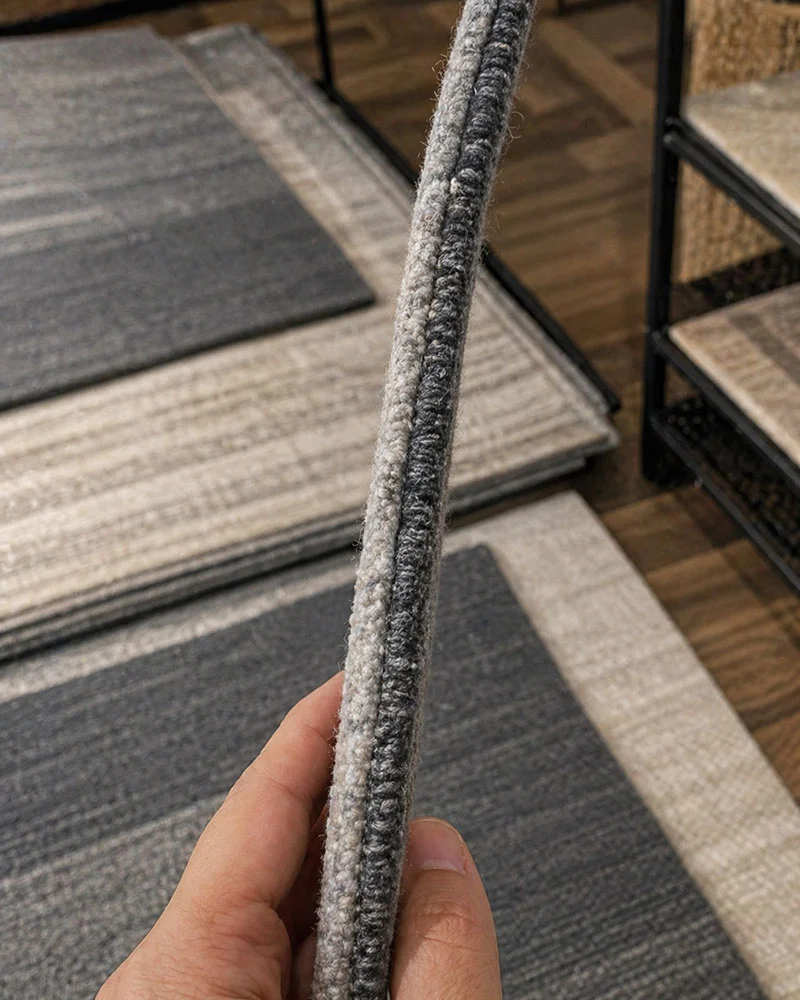
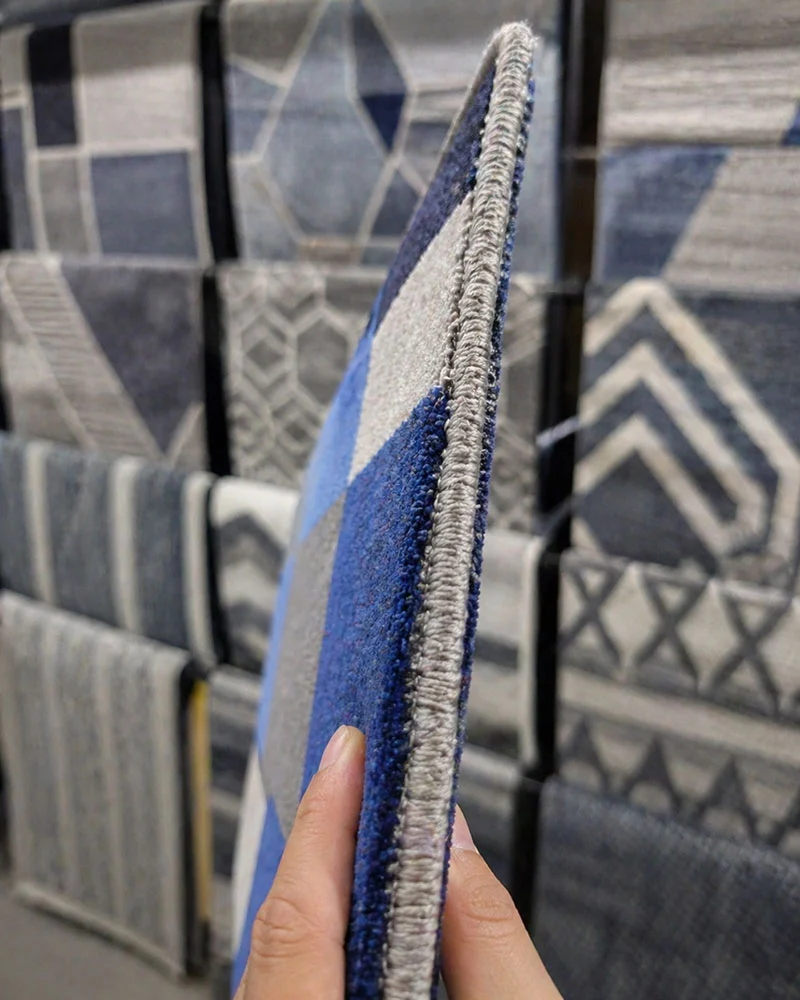
This pile has a firm, slightly dry hand, and pattern edges stay sharp because colour is woven rather than printed. Border lines are squared to the drawing, edges are hand-finished, and the jute back shows the woven structure when the rug is lifted.
Rugs ship rolled on a core and wrapped, with design code, size, pattern direction and care note on the label, and large formats are always rolled so the first night on the floor is flat. Use a felt underlay on hard floors beneath it. Minimum order is eight pieces per design, with 35 to 40 days of production after strike-off approval. Send LUCK Carpet your layout drawing and we will quote the whole house in one dye lot.
Address
Shidaigongguan Building No.5 Office 1212, Haicheng east road, Duanzhou District, Zhaoqing City, Guangdong Province, China
Tel
Copyright © 2026 Zhaoqing Yunle International Trade Co., Ltd. All Rights Reserved.