Hand knotted against hand tufted is the distinction that matters most in the handmade rug market, and the one sellers blur hardest. Both are genuinely made by hand. One is tied knot by knot onto a woven foundation and lasts thirty to fifty years. The other is punched into a canvas, glued and sheared, and lasts eight to fifteen. Below is how each is actually built, how to tell them apart in about ten seconds by turning the rug over, which one suits a home, a hotel or a showroom, and a side by side table of construction, density, repairability and cost.
Alistair Leung
Carpet engineer, five years in commercial flooring, working with a manufacturer and wholesale supplier on specification and quality control. He has valued and inspected handmade rugs for homes and hotel projects, and he starts every valuation by turning the rug over before anyone mentions a price.
Both products are handmade, which is why both are sold as handmade. The word conceals a five to eight times price gap and a three to four times difference in how long the rug will last.
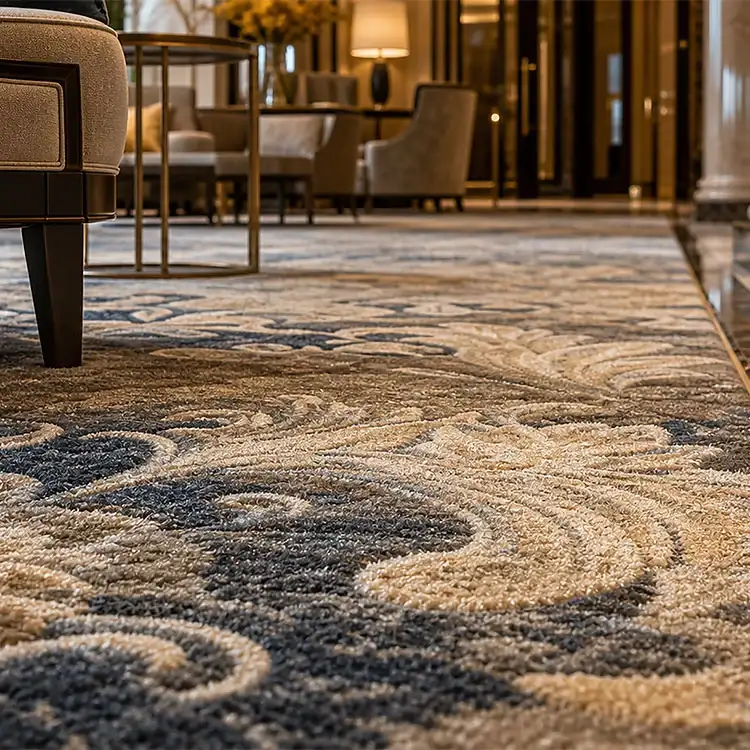
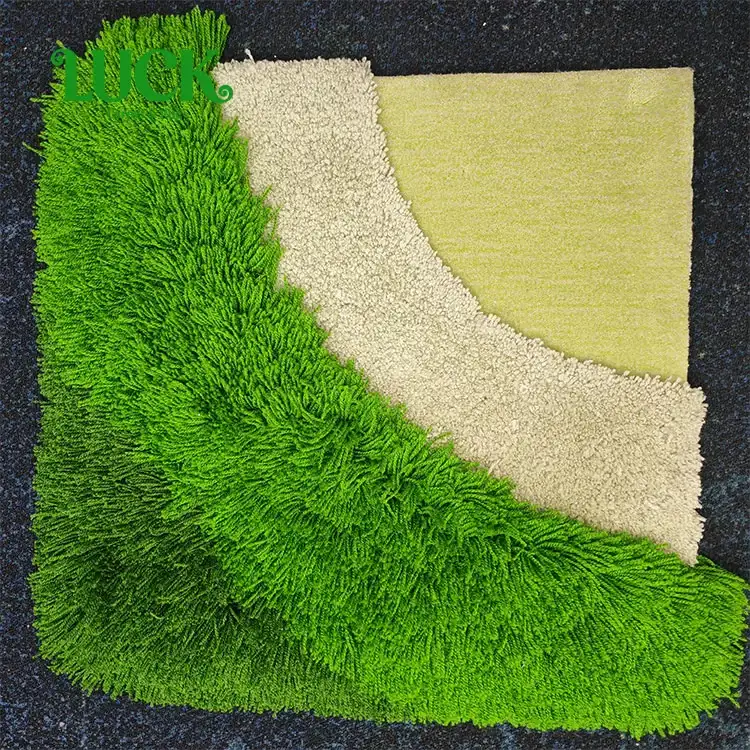
A hand knotted rug is built on a loom. The weaver ties individual knots around the warp, passes a weft thread, beats the row down, and starts the next one. The foundation, usually cotton, is woven as the rug grows, and the pile is the knots themselves. Density is measured in knots per square inch, KPSI, and the range runs from around sixty for a village weave to over a thousand on a fine silk piece. A single eight by ten foot rug at one hundred and fifty KPSI holds roughly one point seven million knots and takes two or three weavers four to nine months. Because the structure is knots on a woven foundation, it can be repaired. A worn patch gets re-knotted, a fringe gets rewoven, and the piece can be washed, re-stretched and revalued. Hand tufting works differently. The weaver uses a tufting gun to punch loops of yarn through a canvas backing, following a printed or projected pattern. Those loops are sheared to a uniform height, then the back is coated in latex and covered with a secondary cloth. Faster, less skilled, and it produces a plush thick rug at a fraction of the price. What it cannot do is survive saturation, because the latex holding the pile is also the layer that fails first. And it cannot be repaired, because there are no knots to replace.
Turn it over. I use this on every rug I inspect and it has not let me down yet. A hand knotted rug shows an irregular but visible grid of knots on a woven foundation, and the design usually shows faintly in reverse because the knots carry it through. A hand tufted rug shows glued canvas under a fabric secondary backing, with no knot structure anywhere. Three secondary checks are worth doing as well. Look at the edge: hand knotted rugs usually have a hand finished selvage, and the fringe is often part of the warp rather than sewn on. Look at pile height: uniform plush across the whole rug suggests tufted, while subtle variation and carving suggest knotted. Then ask for the KPSI. Anyone genuinely selling hand knotted rugs will give you a number immediately. A seller who talks around handmadeness and cannot produce a KPSI is almost always selling tufted goods, and the price will confirm it inside a minute.
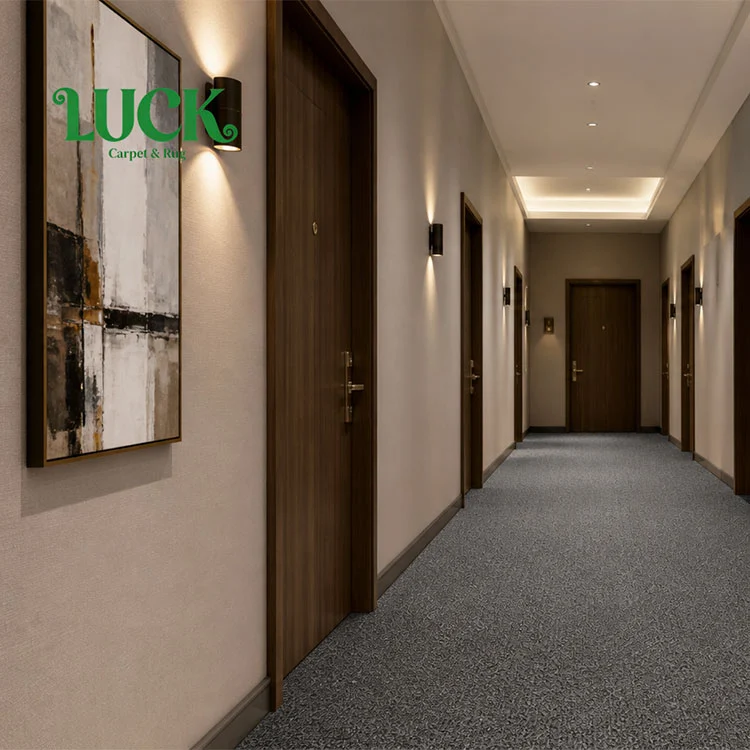
It depends on your horizon, not your taste. Buying for a home you intend to keep for a decade or more, and especially if you want something that can be repaired and revalued later, go hand knotted. If you want fine curvilinear or pictorial detail, go hand knotted at two hundred KPSI or above, because tufted construction cannot hold that drawing. Furnishing a rental, a staged property or a short lease, go hand tufted and accept the shorter life, because in that scenario the rug is not the asset. For contract work I specify hand knotted wool at a hundred KPSI and up in corridors and suites, since a rug that can be re-knotted and washed in place usually costs less across fifteen years than three rounds of tufted replacement. If a large size has to come in under a thousand dollars, hand tufted or machine made is the honest answer, and I would rather say that than sell you a tufted rug described as knotted. For wholesale buyers, ask your handmade area rug supplier for a KPSI range per collection rather than per rug, so specification and pricing stay consistent across a whole project.
Send this to two suppliers who are quoting you very differently. If the numbers are more than a factor of three apart, check this table before assuming one of them is simply expensive.
| Criterion | Hand knotted | Hand tufted |
| How it is made | Individual knots tied on a woven warp and weft | Yarn punched into canvas, sheared, then glued |
| Foundation and backing | Cotton, wool or silk, woven | Canvas plus latex plus secondary cloth |
| Density measure | KPSI, typically 60 to 1,000 plus | Pile height and pile weight |
| Reverse side | Visible irregular knot grid | Glued canvas, no knots |
| Feel | Dense, firm, sculpted | Plush, thick, soft |
| Repairable | Yes, re-knotting and re-fringing are routine | No, the latex layer prevents it |
| Service life | 30 to 50 years and beyond | 8 to 15 years |
| Custom sizes | Woven to order, 8 to 16 week lead time | Made to size in 3 to 8 weeks |
| Price, 8 x 10 ft | $1,500 to $10,000 and up | $300 to $1,200 |
| Value retention | Good, and can appreciate if antique or signed | Minimal resale value |
Care follows the construction. Hand knotted rugs want suction-only vacuuming, rotation every three to six months, and a professional hand wash every three to five years. Hand tufted rugs need the same vacuuming discipline but must not be saturated, because the latex layer can delaminate, so professional cleaning every two to three years is realistic. Expect some shedding from tufted rugs for the first six to twelve months.
A person operates the tufting gun, so yes in that narrow sense. It is a different construction from hand knotted, with a much lower price and a much shorter life. Both statements are true, which is exactly why the confusion survives.
For longevity, repairability and value retention, yes. For comfort at a lower price, hand tufted is perfectly reasonable and I specify it for rentals and staged properties. Better depends on what you are optimising for.
Usually three to eight times a comparable hand tufted rug in the same size. An eight by ten foot hand knotted wool rug starts around fifteen hundred dollars, against three hundred to twelve hundred for hand tufted.
Yes, differently. Hand knotted wool sheds loose fibre for two to six months while the pile settles. Hand tufted rugs can shed more and for longer, because shearing cuts fibres that then work loose from the latex backed structure.
Professionally cleaned, yes. Saturated, no. Immersion softens the latex bonding the pile to the canvas, and once that layer goes the rug cannot be repaired. Hand knotted rugs, by contrast, are routinely washed by immersion.
Alistair Leung
Carpet engineer, five years in commercial flooring, working with a manufacturer and wholesale supplier on specification and quality control. This article comes from handmade rugs he has inspected and valued for residential clients and hotel projects, and from the reverse side checks and KPSI questions he uses to work out what a rug actually is before anyone discusses price.
Comparing two handmade rug quotes? Send both specifications and I will tell you what each one really describes. Starting from scratch? Tell us the room, the size and the traffic, and samples will come with the KPSI and construction stated in writing so you can compare like with like.
| Ask for | What arrives | How long |
| Sample pack | Hand knotted and hand tufted swatches side by side | 3-5 working days |
| Construction report | KPSI, fibre, knot type and origin in writing for any rug you send us | 2-3 working days |
| Custom size quote | Price and lead time for a rug woven to your dimensions | 3-5 working days |
| Wholesale list | Container and programme pricing for retailers and hotel groups | 2-3 working days |
Send photographs of the front and back of any rug you are considering to sales@example.com with handmade rug check in the subject, and you will find out which construction it is and roughly what it should cost. Buying new? Give us the room and the budget, and we will be straight about which construction that budget actually buys.
Copyright © 2026 Zhaoqing Yunle International Trade Co., Ltd. All Rights Reserved.