News
Author: Young Lin | Role: Export & Project Planning Lead, Oneluck Carpet Factory | Updated: October 2026
Verified by our carpet tile production team, Zhaoqing | Bitumen & PVC backing with fiberglass scrim | Loose Lay Approved
Carpet tile backing controls dimensional stability, moisture tolerance, impact sound reduction and the installation method, so it should be selected from the subfloor condition rather than from the tile face. Our tiles use bitumen or PVC compound reinforced with fiberglass, and the fiberglass component is what limits movement when temperature and humidity change. Both options hold their dimensions within 0.2% of nominal size and sit flat without the dome or ripple effects seen in less stable materials. In our experience the backing question surfaces during installation far more often than during specification, which is exactly when it is most expensive to answer.
Buyers spend a great deal of time choosing the carpet tile face and very little on the backing, yet the backing decides whether the floor stays flat, whether tiles stay aligned and whether the installation can proceed without adhesive. Two carpet tiles with the same face fiber and the same color can behave completely differently on a humid ground floor or on an upper level where impact noise matters. The face is what the client sees on the sample board; the backing is what the contractor deals with two years later.
This guide explains the backing systems we produce, which condition each one suits, and how to match backing to your installation method. It covers standard interior floors, hotel and hospitality areas, upper floors needing acoustic performance, and ground floor or below-grade installations. It does not cover broadloom underlay selection, which follows a different set of rules and is normally specified by the flooring contractor.
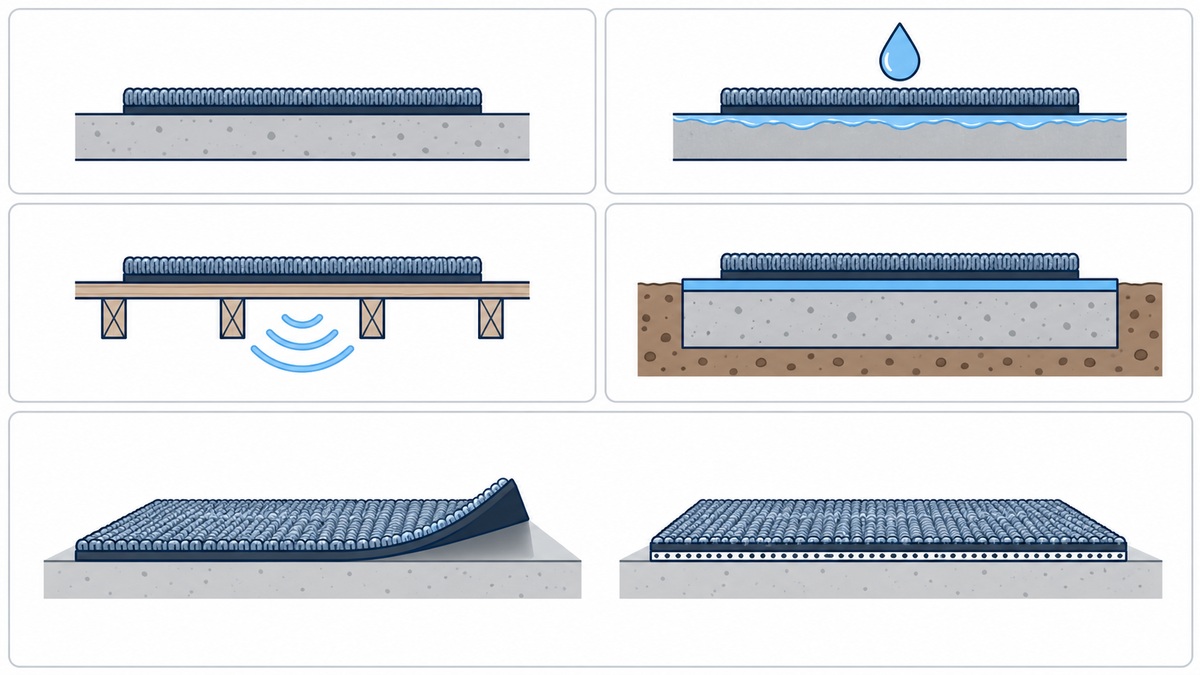
Figure 1: Carpet tile backing options mapped to subfloor condition and installation method. Source: Oneluck Carpet backing specification records, 2026.
Every backing recommendation we issue is built from four inputs: floor level, subfloor moisture, cleaning routine and acoustic requirement. The comparison below sets out which option answers each condition, and how it is installed:
| Backing Type | Suits | Key Property | Installation Method |
| Bitumen compound with fiberglass | Most interior projects | Standard stability for general use | Adhesive-free loose lay or tackifier |
| PVC compound with fiberglass scrim | Hotels, wet cleaning areas | Holds dimensions within 0.2% of nominal | Adhesive-free loose lay or tackifier |
| Acoustic backing | Upper floors needing quiet | Higher mass per square meter | Adhesive-free loose lay or tackifier |
| Moisture barrier backing | Ground floor and below grade | Limits moisture movement | Adhesive-free loose lay or tackifier |
| PVC backing on broadloom | Corridors and humid areas | Flat laying under rolling loads | Full glue down or double stick |
| Jute backing on broadloom | Traditional woven installations | Natural backing for Axminster | Full glue down or stretch-in |
Our tiles with bitumen or PVC compound backing are produced in 500×500 mm and 600×600 mm formats with a total weight between 3500 and 5200 g/m². Total weight is worth checking at specification stage, because the same format in two different backings can sit at opposite ends of that range, and the heavier carpet tile changes both the carton count and the payload calculation for the container.
Send us the floor level, the subfloor condition and the cleaning routine. Oneluck Carpet will recommend the backing and the installation method, and confirm the tile format that suits both.
Request a Free Carpet Tile Backing Review
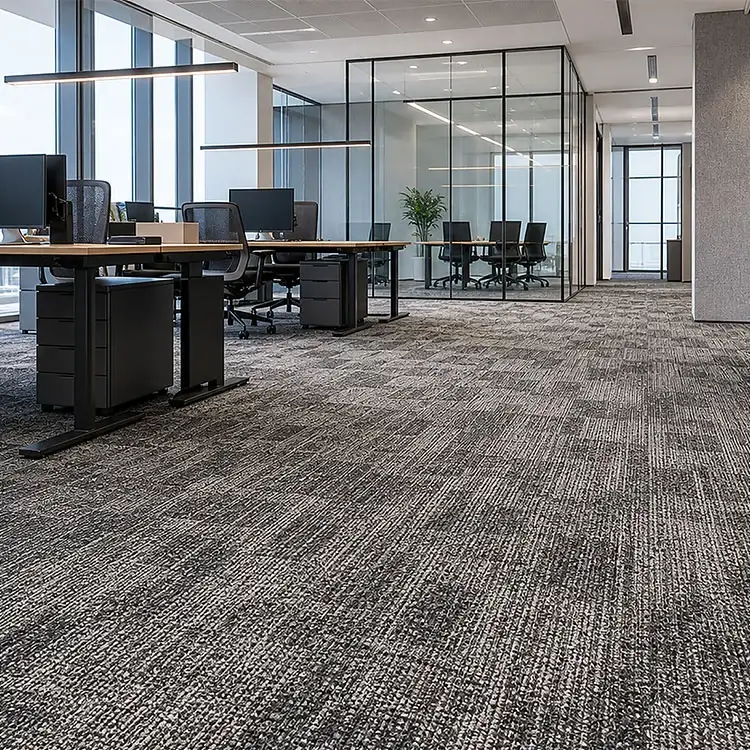
Standard bitumen backing with fiberglass reinforcement suits most interior applications, and it is the option we specify for general office and commercial carpet floors. The carpet tile sits flat on the subfloor without the dome or ripple effects that appear in less stable backing materials, which is the single most visible backing failure on a finished floor. Bitumen also keeps the tile weight at the lower end of our range, so a given container carries more square meters than it would with a heavier compound, and that difference is worth having on a large order where freight is a real line in the budget.
Where a project has no specific moisture, acoustic or cleaning requirement, bitumen remains the practical default. We do not upgrade a specification simply because a higher grade exists. What we do instead is confirm the four inputs first, because a general office floor on an upper level with a dry subfloor and a dry cleaning routine does not benefit from a moisture barrier, and paying for one reduces the area that fits into each container for no gain on site.
PVC backing should be selected where moisture and frequent cleaning are part of daily use, which in practice means hotels and hospitality areas. PVC backing resists water absorption, making it suitable for hotel environments where spills and wet cleaning are frequent, and PVC compound reinforced with fiberglass scrim holds its dimensions within 0.2% of nominal size across the temperature and humidity fluctuations hotels experience. It also sits flat without the dome or ripple effects seen in less stable materials, which matters along corridors where housekeeping trolleys apply concentrated pressure at the carpet tile joints. Where a project runs a nightly wet cleaning routine through public areas, we specify PVC as the default rather than as an upgrade.
Acoustic backing should be specified for upper-floor installations, and moisture barrier backing for ground floor or below-grade installations. Acoustic backing with higher mass per square meter is available for upper-floor installations requiring impact sound reduction. For ground-floor installations where subfloor moisture is a concern, we specify backing with integrated moisture barrier properties, and the adhesive-free loose lay method eliminates wet adhesive emissions where air quality sensitivity is high. In an occupied building, that method also shortens the installation window, because there is no adhesive cure time to schedule around and no solvent smell to manage with the tenant in place.
Backing choice also changes what the installer can do with the carpet floor afterwards. A tile laid loose can be lifted and replaced individually when a single tile is stained or damaged, which matters on a floor where chairs, trolleys and cleaning machines concentrate wear in predictable lines. A fully bonded tile resists lateral movement at the edges, so we specify adhesive where a floor receives heavy rolling loads or where the perimeter will be subject to dragging furniture. That is a decision about how the floor will be used rather than about the backing grade, and it is worth confirming with the facilities team before the order is placed.
1. Confirm the floor level and subfloor moisture: Ground floor and below-grade installations need backing with integrated moisture barrier properties, while upper floors with a noise requirement need higher mass acoustic backing.
2. Name the backing, not just the tile: State bitumen compound or PVC compound with fiberglass reinforcement on the order, since face fiber and color do not describe the layer that controls stability and moisture tolerance.
3. Confirm the installation method: Adhesive-free loose lay and tackifier both work with our tile constructions, and loose lay avoids wet adhesive emissions in occupied buildings and shortens the programme.
4. Check the total tile weight: Total weight between 3500 and 5200 g/m² moves the carton count for the container, so confirm which backing you have quoted before the loading plan is fixed.
What is the most common carpet tile backing?
Bitumen compound with fiberglass reinforcement is the most widely specified option for general commercial interiors. It is also the lighter option in our range, which means more square meters per container on a large order where freight cost matters, and it sits flat without the dome or ripple effects seen in less stable materials. Where a project has no moisture, acoustic or heavy cleaning requirement, it remains the practical default.
Is PVC backing better than bitumen?
PVC suits areas with frequent cleaning and moisture, while bitumen remains a practical choice for standard interior floors. Neither is universally better, so we select on subfloor condition and cleaning routine rather than on grade, and we will say so if a project is paying for moisture resistance it does not need. The heavier compound also changes the carton count, so the loading plan should be built after the backing is confirmed rather than before.
Can carpet tiles be installed without adhesive?
Yes. Our tiles support adhesive-free loose lay or a tackifier, and the loose lay method also avoids wet adhesive emissions. In occupied buildings that usually shortens the installation window as well, since there is no adhesive cure time to schedule around, and individual tiles can be lifted later for spot replacement along a wear line.
Which backing reduces noise between floors?
Acoustic backing with higher mass per square meter is available for upper-floor installations requiring impact sound reduction. Tell us the floor build-up and the acoustic target and we will confirm the mass that suits it, because the backing is only one part of the floor assembly that controls impact noise, and the ceiling below usually carries most of the remaining performance. On a hotel corridor above guest rooms, we would normally review the whole build-up rather than the backing alone.
What backing should be used on a ground floor?
We specify backing with integrated moisture barrier properties for ground-floor or below-grade installations. Moisture testing of the slab before installation is still worth doing, because no backing compensates for an active water problem, and a barrier that traps moisture can create a worse failure than one that lets it pass.
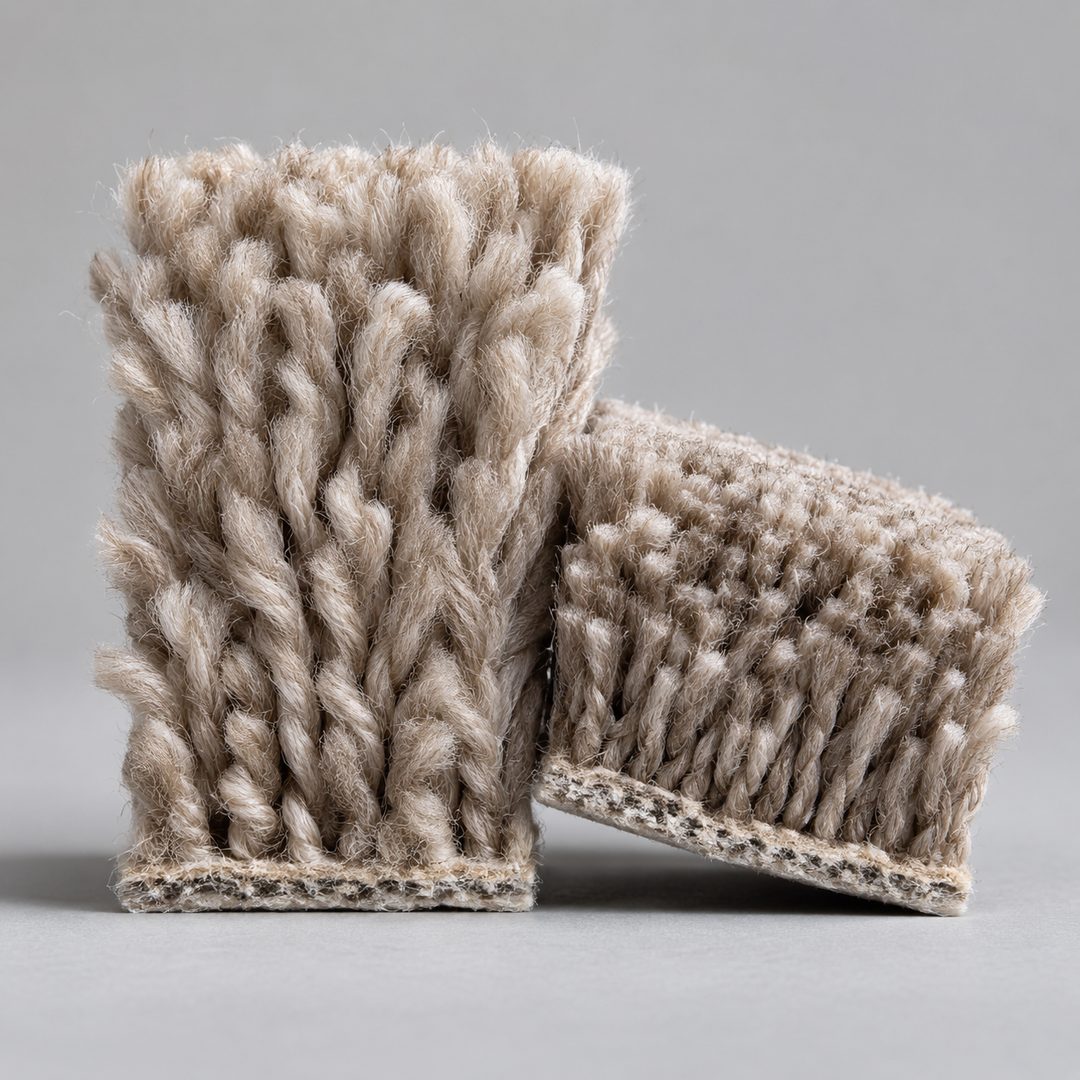
Backing constructions: bitumen or PVC compound with fiberglass reinforcement or scrim.
Dimensional stability held within 0.2% of nominal tile size across temperature and humidity change.
Tile formats 500×500 mm and 600×600 mm, total weight 3500 to 5200 g/m².
Installation methods: adhesive-free loose lay or tackifier for tile, glue down or stretch-in for broadloom.
What Should a Carpet Specification Sheet Include? : the six specification lines that control performance, including backing and dimensional tolerance.
Does Carpet Pile Weight Determine How Long It Lasts? : how backing and density work with pile weight to hold appearance under traffic.
What Carpet Works in Hospitals and Healthcare Facilities? : backing choice where wards are refurbished in stages and cleaning is aggressive.
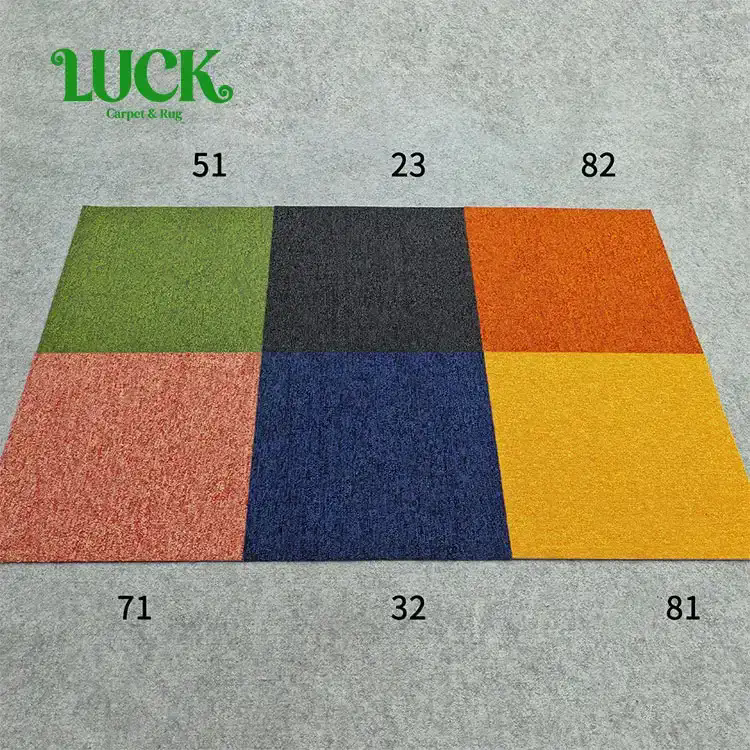
Carpet Tile Collection : 500×500 mm and 600×600 mm tiles in bitumen and PVC backing, ready for loose lay.
Oneluck Carpet produces Carpet Tile in bitumen and PVC compound backing, both with fiberglass reinforcement and held within 0.2% of nominal size. Send your subfloor details and we will confirm the backing.
Send Your Subfloor Details for a Backing Recommendation
Copyright © 2026 Zhaoqing Yunle International Trade Co., Ltd. All Rights Reserved.