Products
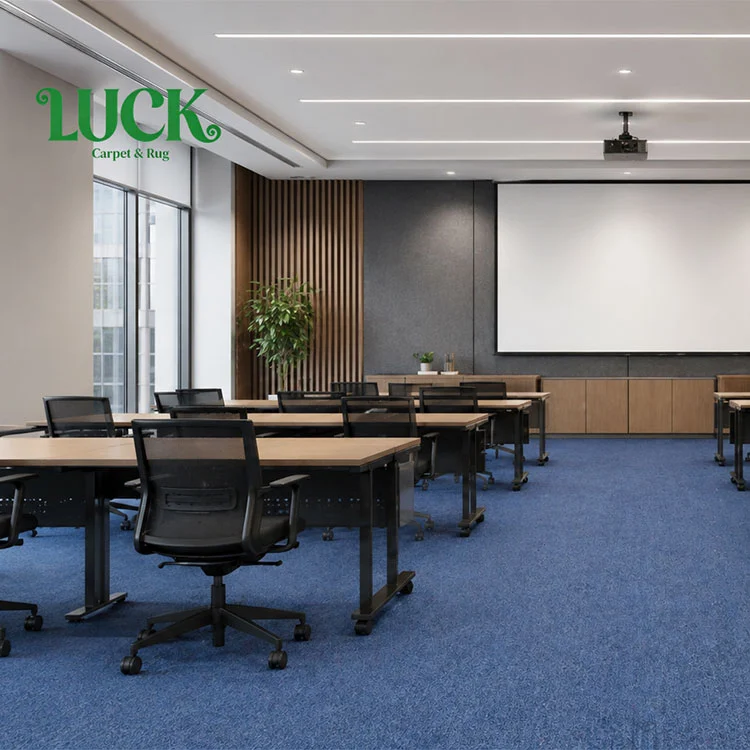
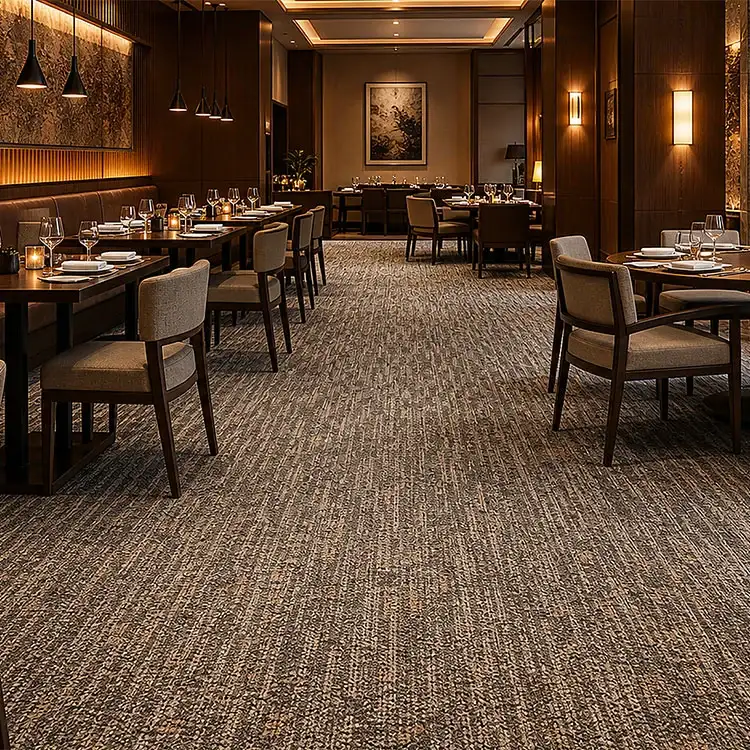
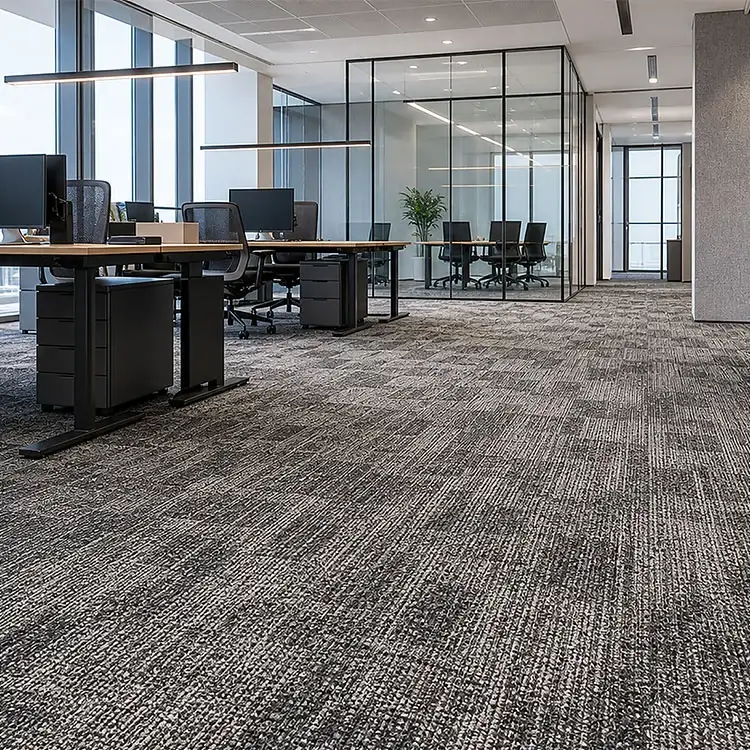
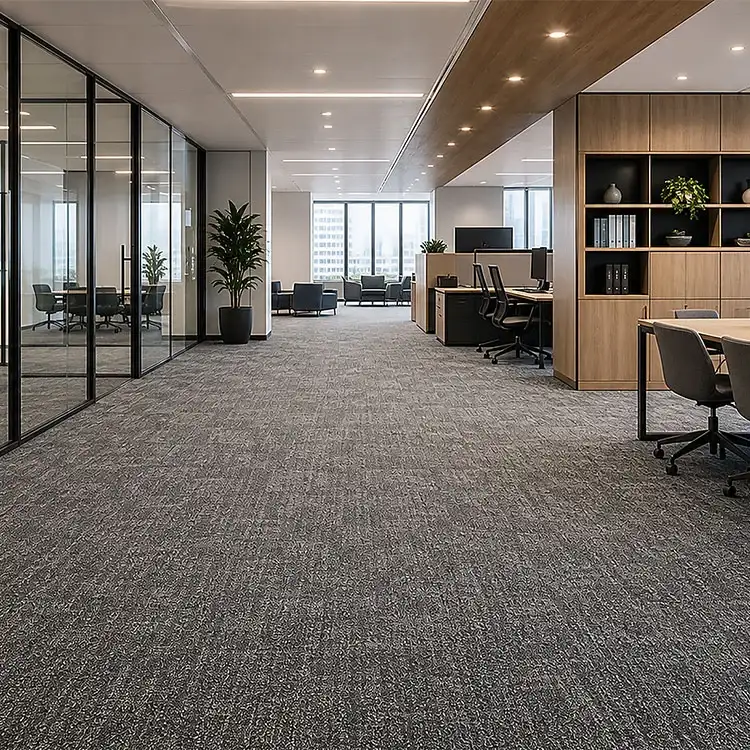
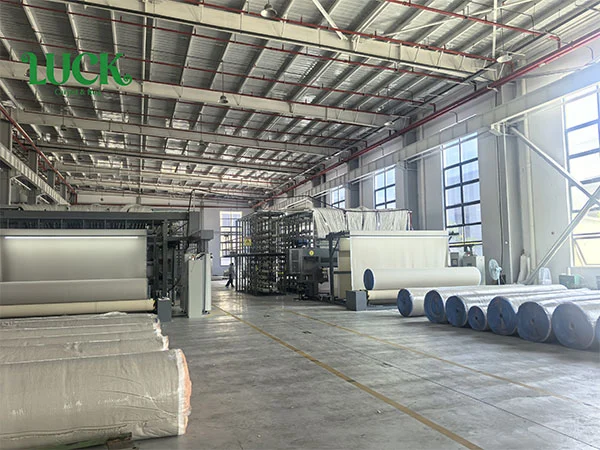
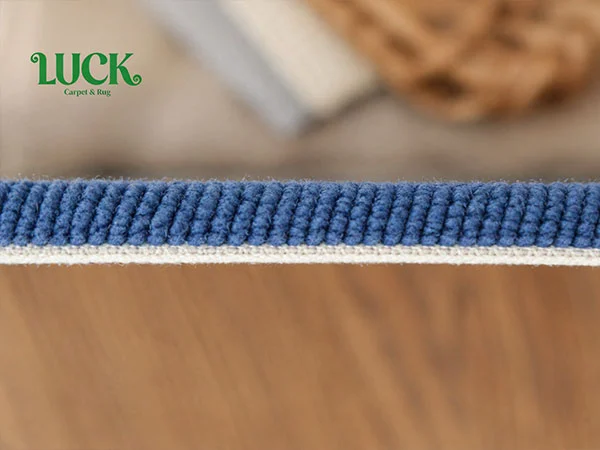
LUCK Carpet manufactures this tufted solution dyed yarn wall to wall carpet for office floors at our own plant in Foshan, Guangdong, and we have exported for 14 years. Polypropylene and polyester are pigmented in the melt, so colour runs through the whole filament. Rolls leave the line as a cut pile at 5 mm on an anti-slip textile backing, in a 4 m usable width for commercial floorplates. This page answers one question about how an office floor ages: how the carpet behaves behind floor to ceiling glass.
Solution dyeing happens before the fibre exists: pigment is compounded into molten polymer, and the filament is extruded and heat set around it, so colour belongs to the filament body rather than to its skin. Printed carpet carries its design in a coating on the pile tips, and piece dyed carpet takes its shade after spinning. Both leave a pale core that appears once the surface is worn or bleached, which on a glazed floor shows as a band about a metre and a half from the glass.
Light fastness decides this argument. Under ISO 105-B02 our office grade returns Grade 6 on the blue wool scale, and the polyester rich lots reach Grade 7. That result means the shade survives extended xenon arc exposure without a shift a designer would call a defect, which is why a second phase three years later stitches into the first without a visible join. Printed broadloom sits two or three grades lower, so we do not offer it behind unshaded glass.
Every office roll carries a lot number tracing back to the polymer batch, the extrusion run, the tufting beam and the finishing line. When a designer approves a strike-off we keep the recipe, not just the sample, and the recipe is what we run against later. That matters on a 700 g/m2 cut pile, because a light pile reveals half a grade of shade difference across a butt joint that a pattern would hide.
Line control on this product is dimensional. A laser gauge reads pile height across the beam, we weigh a sample from each roll, and a tuft is pulled for ISO 4919 bind testing; the office grade has held 41 N or better across the last seven production runs. Yarn lot traceability from polymer batch to finished roll is standard, so a site query about one roll is answered from our own records.
The table below is the specification we quote, measured on finished rolls in our Foshan plant. Fire performance is classified under EN 13501-1, supported by EN ISO 9239-1 and EN ISO 11925-2 reports held on file. Read the width row first: it decides the seam plan, and the seam plan decides where daylight finds a joint.
| Style | Tufted Solution Dyed Yarn Wall to Wall Carpet for Office |
| Yarn type | Polypropylene / Polyester |
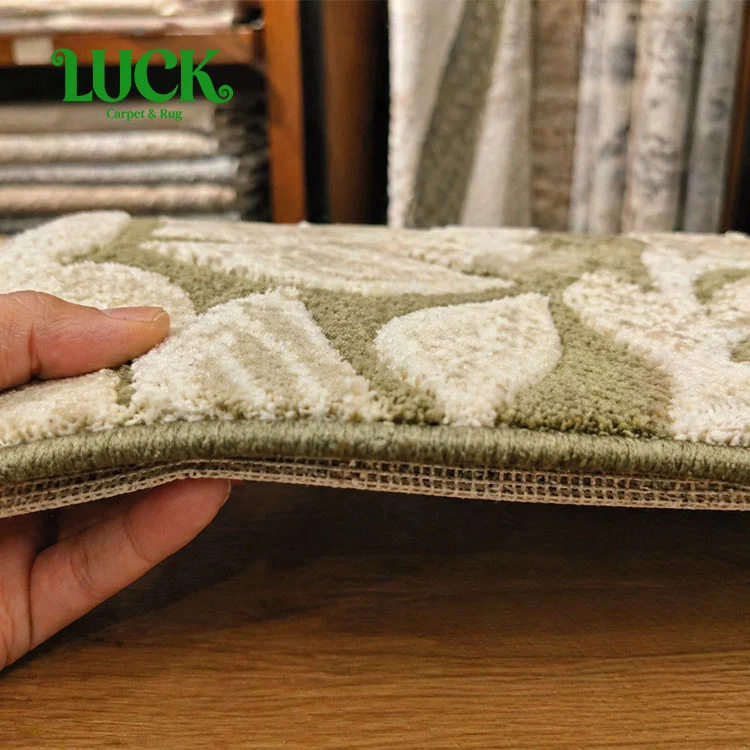
| Pile Height | 5 mm |
| Pile Weight | 700 g/m2 |
| Backing | Anti-slip textile backing |
| Fire Resistance | Bfl-s1 (EN 13501-1) |
| Application | Office |
| Width / Size | 4 m (13.1 ft) usable width |
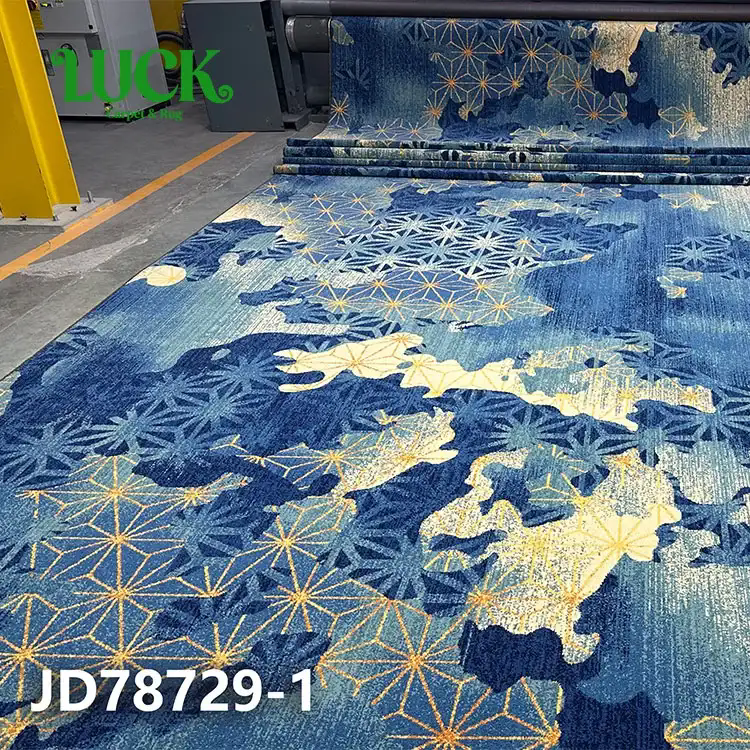
| Pattern | Custom design available (artwork supplied by buyer, strike-off approved before production) |
| Surface / Technique | Cut pile |
An office floor is several floors in one. A glazed perimeter, an internal meeting core and a caster chair zone fail for different reasons, and one carpet has to answer all three. The sections below test this specification against what we meet in commercial fit-outs: daylight at the glass line, the open floorplate behind it, and the failure that turns up most often.
Two properties of melt pigmentation keep this carpet even at the glass line. There is no surface layer to lose, and UV stability belongs to the polymer rather than to a finish that cleaning strips away. Colour fastness to rubbing under ISO 105-X12 comes back at Grade 4-5 wet, the figure that matters along the nightly mop track in front of the glazing.
Printed broadloom behaves differently. Its design sits in a coating on the tips, and a perimeter can lose a visible band of that coating within a couple of summers, long before the pile is mechanically worn. Piece dyed carpet resists light better than print but still fades unevenly roll to roll, which shows at every join on a wide floorplate.
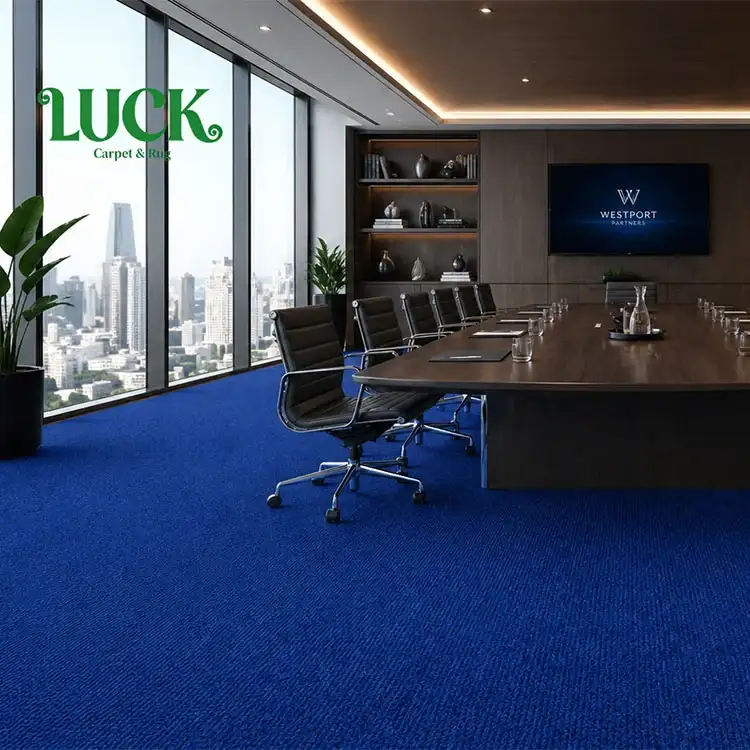
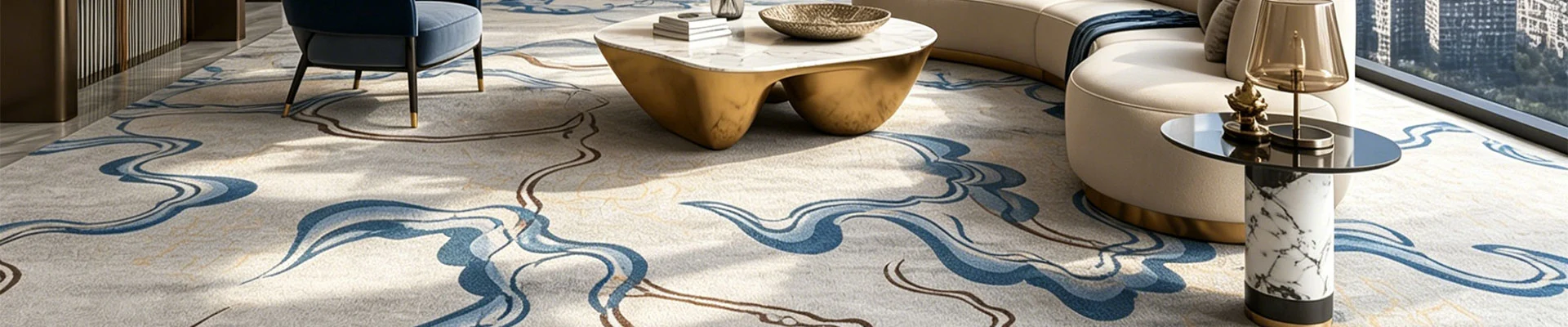
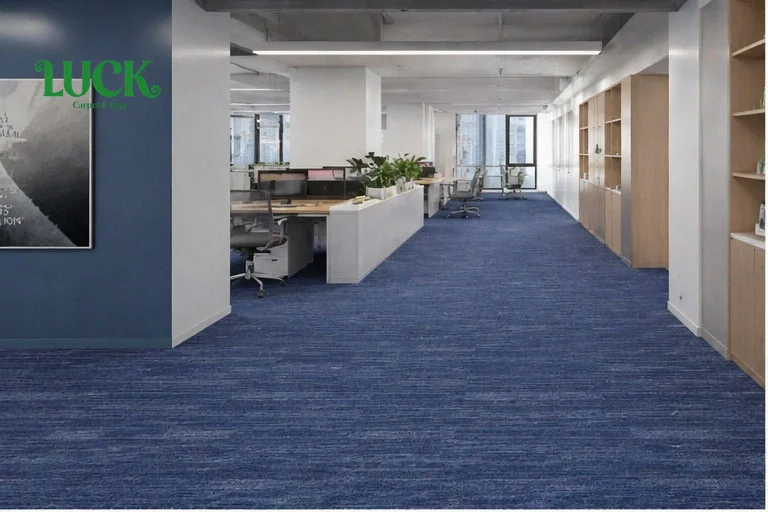
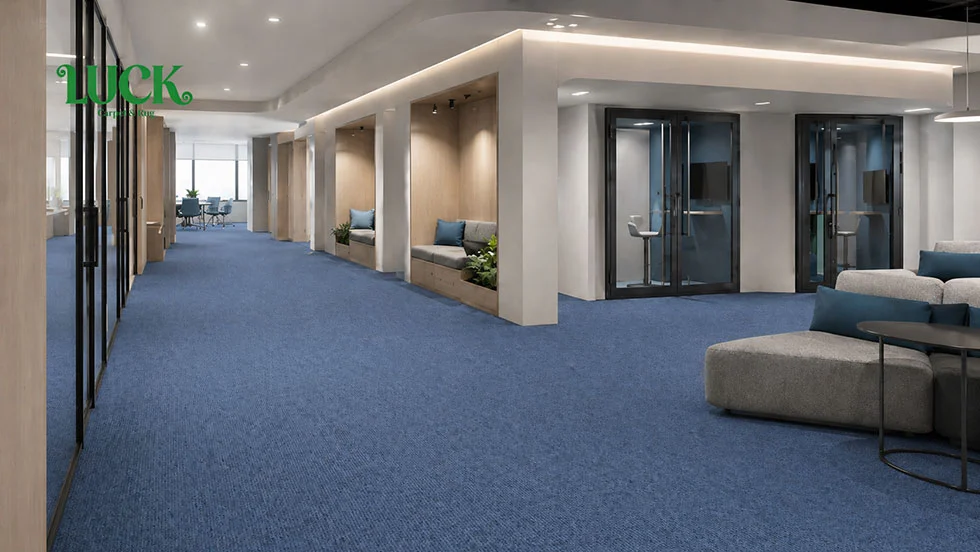
The clearest project in our order book is a tenancy we supplied into a North Sydney office tower in Australia for an insurance group, on two floors with a full curtain wall on the north and east faces. One carpet ran from the lift lobby to the perimeter workstations so daylight would not cut a line across the floor. A shallow services plenum forced a low profile build up, and the perimeter had no blind pocket.
Guidance for a floor like that one is unglamorous. Run seams parallel to the glazing rather than across the sun band, and keep butt joints out of the first two metres from the glass. Check pile direction on every roll before cutting, because a roll laid against the run reads as a shade change even when the dye lot is identical. Shading hardware does more for the carpet than any specification change.
Fade banding is the failure this product was specified to prevent. It appears as a paler strip running parallel to the glass and is worse on cut pile, because the tips reflect light at different angles as they lean. Once a band forms there is no repair: the area cannot be cleaned back, and a patch reads as a rectangle.
Melt pigmentation removes the mechanism instead of treating the symptom. Pigment distributed through the filament cannot be bleached out of the tip, and the ISO 105-B02 result of Grade 6 is where that claim is checked. The same chemistry keeps emissions low, with GB 18587-2001 Class A recorded for this construction. Where a facade has unshaded west glass and no plan for blinds, the carpet is not the weak point, and we say so.
An insurance group refitted two floors of a North Sydney tower: 3,150 m2 of open plan and cellular offices behind a full height curtain wall. The order was 27 rolls, cut and laid in one mobilisation so the whole tenancy came from a single production run. The brief asked for one visual plane from the lift lobby to the perimeter desks, no band of paler carpet where summer sun crosses the floor, and a shade repeatable later.
We quoted solution dyed cut pile rather than print, planned seams parallel to the curtain wall, and reserved the balance of the yarn lot against phase two. Sixteen months after handover the quarterly inspection found no shade difference between the perimeter band and the internal core, and a thickness check in the caster chair lane returned 11 % loss under ISO 3416. The follow-on wing took six rolls from that lot without a visible join.
Records from our Foshan lab accompany every roll. Abrasion to ISO 12947-2 at 5 kPa has averaged 39,000 rubs to defined change on the office grade. Tuft bind is pulled to ISO 4919, laminate peel is recorded in N/50 mm, and dimensional stability after wet cleaning is measured under ISO 2551, where we hold below 0.18 % length change. Fire classification is Bfl-s1 to EN 13501-1 with EN ISO 9239-1 and EN ISO 11925-2 reports behind it, use classification follows ISO 10874, and the construction is tested to EN 1307. Ask any supplier for the raw report with the sample reference on it.
For a normal commercial chair on standard castors, yes. A dense cut pile at this height spreads load well, and static loading under ISO 3416 sits inside the thickness loss band we publish. Hard twin wheel castors under a heavy occupant compact a traffic lane faster, so specify castors to EN 12529 or place a mat at those desks.
Yes, if the original lot data is kept. We hold the extrusion recipe for approved office shades, rebuild it, and verify against a retained control sample from your own roll rather than a photograph. Allow a strike-off before the full run. Two spare rolls on site cover most damage repairs without a new extrusion.
Not for general office use. This backing is dimensionally stable and lays direct to a prepared screed with pressure sensitive adhesive, or on tackless strip where the subfloor cannot be glued. Underlay earns its place only when the floor above a plant room needs impact sound reduction, and it raises finished floor height.
Rolls are cut pile broadloom in 4 m usable width, wound face in on a core and wrapped for container loading. Selvedges are straight and pre-trimmed, so a fitter butt joints without re-cutting edges on site. The surface has a firm, dry hand and a matte finish that keeps reflection low across a wide floorplate, and the anti-slip backing holds each roll flat.
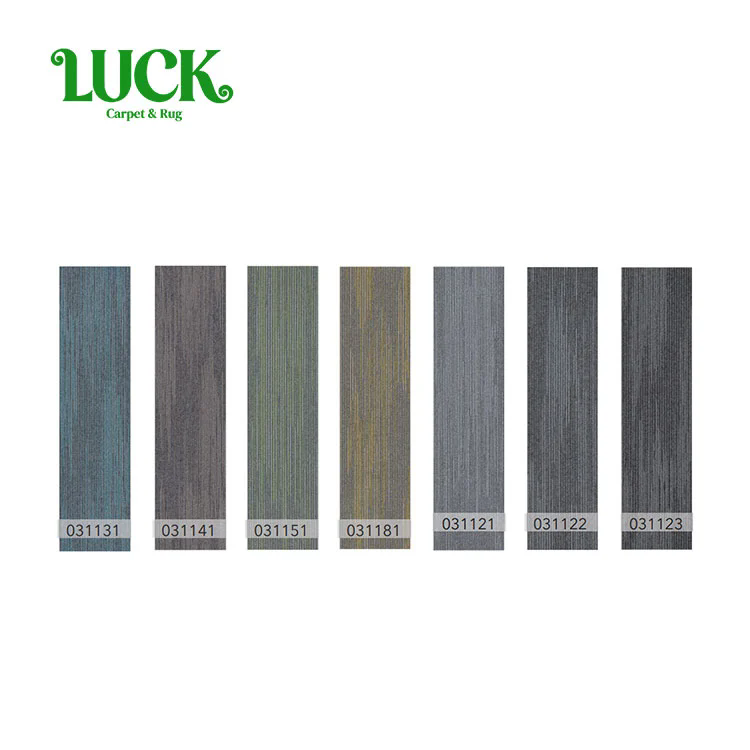
Colour is made to an approved strike-off, and custom patterns are available when artwork comes from the buyer and is approved before production. Stock shades leave Foshan in three to four weeks, and a new extrusion takes five to six, with inspection at our plant by SGS, Intertek or BV on request. Face pile carries an 8 year warranty. Send LUCK Carpet your floor plan and glazing orientation for a seam plan with the quotation.
Address
Shidaigongguan Building No.5 Office 1212, Haicheng east road, Duanzhou District, Zhaoqing City, Guangdong Province, China
Tel
Copyright © 2026 Zhaoqing Yunle International Trade Co., Ltd. All Rights Reserved.