Shidaigongguan Building No.5 Office 1212, Haicheng east road, Duanzhou District, Zhaoqing City, Guangdong Province, China+86-13660997637young@oneluckcarpet.com
Hotel and hospitality projects across the Gulf move quickly once a design is approved, and the carpet package is often placed last and needed first. Sampling should be scheduled before the tender closes rather than after the order, because approval drives every later date. On our schedule, a design draft takes approximately 3 working days from artwork or color references, physical samples take 7 to 10 working days, production runs 20 to 30 working days after written sample approval, and the full span from artwork to shipment readiness is typically 30 to 40 working days. In our experience the projects that slip are the ones where the fire classification or the custom pattern minimum was settled after the order was placed.
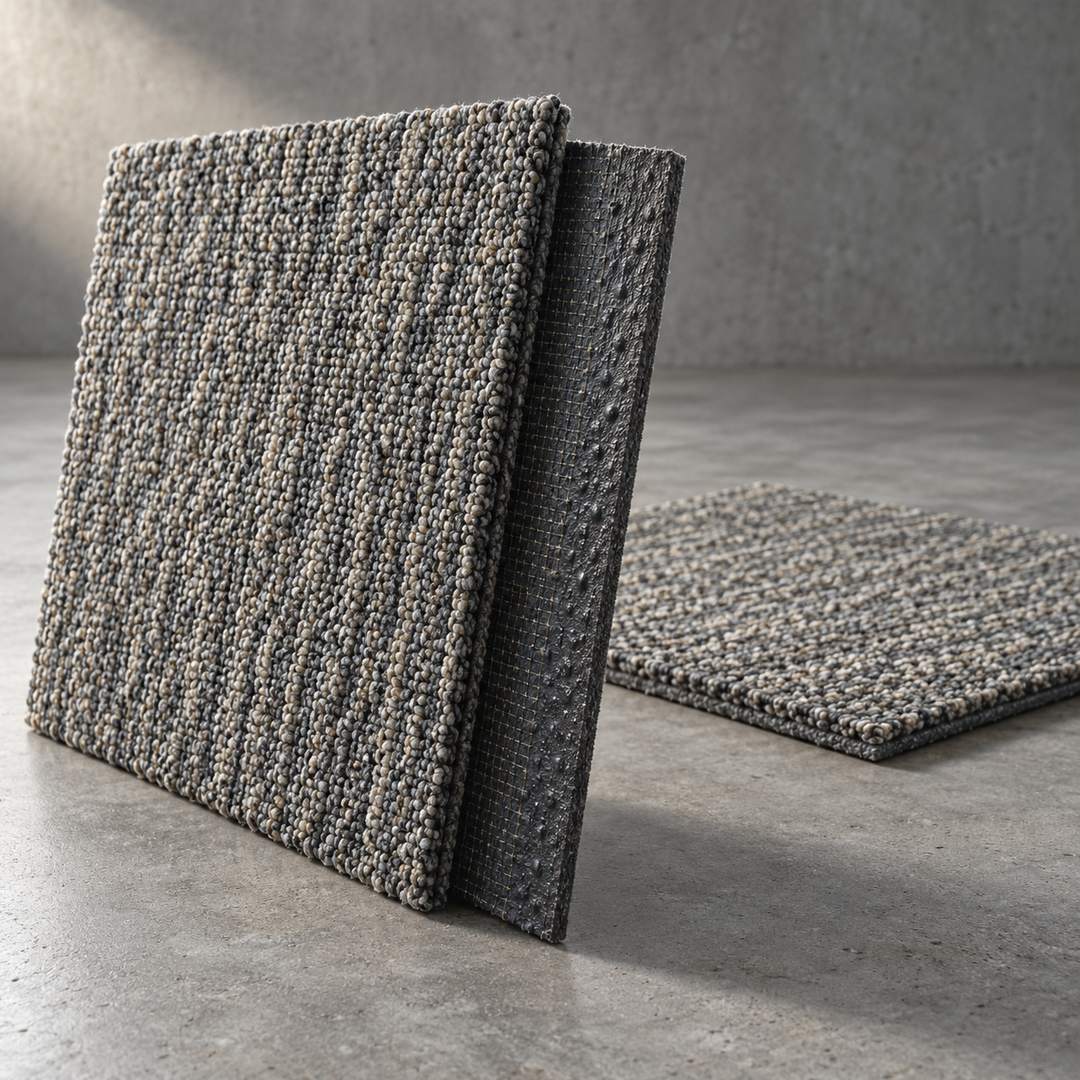
Carpet tile backing controls dimensional stability, moisture tolerance, impact sound reduction and the installation method, so it should be selected from the subfloor condition rather than from the tile face. Our tiles use bitumen or PVC compound reinforced with fiberglass, and the fiberglass component is what limits movement when temperature and humidity change. Both options hold their dimensions within 0.2% of nominal size and sit flat without the dome or ripple effects seen in less stable materials. In our experience the backing question surfaces during installation far more often than during specification, which is exactly when it is most expensive to answer.
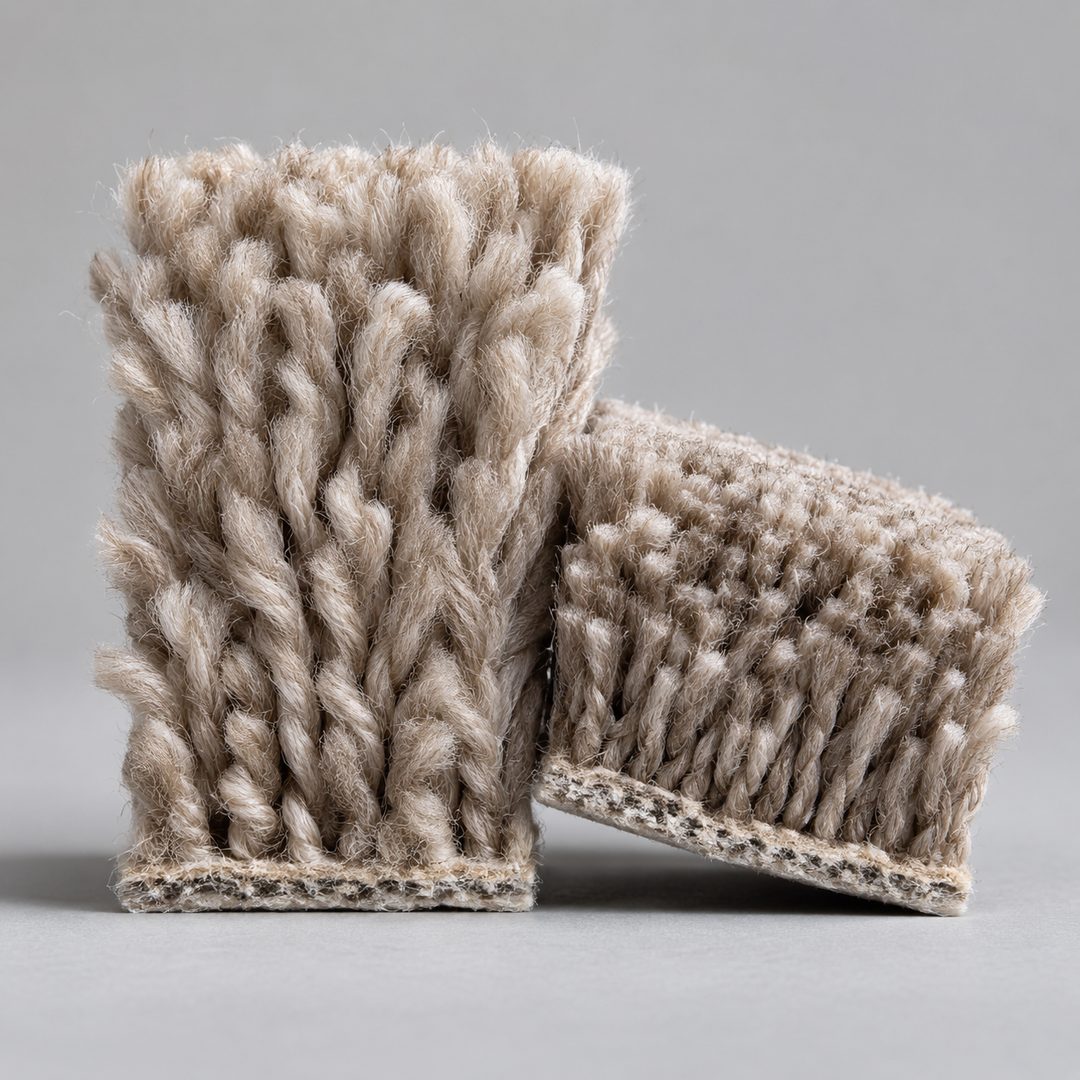
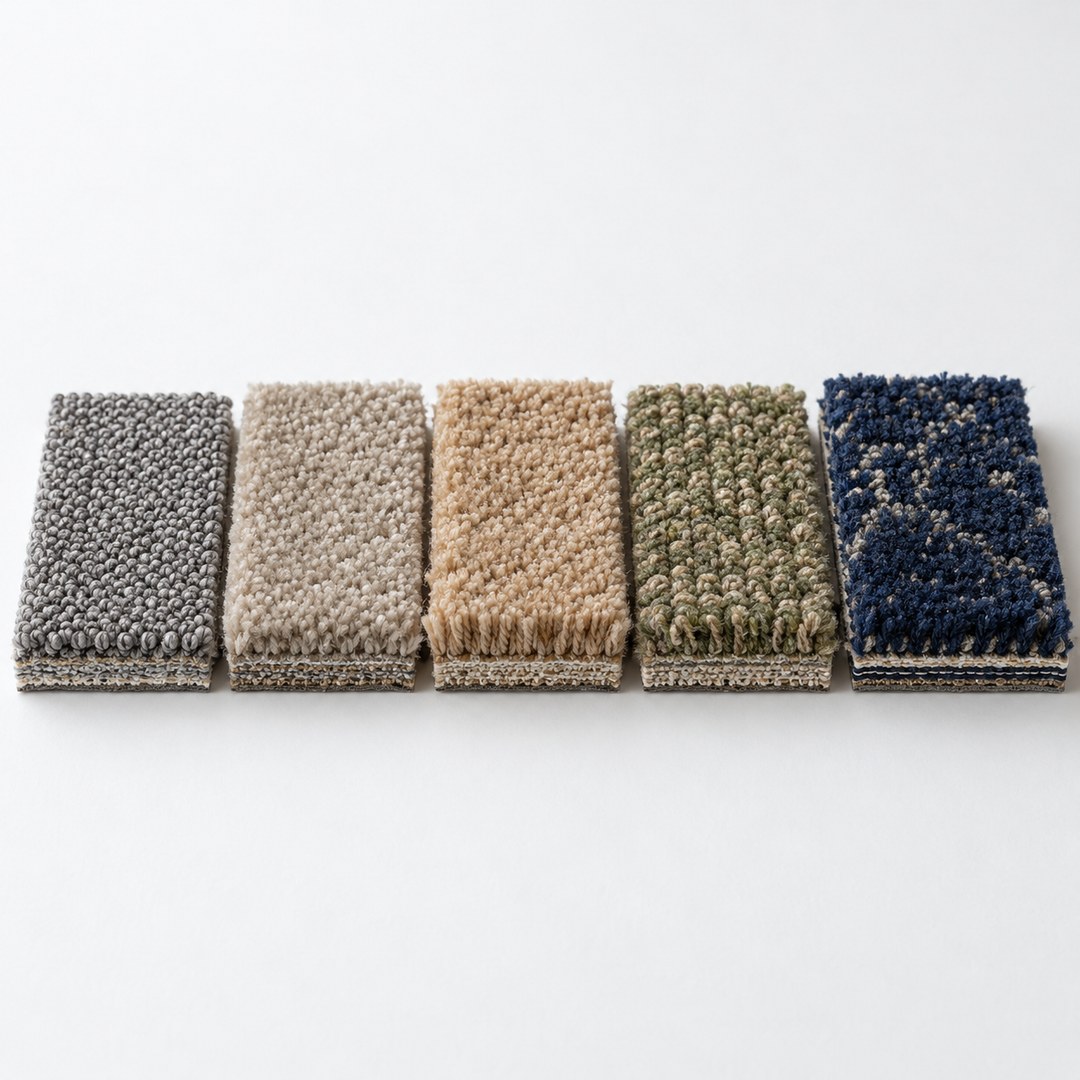
Pile weight alone does not predict how long a carpet lasts, because two carpets with the same face weight can perform very differently once pile height, tuft density and fiber type are taken into account. Pile weight tells you how much yarn sits across a given area, pile height tells you how far that yarn bends before it compresses, and tuft density tells you how closely it is packed. Read together, those three values describe the construction. Read alone, pile weight is the easiest number to quote and the least reliable one to buy on. In our experience the carpet that flattens along a corridor center line is usually the one with the tallest pile, not the lightest.
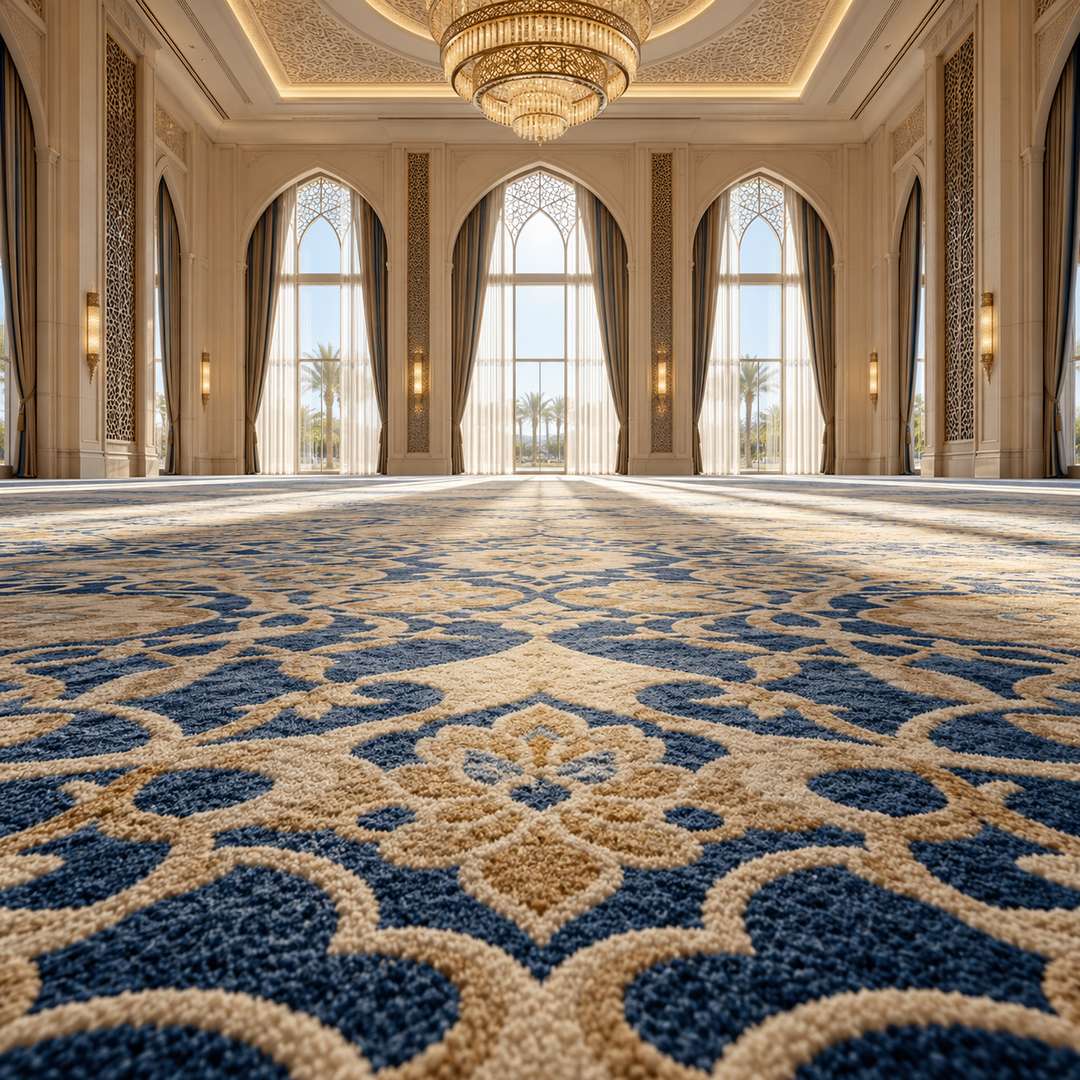
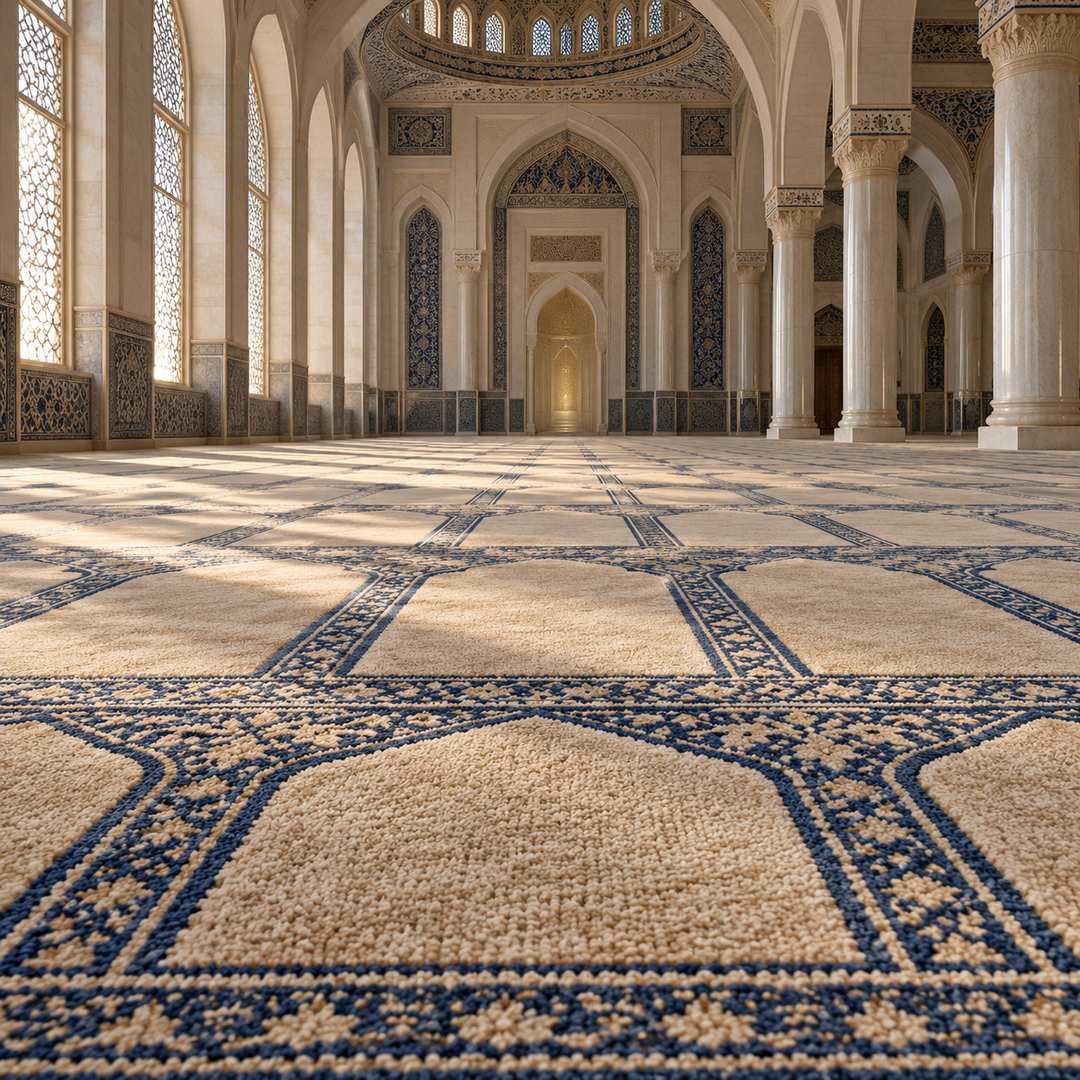
Mosque carpet has to serve one large continuous floor, heavy concentrated use at prayer times and a cleaning routine that involves water, so roll width and backing stability matter more than they do in a partitioned office. Our Axminster woven broadloom is produced in 3.66m or 4m widths, and the 4m width reduces on-site seaming across a wide prayer hall. The construction is woven at 7 rows per inch with approximately 85,000 to 100,000 tufts per square meter, with each tuft locked into the backing fabric, and it is produced in 80% New Zealand Wool 20% Nylon. In our experience the roll layout, not the pattern, is what decides whether the finished floor looks calm.
A carpet specification sheet decides whether a project receives the performance designed for it, or a product that merely looks similar. Six parameters control the result: fiber type, pile weight, pile height, tuft density, backing construction and dimensional tolerance. We recommend stating each one as a measurable value rather than a product name, because a brand reference removes your commercial leverage and still does not guarantee the performance you asked for. On our ranges, pile weight and pile height together define the construction, while the tolerance figure is what lets a site team verify the delivery against the document. In our experience the tension figure is the most commonly omitted line, and it is the first one a contractor asks for.
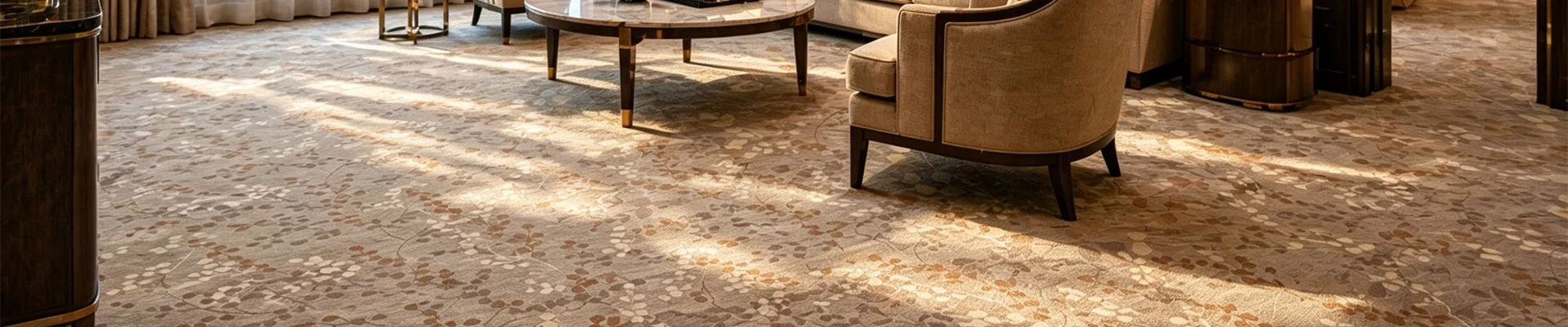
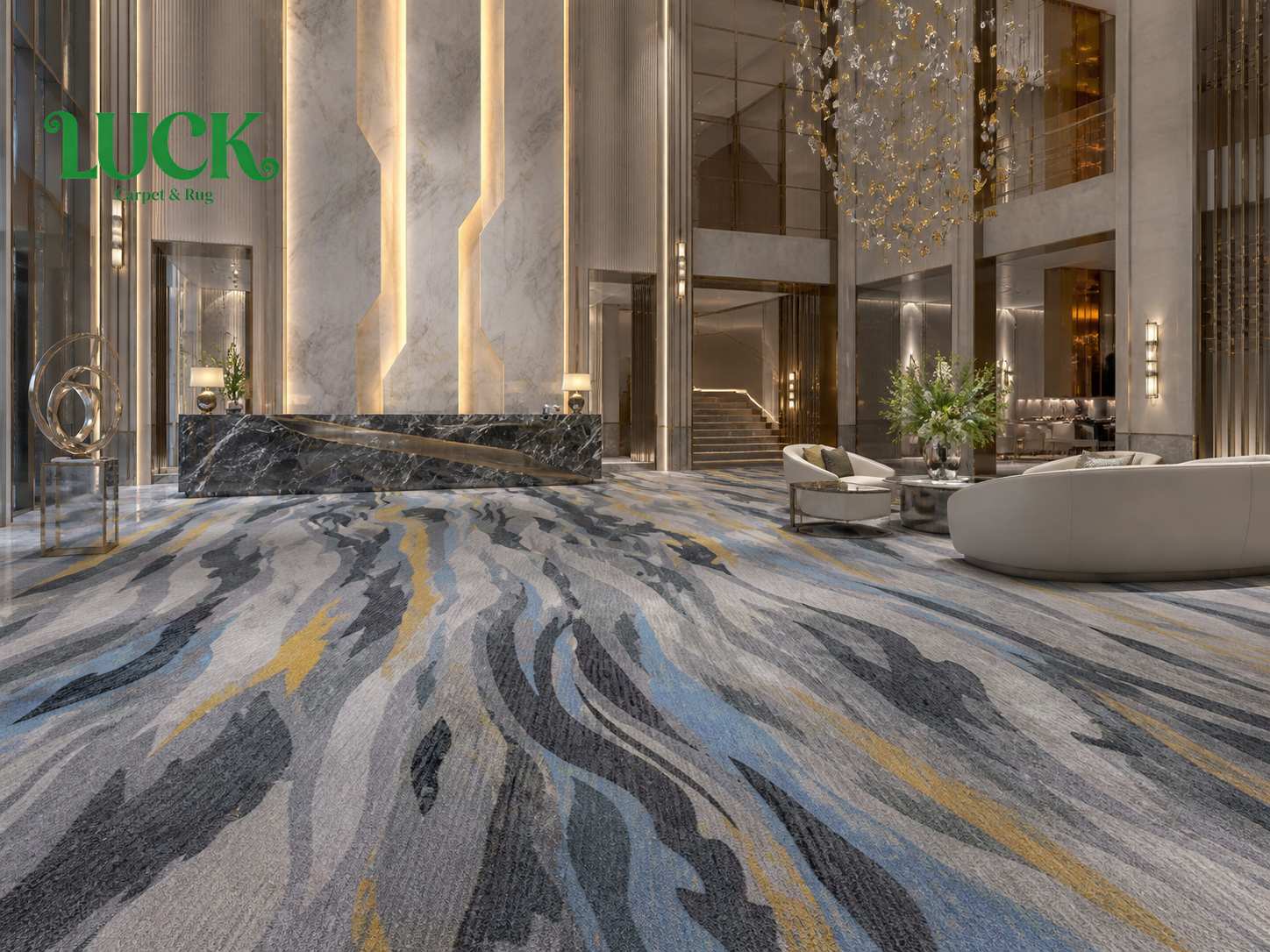
Wool Axminster Wall To Wall Carpet combines the natural comfort of wool with the precision of woven construction, making it a compelling flooring solution for luxury hotels, banquet halls, casinos, and premium commercial interiors. With detailed patterns, durable pile construction, and customizable colors, it helps designers balance visual impact with long-term performance. Luck provides tailored carpet solutions for hospitality projects, supporting buyers with product customization, sample development, and coordinated bulk supply. This guide explores its benefits, applications, selection criteria, maintenance requirements, and purchasing considerations.
We use cookies to offer you a better browsing experience, analyze site traffic and personalize content. By using this site, you agree to our use of cookies. Privacy Policy

 16 2026-10
 16 2026-10
 15 2026-10
 14 2026-10
 14 2026-10
 13 2026-10