Article Summary: Cut Pile Carpet Tile combines the soft, refined appearance of cut-pile flooring with the practical advantages of modular carpet. It can be a strong flooring solution for offices, hotels, retail spaces, educational facilities, and other commercial interiors where appearance, underfoot comfort, maintenance, and long-term usability all matter. This guide explains its construction, benefits, selection factors, installation considerations, maintenance requirements, and common application scenarios so buyers can make a more informed flooring decision.
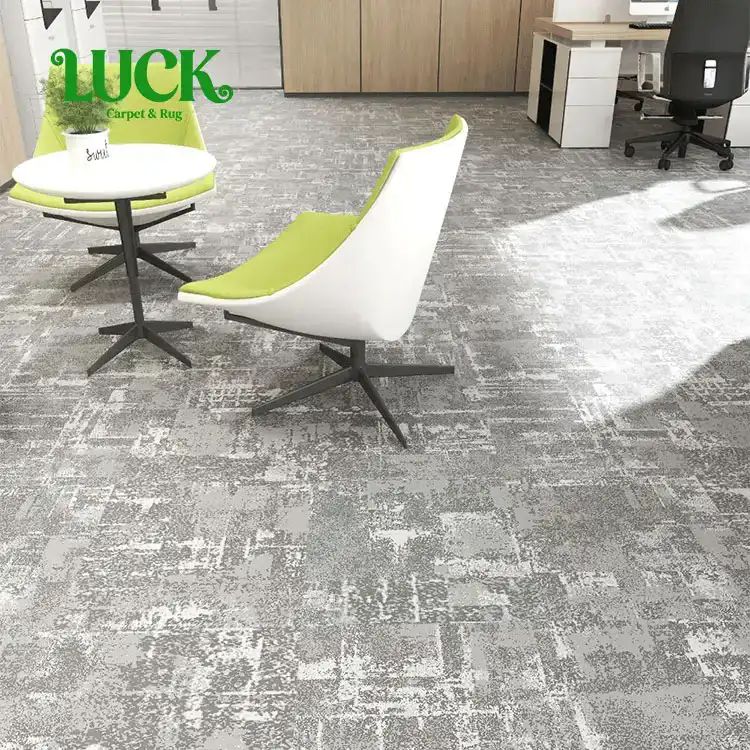
Cut Pile Carpet Tile is a modular flooring product designed to provide the visual warmth and softness of traditional carpet while offering the practical flexibility of individual carpet tiles. Its surface is formed from yarn that is cut at the top rather than remaining in continuous loops. This creates a relatively smooth, soft, and refined texture that can work particularly well in professional interior environments.
The modular format is equally important. Instead of covering an entire floor with one continuous carpet sheet, the flooring is divided into manageable tiles. If a section becomes heavily worn, stained, or damaged, the affected tiles can potentially be replaced without removing the entire floor. This can reduce disruption during maintenance and make long-term flooring management easier.
For commercial buyers, the combination of a sophisticated surface and modular construction can solve several common problems at the same time. A project may need a comfortable floor that looks professional, tolerates daily foot traffic, allows flexible design layouts, and remains practical to maintain. Cut Pile Carpet Tile can address these requirements when the product is correctly specified for the intended environment.
A carpet tile is more than a decorative textile surface. Its performance depends on how several layers work together. The exact construction varies according to the product, but the main components generally include the face yarn, tufting structure, stabilizing layer, and backing.
| Component | Primary Function | Why It Matters |
|---|---|---|
| Face Yarn | Creates the visible carpet surface | Affects softness, appearance, wear resistance, and color presentation |
| Tufting Structure | Secures yarn within the carpet construction | Influences consistency, density, and surface stability |
| Stabilizing Layer | Helps maintain dimensional stability | Reduces unwanted movement and supports reliable installation |
| Backing | Provides structural support and protection | Can influence moisture resistance, dimensional stability, acoustics, and installation requirements |
For a commercial project, buyers should therefore avoid judging a carpet tile only by its color or surface texture. Two visually similar products can perform differently because their yarn composition, density, backing system, and manufacturing quality are not identical.
The popularity of Cut Pile Carpet Tile comes from its balance of aesthetics and practicality. While no flooring product is ideal for every environment, cut pile tiles can offer several valuable advantages when matched with appropriate project requirements.
Cut pile surfaces expose the ends of the yarn, producing a softer and more comfortable feel than many hard flooring surfaces. This can be particularly valuable in workplaces where employees spend many hours indoors or in hospitality environments where guests expect a more comfortable atmosphere.
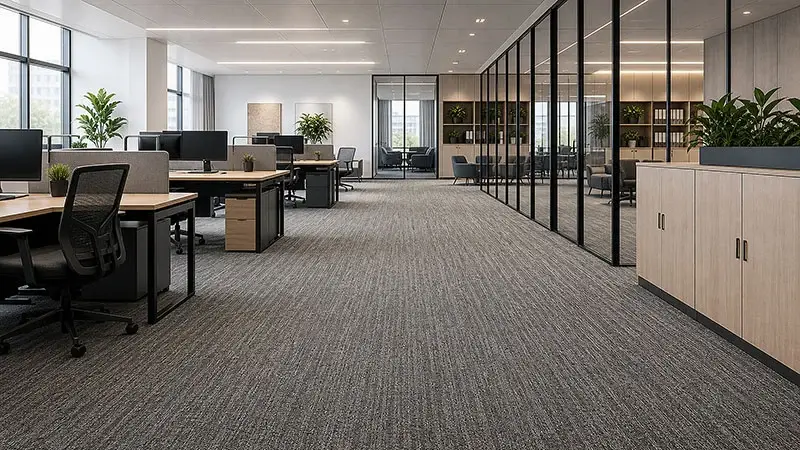
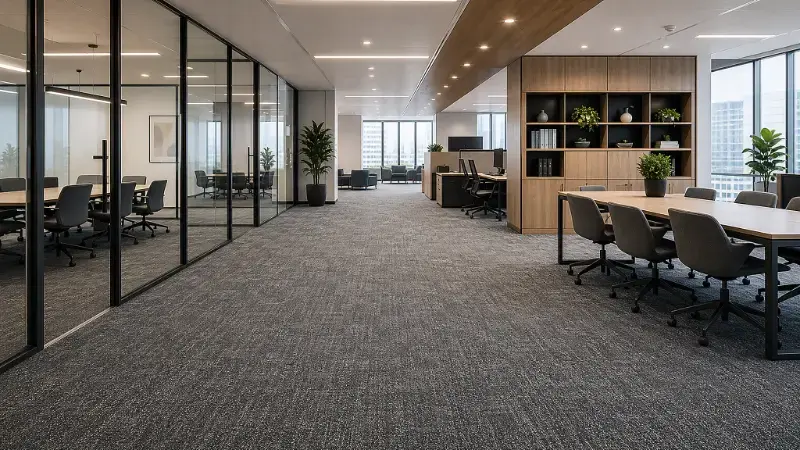
The relatively smooth surface of cut pile flooring can create a polished visual impression. It can complement modern offices, meeting rooms, hotel interiors, lounges, reception areas, and premium retail environments where flooring contributes directly to the overall design language.
One of the most practical advantages of carpet tile is its modular format. If a localized area experiences heavy traffic or accidental staining, maintenance teams can focus on individual tiles rather than treating an entire carpet installation as one inseparable surface.
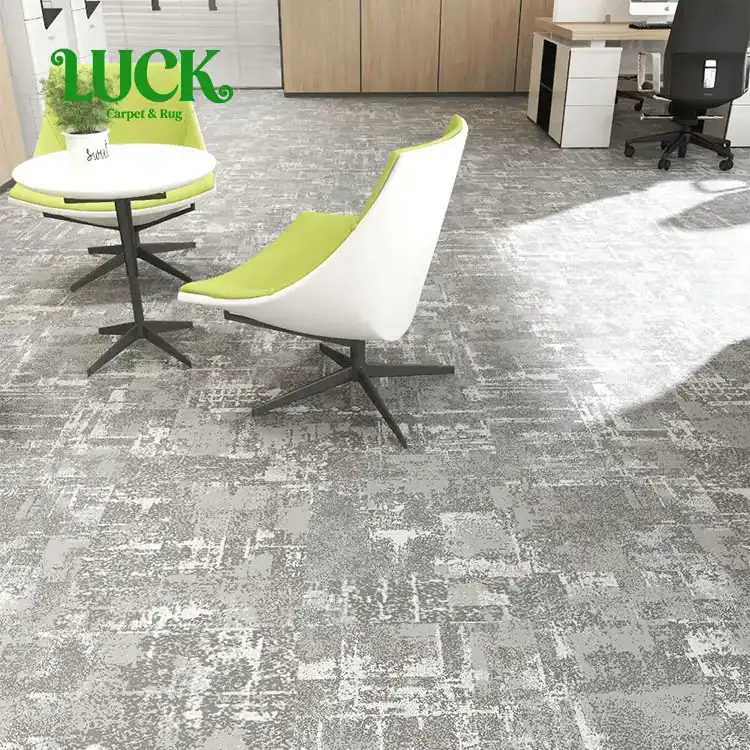
Carpet tiles can be arranged using different orientations, colors, textures, or patterns. Even when a project uses a relatively simple palette, directional installation can create subtle visual variation.
This flexibility is useful when designers want to visually divide large open areas without constructing permanent partitions. Different tile arrangements can help define circulation paths, collaboration zones, workstations, waiting areas, and other functional spaces.
Individual tiles are generally easier to handle than large rolls of carpet. This can simplify transportation into buildings where access is restricted by elevators, narrow corridors, multiple floors, or limited storage space.
Selecting between cut pile and other carpet constructions depends on the project's priorities rather than a single universal definition of the "best" carpet.
| Feature | Cut Pile Carpet Tile | Loop Pile Carpet Tile | Traditional Broadloom Carpet |
|---|---|---|---|
| Surface Feel | Soft and relatively smooth | Textured and structured | Varies by construction |
| Format | Modular tiles | Modular tiles | Usually supplied in rolls |
| Localized Replacement | Convenient | Convenient | More complicated |
| Design Flexibility | High | High | Moderate to high |
| Typical Visual Character | Soft, elegant, refined | Textured, structured, contemporary | Continuous and seamless |
Cut pile is often selected when comfort and a refined appearance are important. Loop pile may be preferable where a more textured surface is desired. Broadloom can remain attractive for projects that prioritize a continuous appearance and have fewer concerns about localized replacement.
Choosing carpet tiles based only on appearance can create problems later. A better approach is to start with the actual operating conditions of the building.
Analyze where people will walk most frequently. Corridors, entrances, elevator areas, reception zones, and common spaces usually experience more concentrated traffic than private offices. The yarn and construction should be selected according to the expected traffic level.
Fiber selection influences appearance retention, resilience, cleaning requirements, and overall service expectations. Buyers should request clear technical information about the proposed fiber rather than assuming that every carpet tile has the same performance.
A dense and consistently manufactured surface can contribute to better appearance retention. Ask suppliers about manufacturing tolerances, quality inspection, pile construction, and batch consistency when purchasing for a large project.
The backing is a critical part of the product. It can affect dimensional stability, installation behavior, moisture management, acoustic characteristics, and overall service performance.
Before ordering, evaluate the floor substrate, expected humidity, potential spills, cleaning methods, sunlight exposure, and temperature conditions. Carpet tile should be matched to the environment rather than treated as a one-size-fits-all product.
Even a high-quality carpet tile can perform poorly if installation conditions are ignored. The substrate should be properly prepared, clean, dry, and sufficiently level before installation begins.
Installation planning should also consider tile direction. Some products have a visible pile direction, and changing the orientation can intentionally create visual effects. In other situations, maintaining a consistent direction may produce a more uniform appearance.
For projects with unusual substrates, stairs, high moisture exposure, or specialized heating systems, professional technical advice should be obtained before installation.
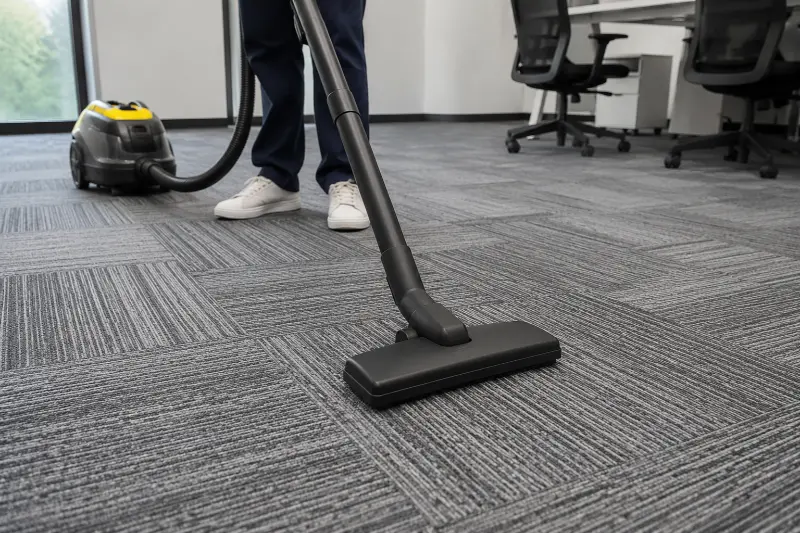
Regular maintenance is essential for protecting both the appearance and useful life of commercial carpet tile. A simple maintenance program is usually more effective than waiting until visible contamination becomes severe.
Entrance areas deserve particular attention because outdoor dirt and moisture are commonly introduced at building access points. Effective entrance matting can reduce the amount of contamination transferred onto the carpet.
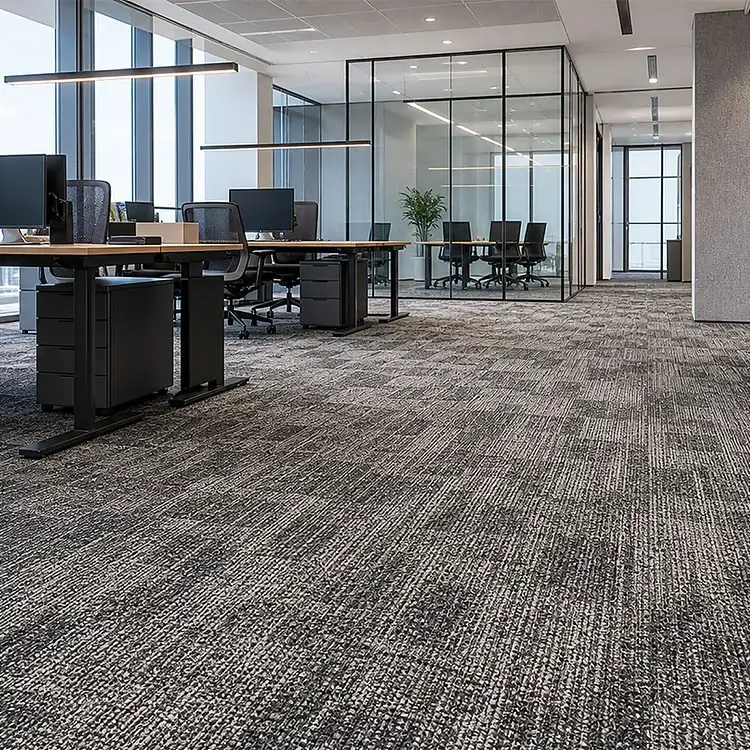
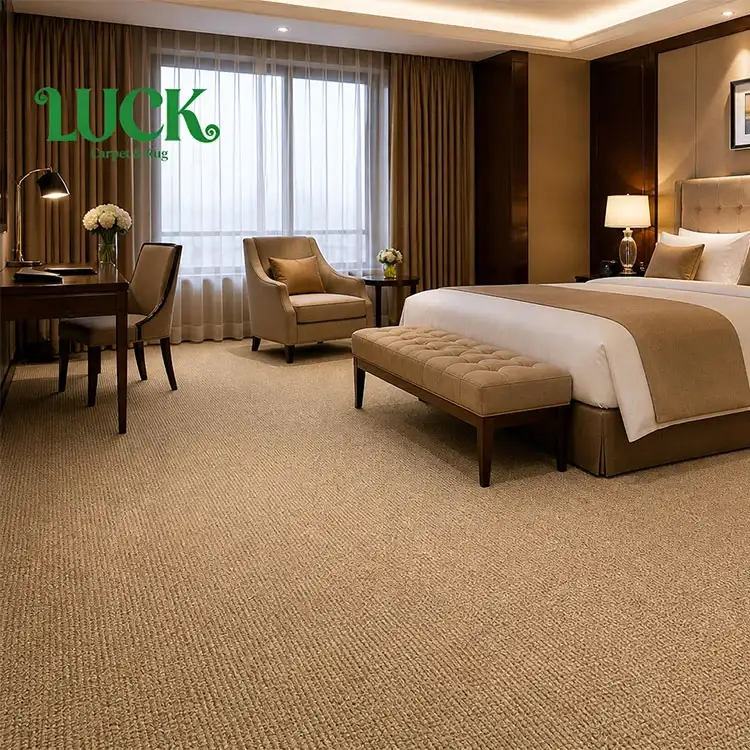
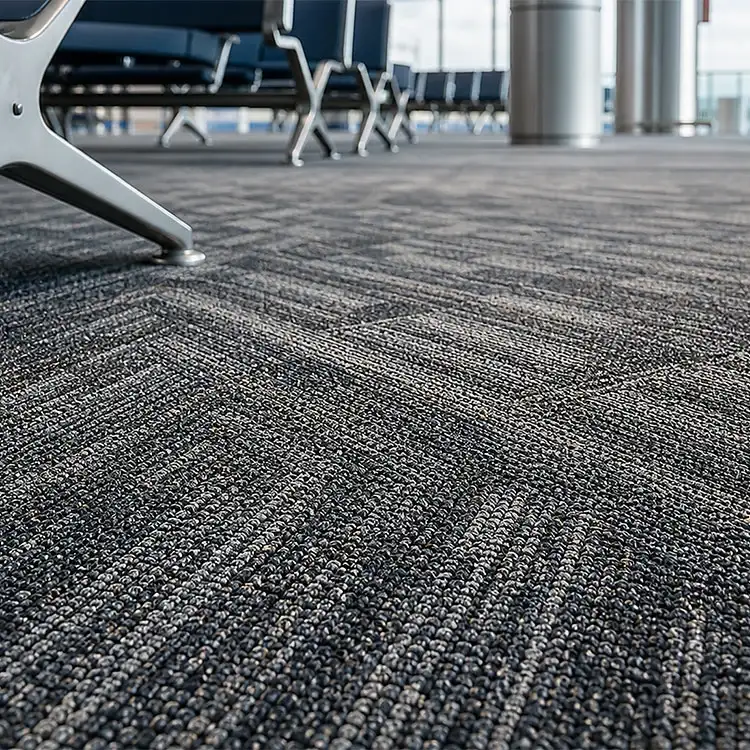
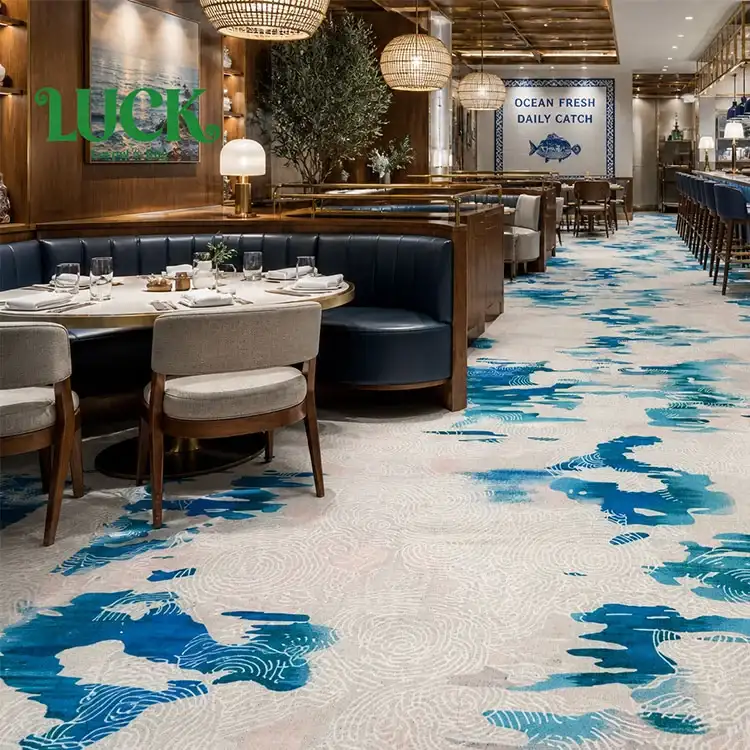
Cut Pile Carpet Tile is suitable for a broad range of interior environments when the construction is properly specified.
| Application | Key Flooring Requirements | Potential Advantage |
|---|---|---|
| Corporate Offices | Comfort, appearance, easy maintenance | Professional atmosphere with modular maintenance |
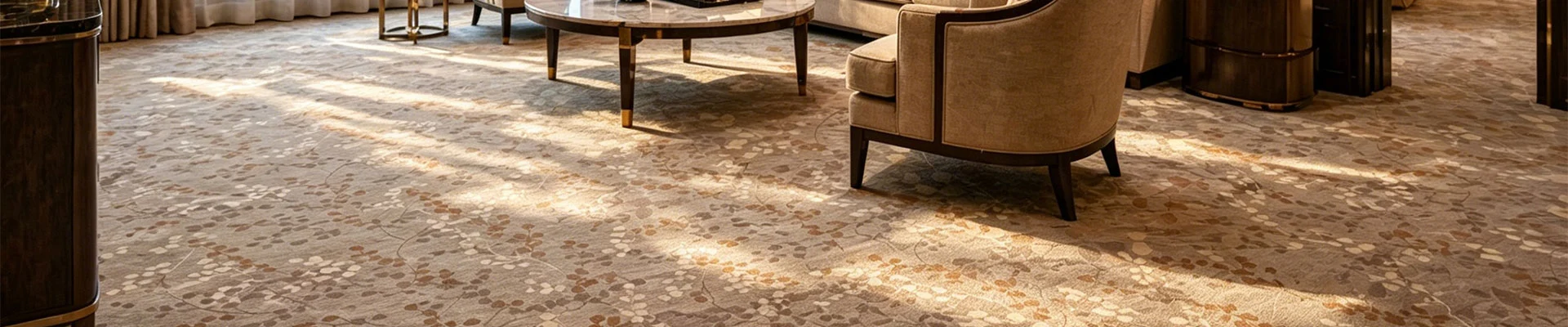
| Hotels | Comfort, visual quality, traffic resistance | Creates a warm and sophisticated interior |
| Retail Spaces | Design flexibility and localized maintenance | Supports zoning and changing layouts |
| Meeting Rooms | Comfort and acoustic considerations | Creates a quieter, more comfortable environment |
| Educational Facilities | Durability and practical maintenance | Individual tiles can simplify localized replacement |
| Public Buildings | Traffic management and long-term maintenance | Modular construction supports ongoing floor management |
Several common mistakes can increase project costs or reduce flooring performance.
A reliable supplier should be willing to discuss the application, provide technical information, explain available constructions, and help buyers select an appropriate product instead of simply recommending the most visually attractive option.
For commercial flooring buyers, supplier capability is an important part of the purchasing decision. Luck Carpet focuses on carpet products for commercial applications and provides Cut Pile Carpet Tile options designed around different performance and design requirements.
Luck Carpet's product range includes tufted and printed cut pile carpet tile solutions, allowing project teams to consider different surface effects and construction requirements. The company also emphasizes production consistency and inspection during manufacturing, which is particularly important when a project requires large quantities of tiles with a cohesive appearance.
For a project specification, buyers should provide information such as floor area, intended application, expected traffic level, preferred color or pattern, installation environment, and target performance requirements. With these details, the supplier can help narrow down suitable constructions rather than leaving the customer to make the decision from appearance samples alone.
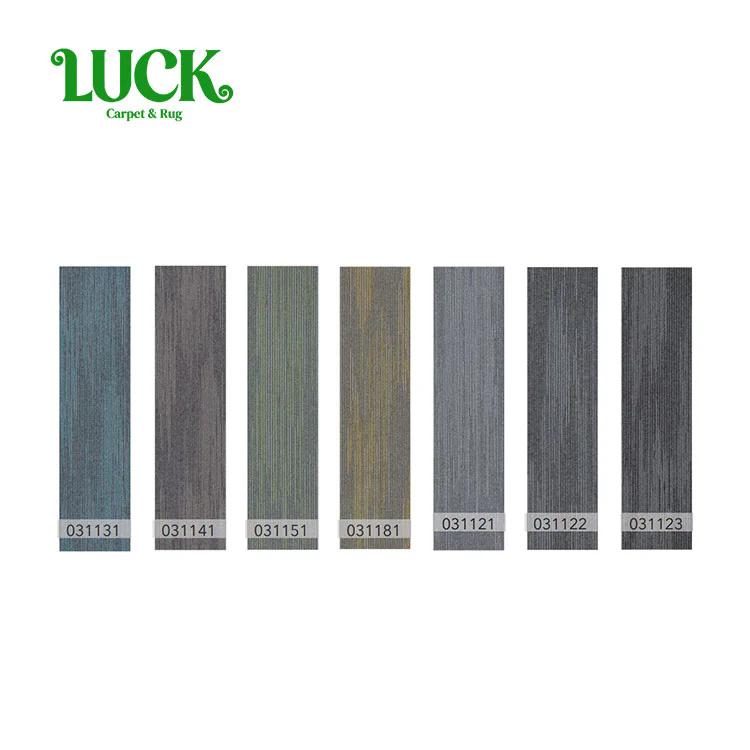
It is also practical to request physical samples before approving a large order. A sample allows designers, contractors, and facility managers to evaluate the actual color, texture, pile feel, construction, and visual effect under the project's lighting conditions.
Q: Is Cut Pile Carpet Tile suitable for commercial buildings?
Yes. It can be suitable for offices, hotels, retail areas, meeting rooms, educational facilities, and other commercial interiors when the fiber, density, backing, and construction are selected according to traffic and environmental conditions.
Q: Is Cut Pile Carpet Tile comfortable underfoot?
One of its major characteristics is its soft surface. The cut yarn structure can provide a more comfortable and refined feel, making it attractive for environments where people spend significant amounts of time indoors.
Q: Can individual carpet tiles be replaced?
Yes. The modular format makes localized replacement possible. Keeping spare tiles from the original order can make future repairs easier, particularly when color and production consistency are important.
Q: Is cut pile better than loop pile?
Neither construction is universally better. Cut pile is often selected for softness and a refined appearance, while loop pile can offer a more textured visual character and different performance characteristics. The appropriate choice depends on the building and its operating requirements.
Q: How long can Cut Pile Carpet Tile last?
Service life depends on fiber, pile construction, traffic intensity, installation quality, cleaning practices, and environmental conditions. A properly specified commercial product can provide many years of useful service when maintained correctly.
Q: Can carpet tiles be used in high-traffic areas?
They can, provided the selected product is specifically designed for the expected traffic level. High-traffic corridors and entrances should receive particular attention during product specification and maintenance planning.
Q: What information should I provide when requesting a quotation?
Useful information includes project area, application, approximate quantity, preferred colors or patterns, traffic level, installation method, delivery destination, and any special environmental requirements. Providing these details helps suppliers recommend a more appropriate construction.
Q: Should I request samples before placing a bulk order?
Yes. Physical samples can help buyers evaluate texture, color, pile appearance, backing, and overall quality before committing to a large project.
Cut Pile Carpet Tile offers a practical combination of comfort, visual refinement, modular flexibility, and maintenance convenience. Its value does not come from the surface appearance alone. The final performance depends on the interaction between fiber selection, pile density, construction, backing, installation, traffic conditions, and maintenance.
For buyers, the most effective approach is to define the project's real requirements first and then select the appropriate carpet construction. Consider where the flooring will be installed, how heavily it will be used, what type of maintenance is expected, and how future repairs will be handled.
When these factors are evaluated carefully, Cut Pile Carpet Tile can become more than an attractive flooring material. It can provide a practical long-term flooring strategy for commercial interiors that need comfort, design flexibility, and manageable maintenance.
Looking for a Cut Pile Carpet Tile solution for your next commercial flooring project? Share your project requirements, preferred design, quantity, and application with Luck Carpet. Our team can help you evaluate suitable options, request samples, and move from product selection toward reliable project delivery. Contact us today to discuss your flooring requirements.
-
Copyright © 2026 Zhaoqing Yunle International Trade Co., Ltd. All Rights Reserved.