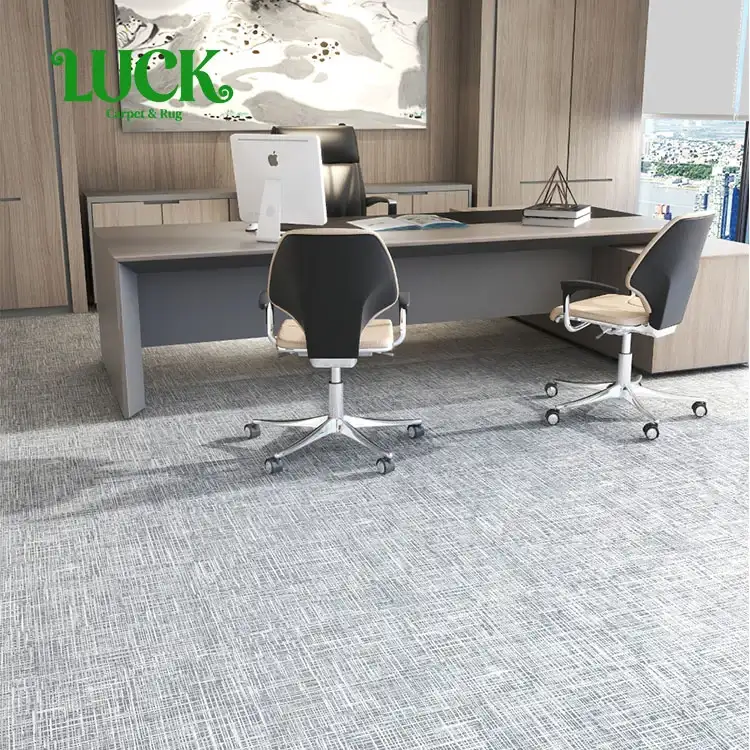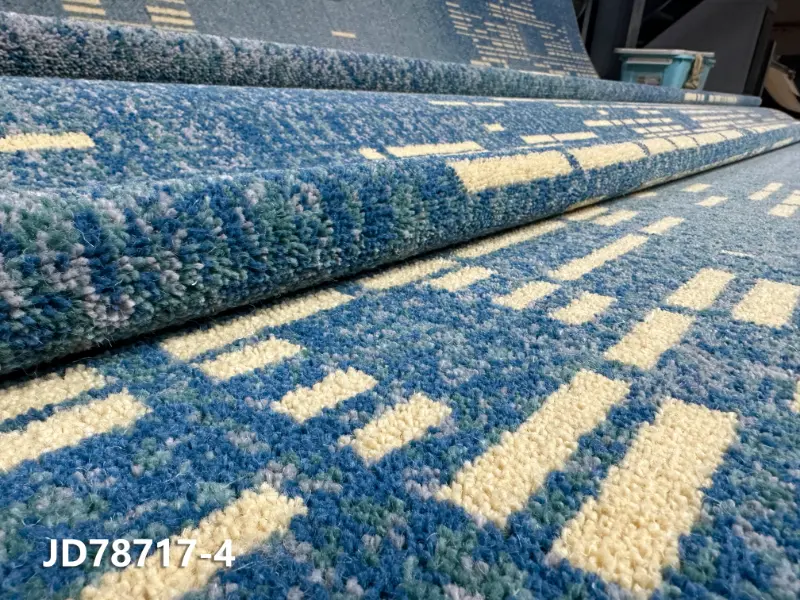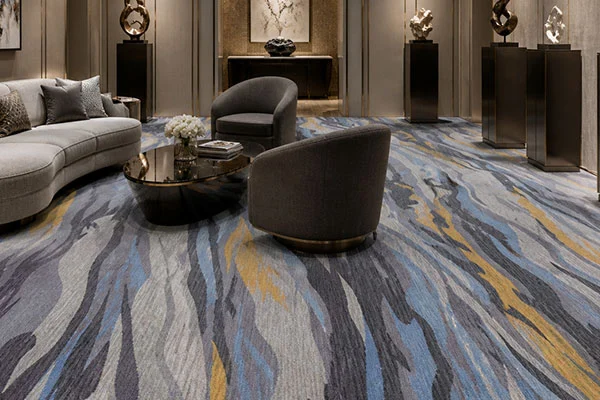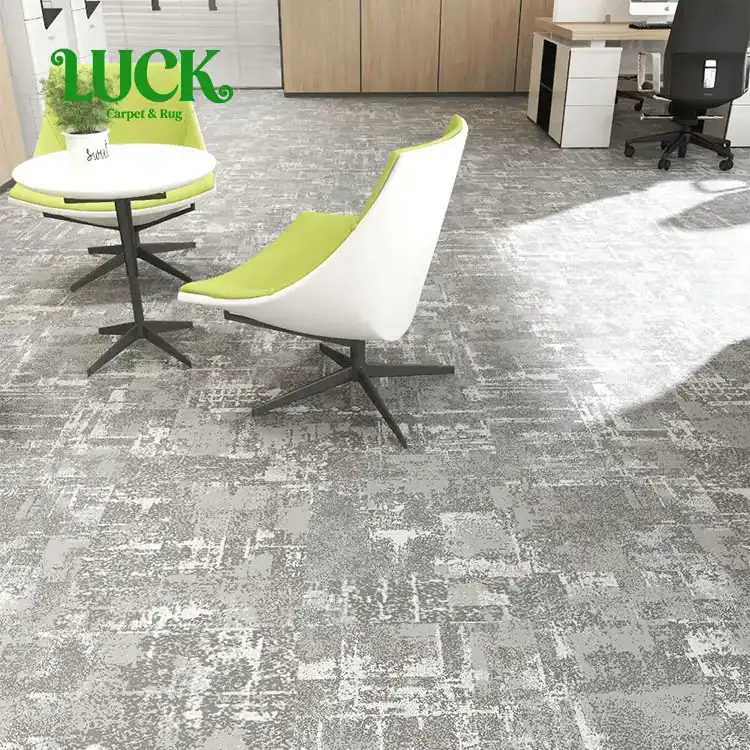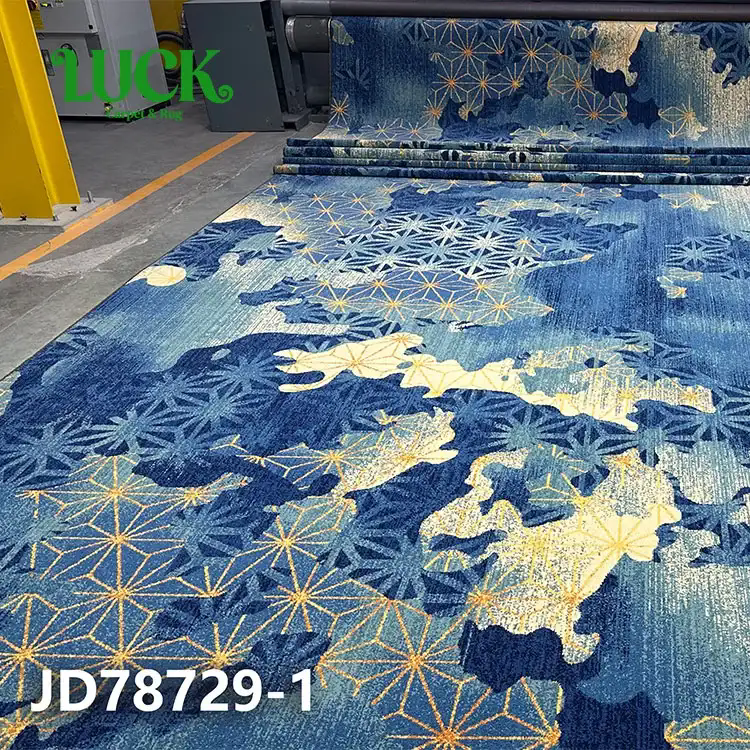
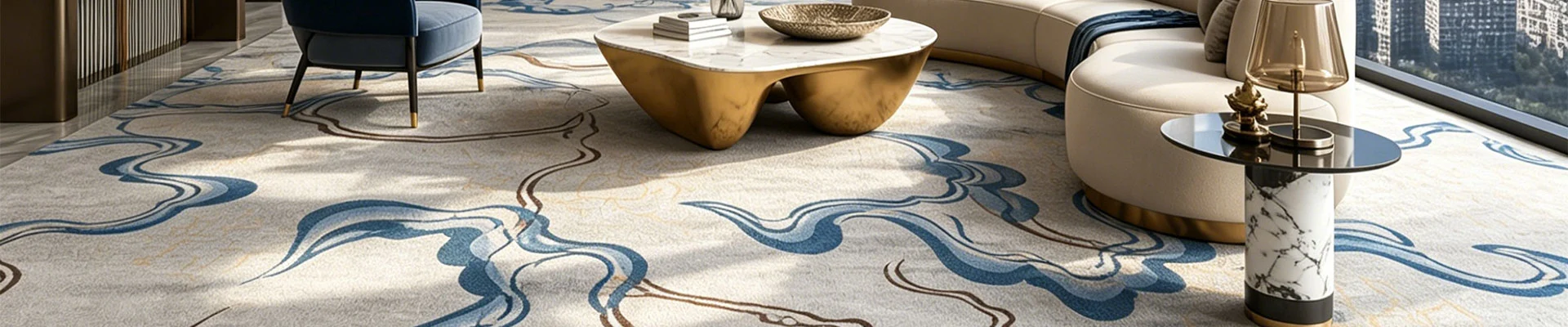
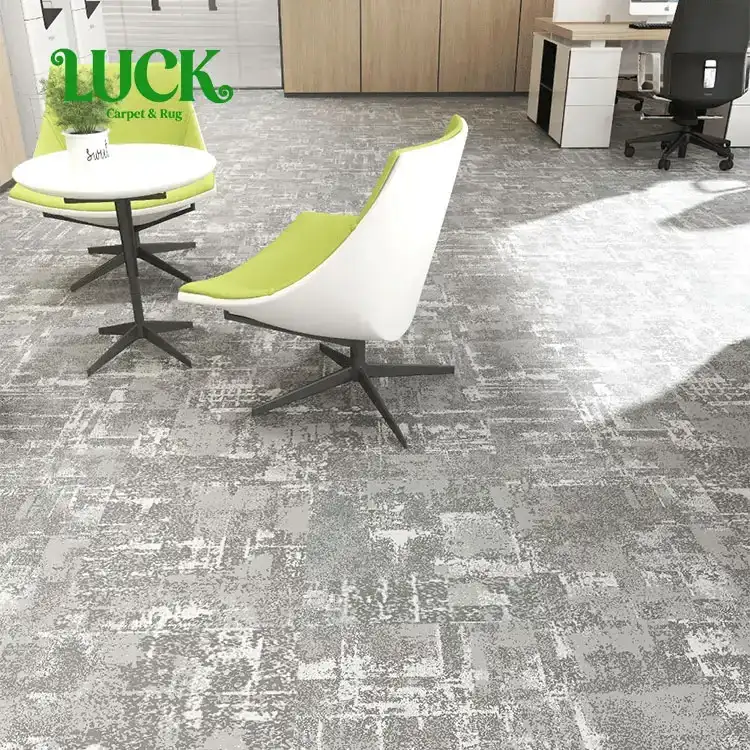
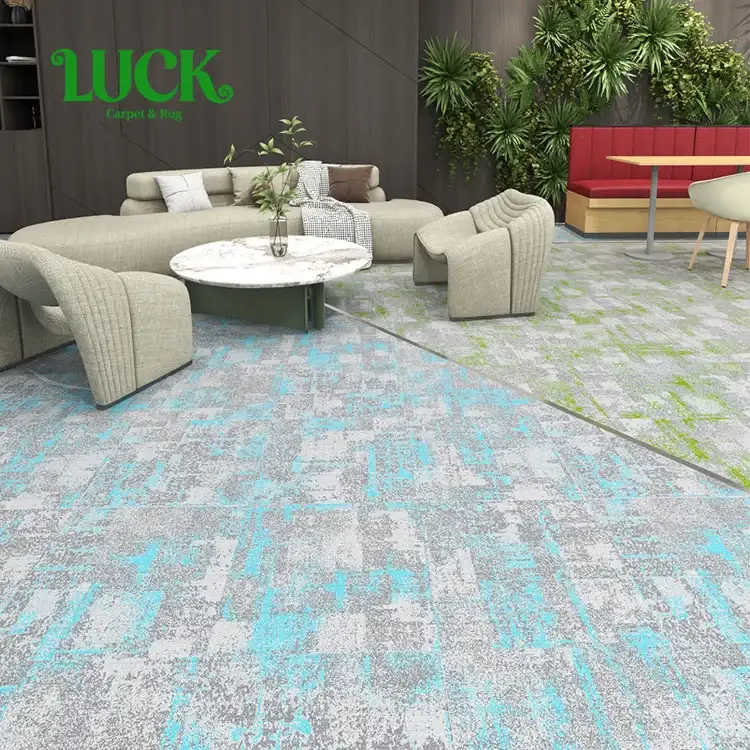
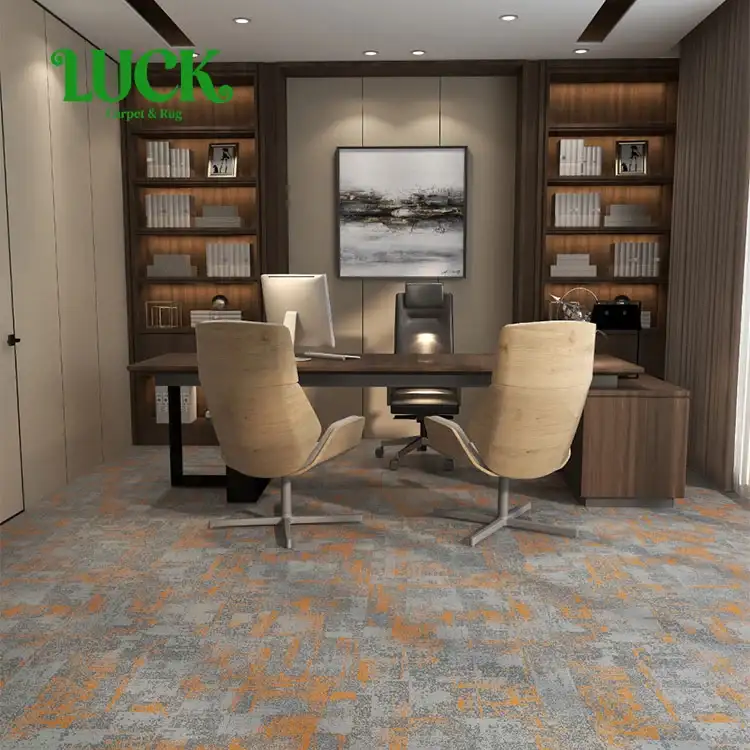
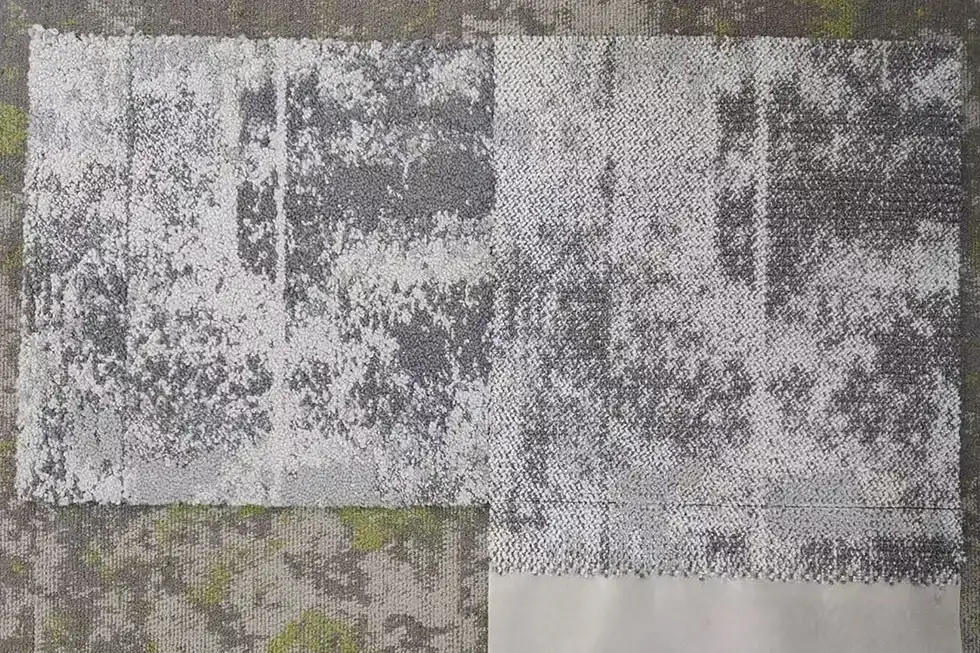
Sharing what happens inside our inspection area can give you a clearer picture of how we keep tufted cut pile carpet tiles consistent. The very first check is shade variation. We pull a sample from the current production batch and compare it against the sealed master swatch under a daylight balanced viewing lamp. Even a subtle drift in dye lot can show up once tiles are laid side by side, so we reject rolls that step outside a Delta E of 0.8 against the standard. Our technicians also view the surface at a low angle because cut pile can reflect light differently when yarn ends lean slightly, and that grazing light test catches visual bands that a head on glance might miss.
The second gate is stain and soiling inspection. Tufted cut pile can trap tiny specks of oil from spinning machinery or airborne dust that settles into the fibre tips before the tile is trimmed. We run every tile under a bright, oblique LED array and mark anything larger than a pinhead. If a mark is spotted, the tile moves to a spot cleaning station where we gently lift the contaminate with a mild, non ionic surfactant rather than masking it. This matters because a hidden stain tends to oxidize over time and become more visible after a few months on a floor, especially near doorways where natural light floods in.
Straightness and dimensional accuracy come next. A carpet tile that is even half a millimetre out of square creates a cumulative gap that the eye catches immediately in a grid layout. We place each tile on a calibrated granite table and measure the four sides against a steel straightedge under a consistent 1 kg tension. Corner angles are checked with a digital protractor that we zero against the same reference surface every morning. Tiles are also flipped face down so we can see whether the backing sheet has any curl that could cause lifting at the seam. Any edge that drifts beyond 0.3 mm per 500 mm of length is quarantined for re trimming.
The final filter is surface defect detection, and here we rely on the trained eye rather than automated scanning because cut pile texture can confuse a camera system. Inspectors walk slowly around a tilted inspection board where each tile is held at chest height. They look for missing tufts, broken yarn ends that create a tiny pit in the pile, stray filaments of a foreign colour, or backing latex that has bled through the primary layer. A missed filament may sound minor, but in a broadloom effect installation of carpet tiles, one discoloured fibre can draw the gaze across the room. We patch these tiny faults by hand if the surrounding density allows, and otherwise the tile is graded out.
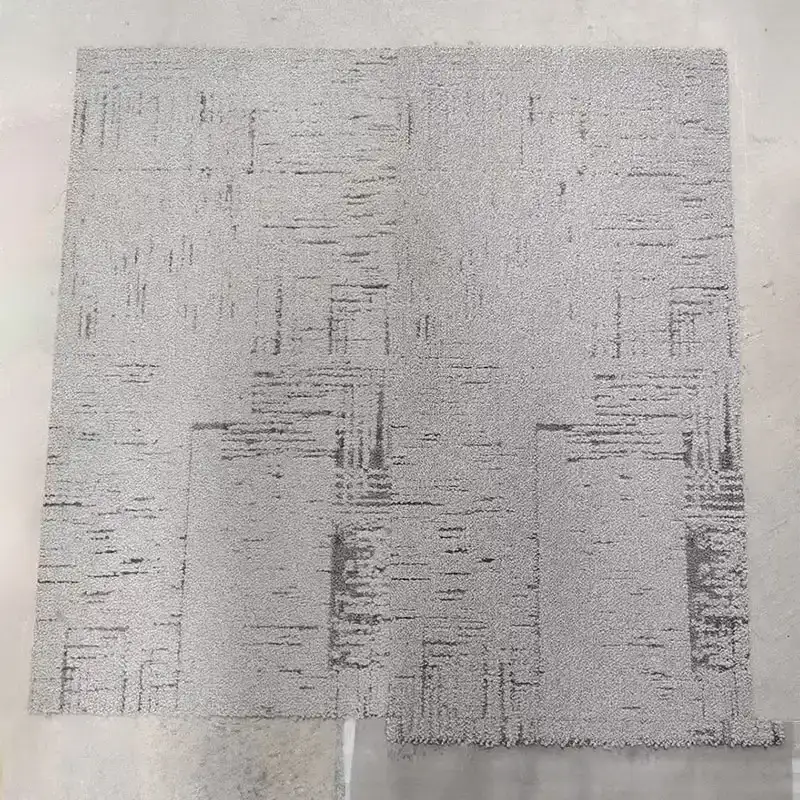
| Style | Tufted Cut Pile Carpet Tile |
| Yarn type: | Nylon/Polyester/Polypropylene |
| Pile Height: | 5mm |
| Pile Weight: | 600g/㎡ |
| Backing: | PVC/PE/Eco-friendly Backing |
| Fire Resistance: | Bfl-S1 |
| Application | Office / Corporate / Retail / Showroom |/School |
| SIze | 50cm50cm/25cm100cm/Custom |
| Pattern | Custom Design Available |
| Surface Pile | Loop pile |
Keeping tufted cut pile carpet tiles safe through the journey from our factory to a job site takes more than a sturdy carton. We begin with an individual inspection sleeve: each tile slides into a transparent, low density polyethylene bag that acts as a moisture barrier and prevents fibre abrasion during handling. The sleeved tiles are then stacked face to face and back to back so that the pile surfaces never rub against the rough backing of the next tile. That stack rests on a rigid honeycomb board inside the outer box, lifting it off the floor of the container and creating an air buffer against humidity. Corners receive extra moulded pulp protectors because courier handling tends to concentrate impact right at the edges, and a deformed corner can compromise the squareness we worked to achieve in the factory. The outer carton is a double wall corrugated board rated for 14 kPa edge crush, sealed with water based adhesive tape that does not leave a sticky residue on the poly bags. Before a pallet leaves, we record the weight and the drop test log of that packaging batch, so we know the configuration has been physically challenged and held up. When the shipment arrives, the tiles should be clean, flat, and ready to install straight out of the box.
1. How do we maintain the look of a cut pile surface on a daily basis?
We recommend vacuuming with a suction only head, no rotating brush, because aggressive bristles can fuzz the cut yarn ends. A pass every two or three days in commercial corridors keeps grit from working down into the pile, which is the main reason a cut pile face starts looking tired. For spills, we suggest blotting immediately with a white cotton cloth and cool water. Warm water or rubbing can set a stain rather than lift it, so patience is more valuable than scrubbing energy.
2. How are the tiles packaged for delivery?
Each carton holds 24 tiles, and the cartons are stacked onto a wooden pallet before being wrapped with a tough stretch film. The pallet configuration keeps the load stable during handling, and the wrap guards against moisture and edge scuffs. This method means the tiles reach the site flat, dry, and without corner damage.
3. What keeps the tiles from sliding or shifting once they are laid loose?
Our secondary backing includes a controlled coefficient of friction face paired with a light tackifier layer that is dry to the touch but grips smooth subfloors. For larger open areas, we advise a pressure sensitive adhesive tab at the perimeter and every third row. That is usually enough to prevent migration even under rolling loads, while still allowing individual tile removal for cleaning or replacement.
4. Is it practical to replace a single damaged tile without disturbing the floor?
One of the advantages of the modular format is that a tile can be lifted with a suction cup, a fresh tile dropped into its place, and the surrounding edges will blend if the batch numbers match. We encourage keeping a few extra tiles from the same dye lot on site, stored flat in their sleeves, so that any future swap is invisible.
5.Does the cut pile texture flatten under heavy office chair use?
Cut pile will show a slight shading effect when the yarn tips are pushed in a single direction repeatedly, which is a natural characteristic of all cut pile textiles, not a defect. We see the best recovery when the pile is allowed to rest overnight, because nylon has a memory that slowly returns the fibre to its upright position. A short pile, higher twist specification for workstations minimizes the visual contrast, and our commercial grade options are built with that in mind. Taking these small habits into account helps a tufted cut pile floor feel fresh over years of heavy use.
Address
Shidaigongguan Building No.5 Office 1212, Haicheng east road, Duanzhou District, Zhaoqing City, Guangdong Province, China
Tel
Copyright © 2026 Zhaoqing Yunle International Trade Co., Ltd. All Rights Reserved.