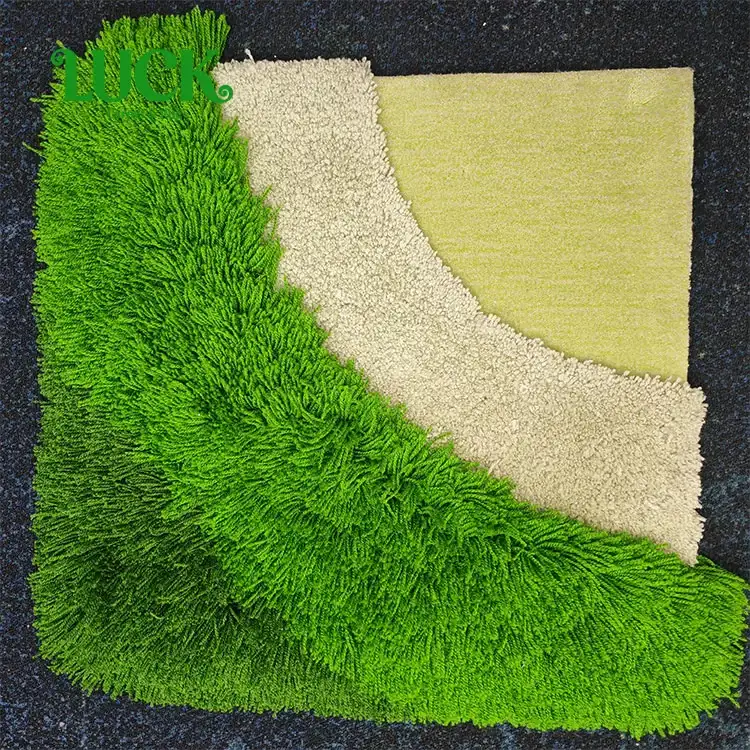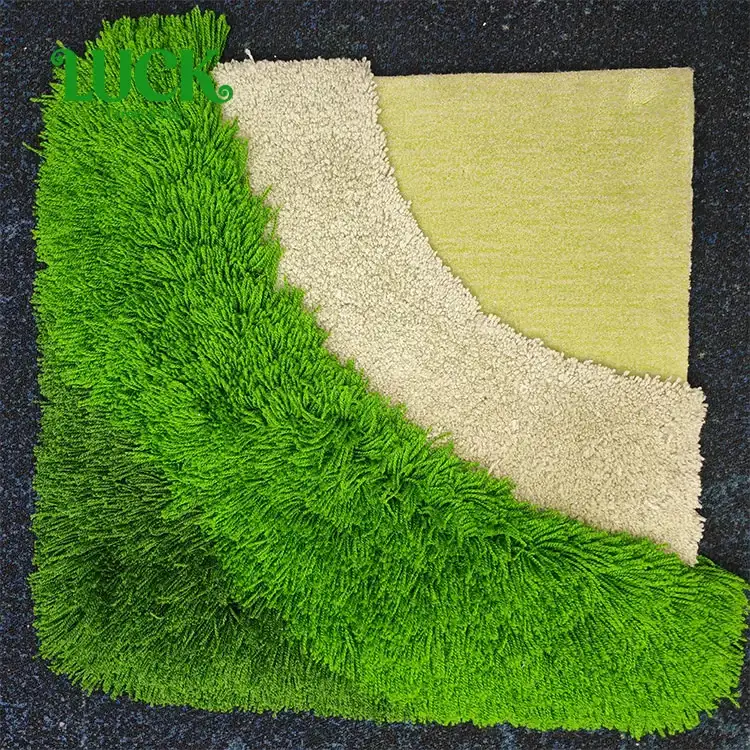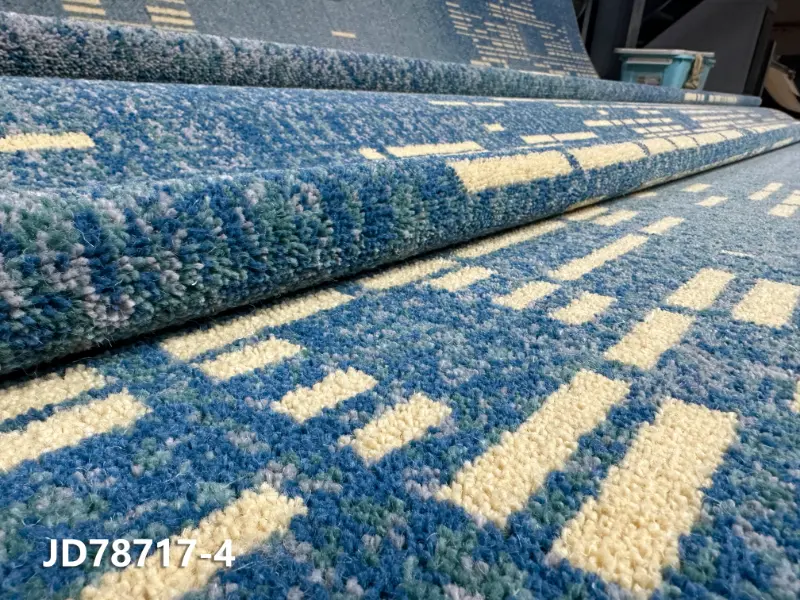
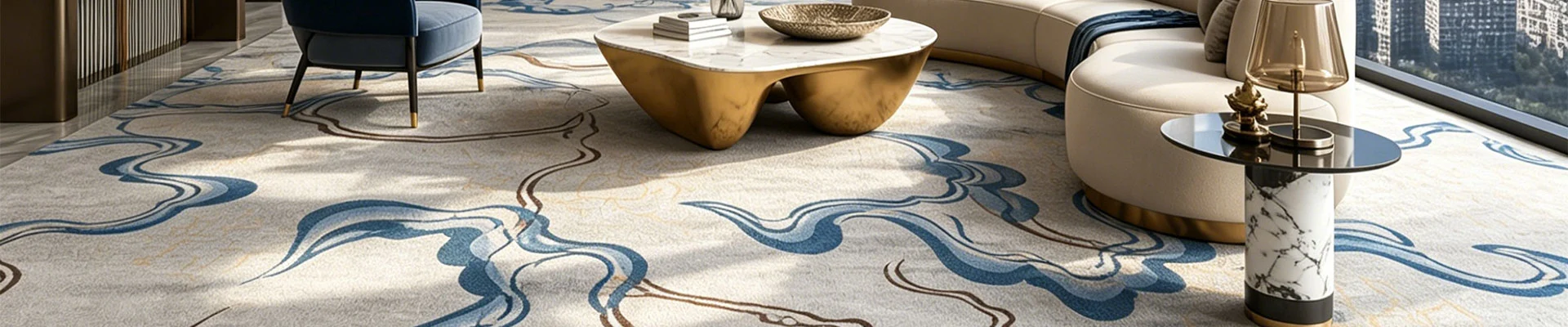
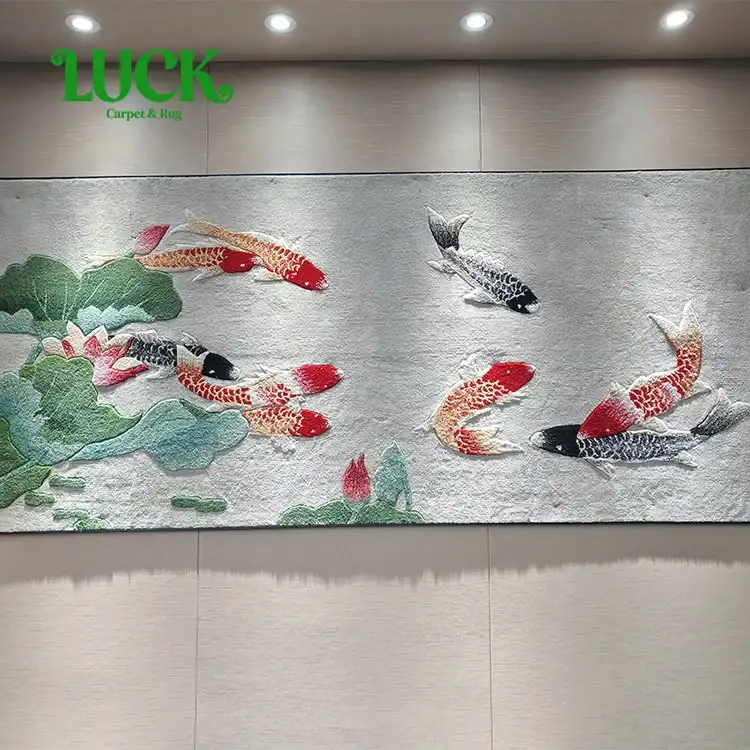
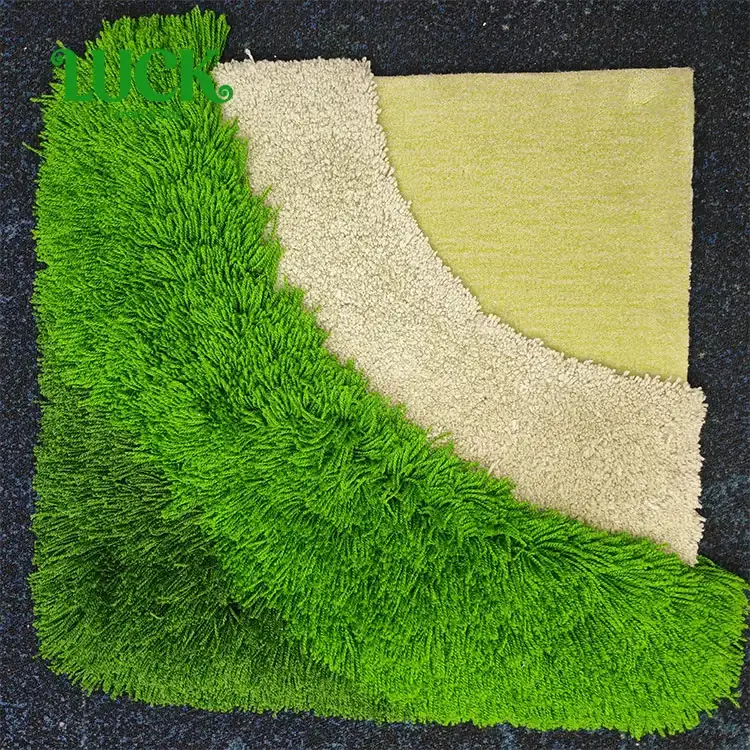
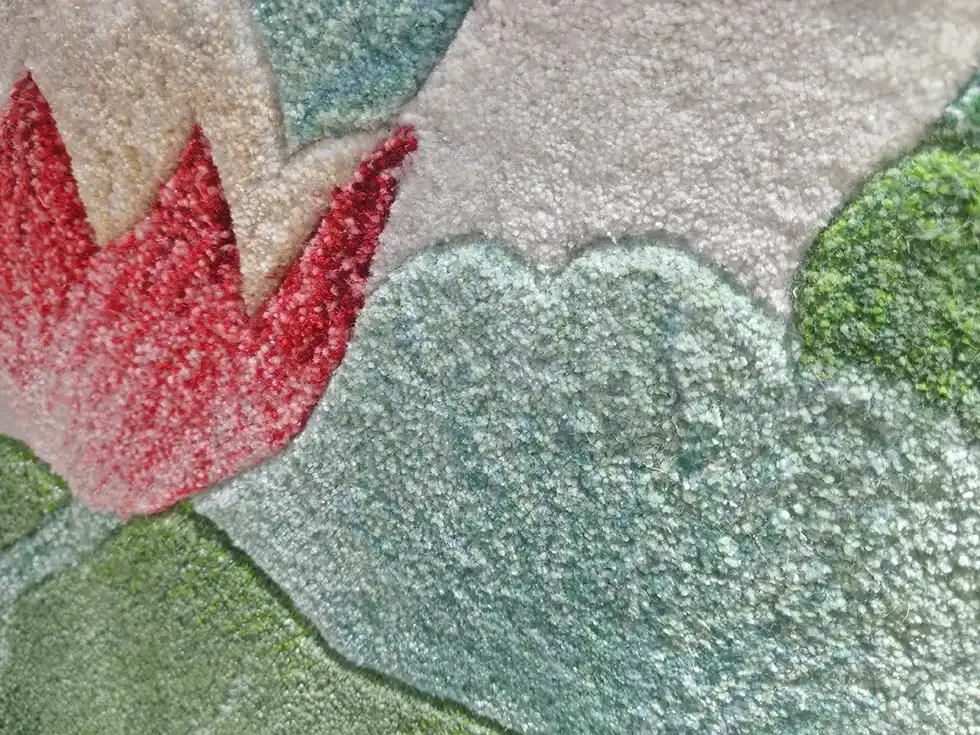
For Wool Hand made Area Rug production, the later trimming process of a handmade wool rug can make the surface more dimensional because wool pile responds well to controlled cutting, leveling, and carving. In our production view, a handmade wool rug is not finished immediately after yarn placement; the surface still needs repeated trimming to improve pattern clarity, pile balance, and visual depth. For a standard handmade wool rug, the pile height may be planned around 8mm–14mm, while local carving depth can often be controlled around 2mm–5mm according to the pattern structure. If the design includes borders, floral lines, geometric shapes, or layered color blocks, trimming can separate different areas more clearly and make the pattern easier to read from a normal viewing distance of about 1–2 meters. For large hotel lounge rugs or villa living room rugs, we may use a fuller pile in the main area and slightly deeper carving along the pattern edge, so the rug does not look flat under indoor lighting. The trimming work usually includes surface shearing, height correction, edge refinement, local carving, and final hand checking. If the surface height difference is not controlled carefully, even a small uneven area of 2mm–3mm may affect the finished look. This is why handmade wool rug finishing depends on both tools and worker experience. Wool fiber has natural resilience, so after trimming, the pile can still keep a soft and rich touch. Compared with a simple flat surface, a well-trimmed handmade wool rug can create stronger shadow lines, clearer color separation, and a more crafted appearance. For hospitality and high-end residential interiors, this dimensional surface helps the rug become part of the design language rather than only a floor covering.
The maintenance of a handmade wool rug should be practical, regular, and gentle, because wool has a soft natural surface that can stay attractive longer when it is cared for correctly. For daily use, we usually suggest light vacuum cleaning about 1–2 times per week, especially in living rooms, hotel suites, lounges, and reception areas where dust can settle into the pile. The vacuum should avoid overly aggressive beater bars, because strong mechanical force may pull the yarn or disturb the surface texture. For spills, the first 5–10 minutes are important; blotting with a clean dry cloth is better than rubbing, because rubbing can push liquid deeper into the pile and enlarge the stain area. If the rug is placed in a sunny room, rotating it every 3–6 months can help reduce uneven color exposure and traffic marks. For furniture pressure, moving heavy furniture slightly or using protective pads can reduce long-term compression in one fixed area. In commercial or hospitality projects, deeper professional cleaning may be discussed every 12–18 months, depending on foot traffic, indoor air quality, and actual use. Wool handmade rugs should not be soaked for long periods, and strong chemical cleaners should be avoided unless they are reviewed as suitable for wool. We also suggest checking the rug edge, backing, and high-traffic zones during regular maintenance. If small loose fibers appear at the beginning of use, this can be managed by proper vacuuming and surface care rather than pulling by hand. With a reasonable care routine, this handmade wool rug can maintain its soft touch, dimensional pile, and decorative value in hotels, villas, lounges, guestrooms, and private interiors.
| Style | Wool Hand made Area Rug |
| Yarn type: | Wool |
| Pile Height: | 12mm |
| Pile Weight: | 1800g/㎡ |
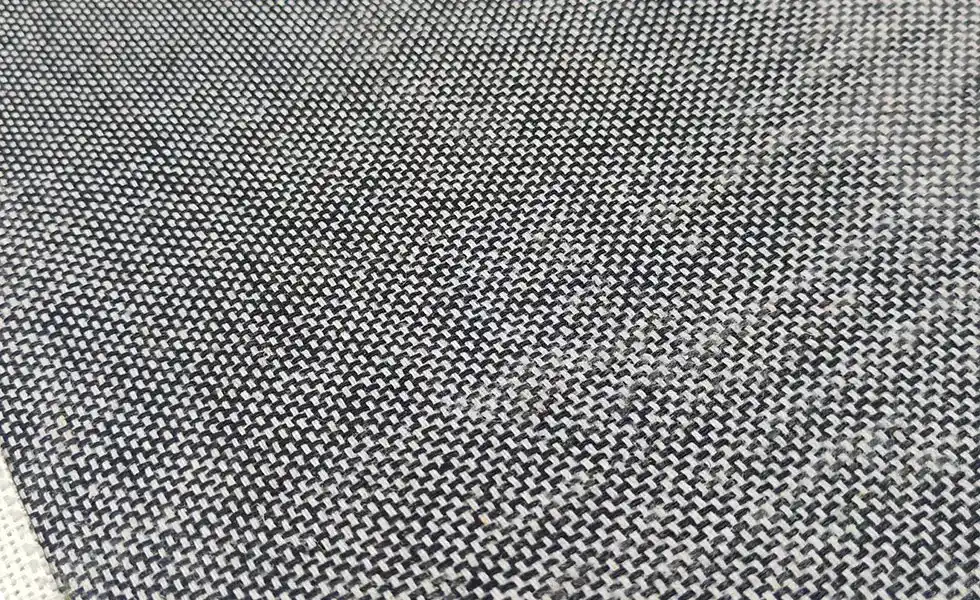
| Backing: | Cotton |
| Fire Resistance: | Bfl-S1 |
| Application | Hotel, Villa, Lounge, Suite, Club, Reception Area, High-End Residential Interior |
| SIze | Custom |
| Pattern | Custom Design Available |
| Technique | Hand-tufted |
FAQ 1: What information helps us develop a custom Wool Hand made Area Rug more accurately?
For a custom project, we usually suggest buyers provide at least 6 key details: target size, room use, design artwork, color reference, furniture layout, and expected surface style. If the rug is for a hotel suite or villa living room, a floor plan with furniture dimensions can help us judge whether the rug should sit fully under the furniture or only cover the central area. For color discussion, Pantone references, yarn samples, material boards, or 2–3 clear interior photos can reduce misunderstanding. When these details are available, we can review size proportion, pattern scale, color direction, edge finish, and backing choice more realistically before sampling or bulk production discussion.
FAQ 2: How should buyers choose the size for different rooms?
Size should be decided by furniture placement, walking space, and the visual center of the room. For a bedside area, 80cm × 150cm, 120cm × 180cm, or 160cm × 230cm may be suitable depending on the bed size and walkway. For a sofa seating area, 200cm × 300cm or 250cm × 350cm is often easier to coordinate with coffee tables and chairs. For larger hotel lounges, villa living rooms, or reception spaces, 300cm × 400cm or custom oversized dimensions can be discussed. We usually suggest leaving at least 20cm–40cm of visible floor around the rug when the design needs a framed look, but this can change according to the room plan.
FAQ 3: Can the rug shape be customized beyond standard rectangles?
Yes, the shape can be discussed according to the project design. Besides standard rectangles, this handmade wool rug can be developed in round, oval, runner, arch, wave, or irregular shapes. For round rugs, common diameters may include 150cm, 200cm, 250cm, or 300cm. For corridor or bedside runner use, widths around 70cm–100cm and lengths around 200cm–400cm can be considered. For irregular shapes, we usually need a vector drawing or clear outline file so the edge can be reviewed before production. Shape customization is useful for boutique hotels, villas, lounge corners, and spaces where a standard rectangle may feel too ordinary.
FAQ 4: How do we control color direction for a custom wool rug?
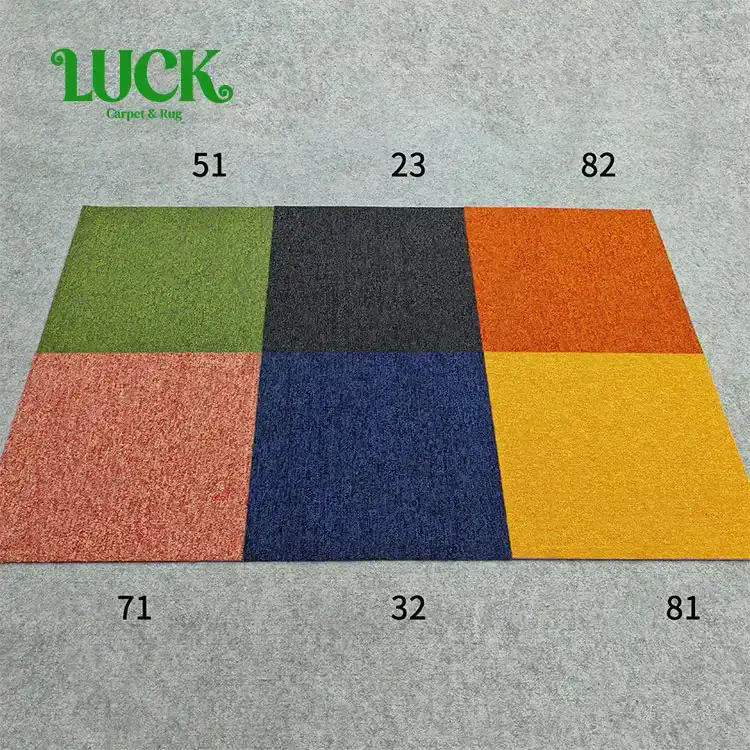
Color control starts from reference confirmation. Buyers can provide Pantone numbers, yarn cards, physical fabric samples, stone samples, wood finishes, or interior renderings. In a custom rug, a simple design may use 2–4 colors, while a richer decorative pattern may use 5–10 colors or more depending on the artwork. We usually suggest checking colors under the project’s expected lighting condition, because warm light, natural daylight, and cool commercial lighting can make the same wool tone look different. If color accuracy is important, sample discussion is recommended before bulk production, especially for brand colors, large background areas, and high-contrast patterns.
FAQ 5: What project spaces are suitable for this handmade wool rug?
Wool handmade rugs are suitable for spaces where comfort, texture, and custom decoration matter. Typical applications include hotel guestrooms, suites, boutique lounges, villa living rooms, private clubs, VIP rooms, reception corners, reading rooms, and high-end residential interiors. For compact rooms under 20㎡, a rug around 160cm × 230cm or 200cm × 300cm may be enough to define the area. For larger rooms around 30㎡–50㎡, sizes such as 250cm × 350cm or 300cm × 400cm can create a stronger visual anchor. For oversized hospitality areas above 50㎡, we usually recommend discussing custom dimensions according to the furniture layout and traffic route.

Address
Shidaigongguan Building No.5 Office 1212, Haicheng east road, Duanzhou District, Zhaoqing City, Guangdong Province, China
Tel
Copyright © 2026 Zhaoqing Yunle International Trade Co., Ltd. All Rights Reserved.