Products
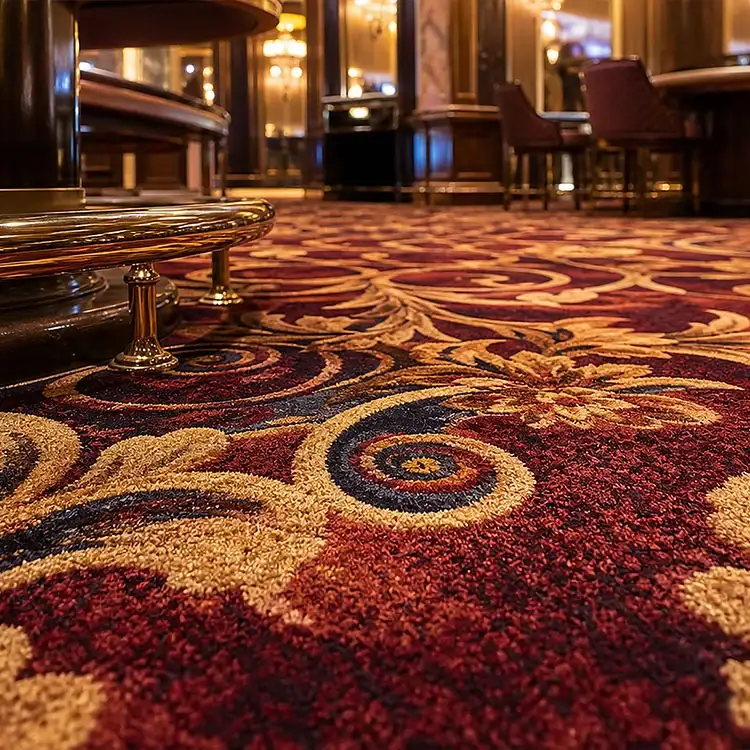
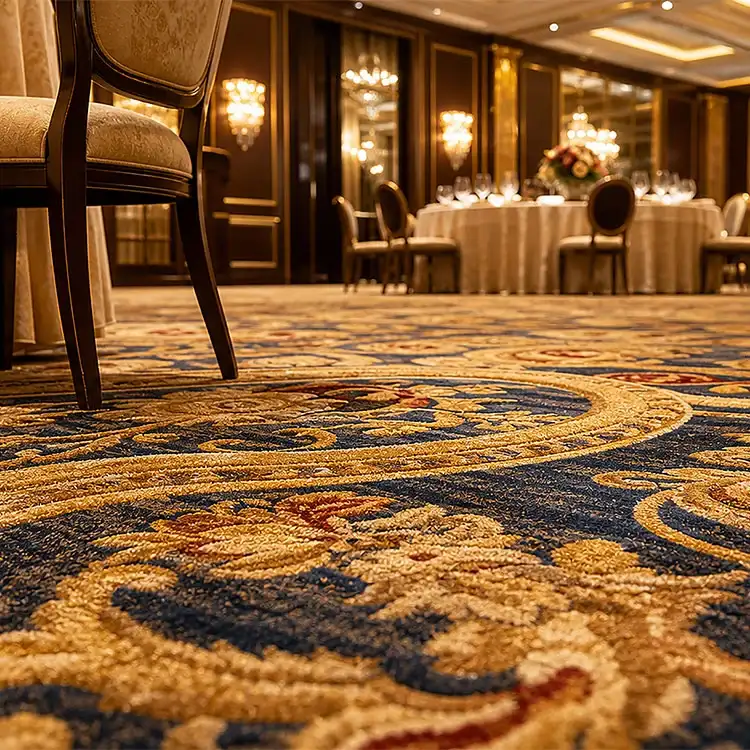
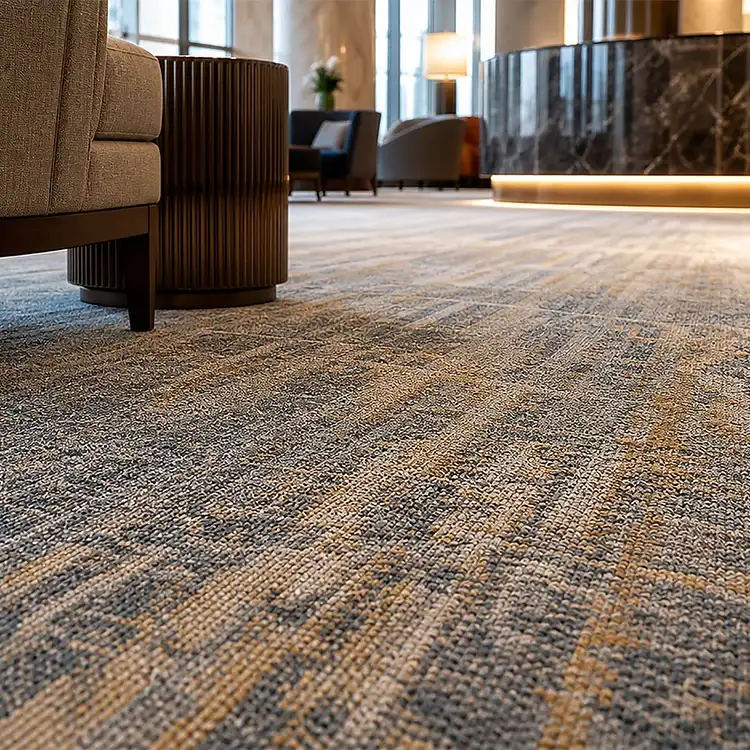
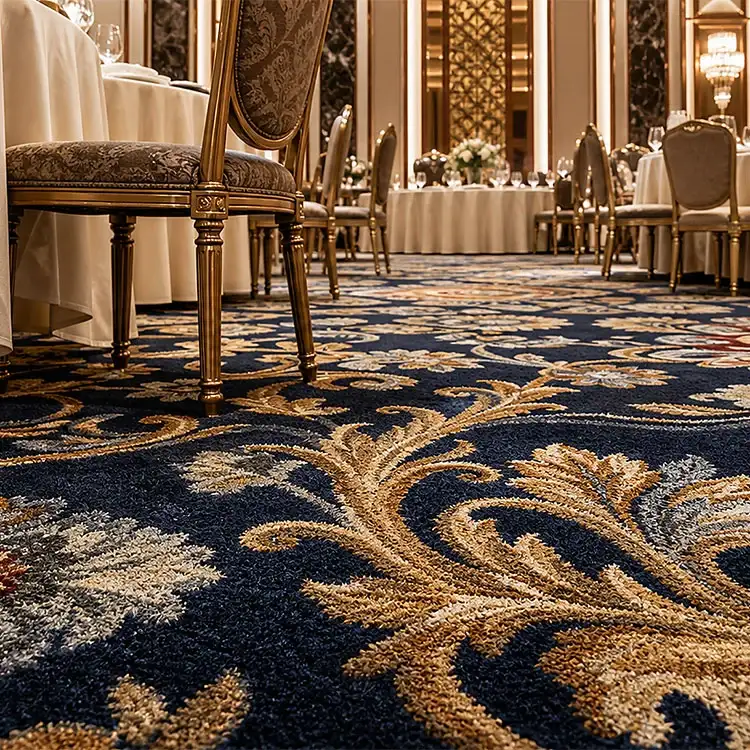
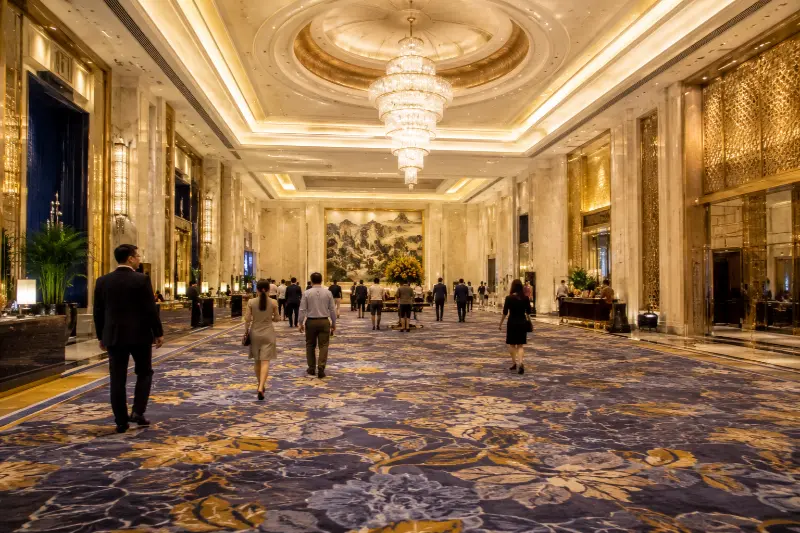
A casino floor is not one floor. The gaming floor carries fixed machine bases and chairs that swivel and roll all night. The aisles between slot banks take the walking traffic. The pit surround takes stools, players leaning in and cocktail service. The VIP and high-limit rooms take lower traffic but the highest expectation on pattern and colour. The corridor back to the hotel repeats the same design in a tighter repeat. Operators usually tender by zone with a phased opening, so the specification has to survive being cut into phases without a visible change at a doorway.
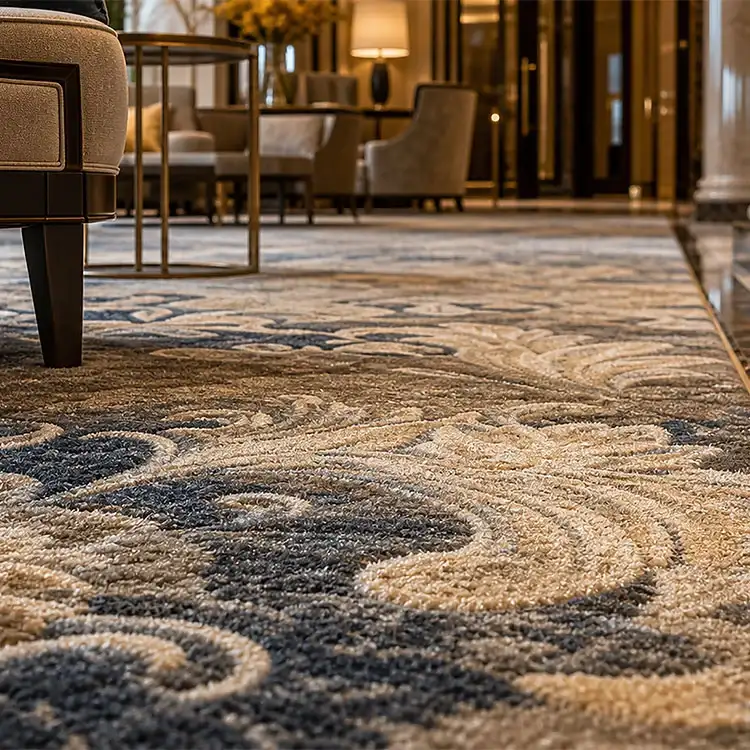
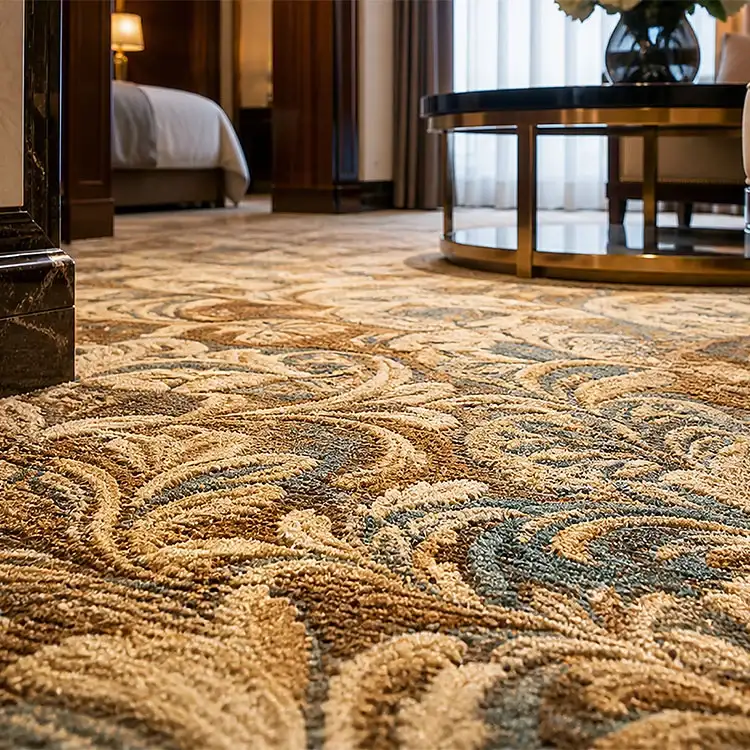
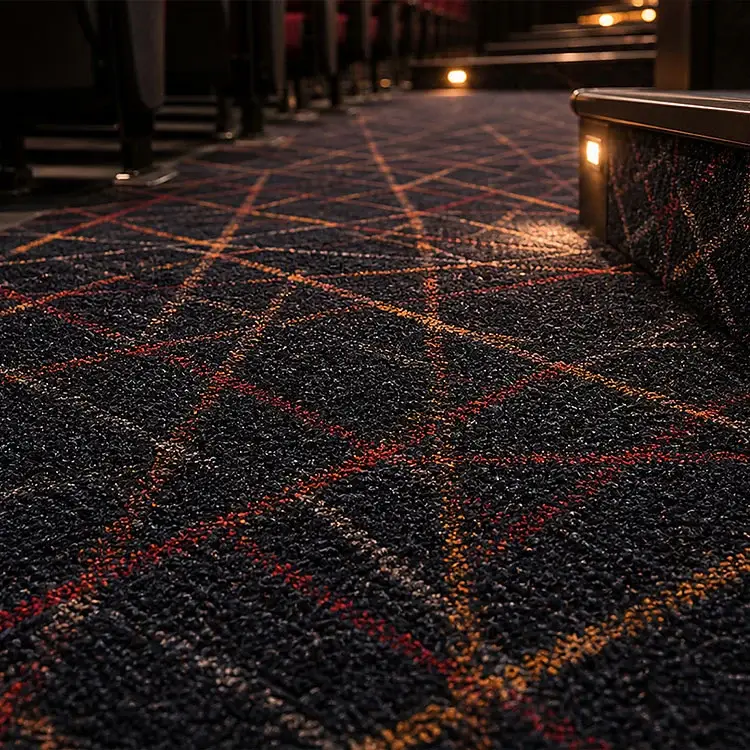
Patterns arrive as a designer's file and leave as a weave file. An electronic jacquard loom carries up to 12 colours in one design, and each colour is a separate yarn rather than a layer printed on the surface. That is what holds a fine gold scroll on a burgundy ground under 24-hour lighting, which is the test every casino carpet actually faces. Yarn is hank dyed with metal-complex dyes and reads Grade 5 to 6 on the blue wool scale to ISO 105-B02. What the loom cannot do is a photographic gradient, a metallic sheen, or a line finer than 7 rows per inch resolves, and we say so when the artwork arrives rather than after the strike-off.
Two faces are quoted on this loom. The base quality is 100 % New Zealand wool, 1200 to 2000 g/m² at 6 to 10 mm pile, and it is the face we recommend where the brief leads with acoustics, natural flame behaviour and the way wool takes a deep ground colour. The 80 % wool and 20 % nylon blend is the alternative for aisles with continuous trolley traffic or halls that get refitted often. Each option is confirmed on its own sheet: pile weight, total weight of 2600 to 3800 g/m², backing in jute or synthetic woven, and fixing by full glue down or double stick. We do not claim every combination, and the specification issued with your quote names the build we will actually run.
Layout is settled before the loom starts. The repeat unit is checked against the usable width of 3.66 m or 4 m, because a repeat that does not divide cleanly leaves a sliver of pattern at the wall. Lay direction is fixed on the drawing so the pile shades read the same way down an aisle, and seams are placed under slot bank plinths and table surrounds instead of down the middle of a walkway. The cutting plan that comes back with the quote states the drops, the seam lines and the waste each drop carries, so the purchase order can be raised on real numbers.
|
Attribute |
Specification |
|
Application |
Casino gaming floor, slot aisles, pit and table surrounds, VIP and high-limit rooms, casino hotel corridor |
|
Construction |
Axminster woven broadloom, electronic jacquard |
|
Face fibre |
100 % New Zealand wool (base quality); 80 % wool / 20 % nylon blend quoted on request |
|
Wool grade |
New Zealand wool, 100 to 150 mm staple, 32 to 38 microns |
|
Pile height |
6 to 10 mm |
|
Pile weight |
1200 to 2000 g/m² on the all-wool face; blend weight confirmed per order |
|
Total weight |
2600 to 3800 g/m² |
|
Total thickness |
10 to 14 mm |
|
Pitch |
7 rows per inch |
|
Pile density |
Approx. 85,000 to 100,000 tufts per m² |
|
Yarn dyeing |
Hank dyed, metal-complex dyes |
|
Colour fastness |
Light Grade 5 to 6 (ISO 105-B02); rubbing Grade 4 to 5 (ISO 105-X12) |
|
Abrasion |
40,000 to 60,000 rubs, ISO 12947-2 at 5 kPa |
|
Backing |
Jute standard; synthetic woven backing on request |
|
Roll width |
3.66 m (12 ft) or 4 m (13.1 ft) |
|
Pattern |
Up to 12 colours, each a separate yarn; repeat set to your design file, re-orders held within 3 mm |
|
Fire classification |
Bfl-s1 to EN 13501-1 (EN ISO 9239-1, EN ISO 11925-2) |
|
Stain protection |
Optional fluorocarbon treatment at finishing |
|
Installation |
Full glue down or double stick |
|
Dimensional stability |
Under 0.2 % length change, ISO 2551 |
|
Use classification |
ISO 10874 class 32 to 33, heavy commercial |
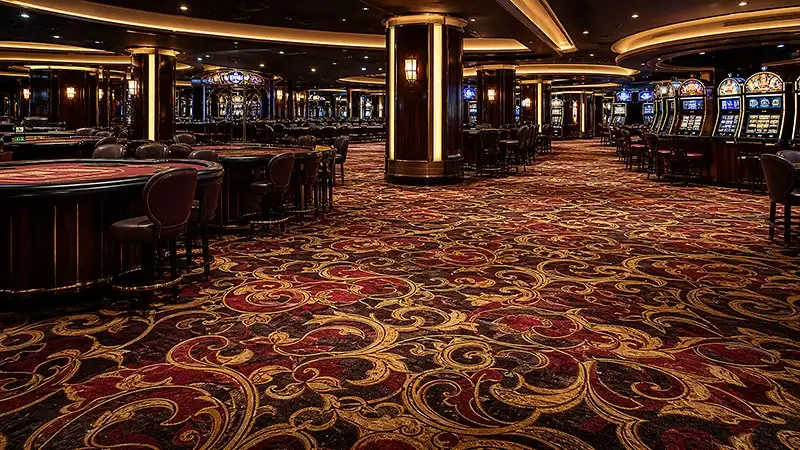
Chair castors and swivelling stools decide appearance here, not footsteps. A wool face at 1200 to 2000 g/m² recovers from that compression better than a low pile synthetic, so a machine base lifted during a refit leaves an indent that brushes out, not a permanent shadow. Spills arrive at table height: cream liqueur, red wine, soda. Wool holds a water-based spill at the surface long enough to blot, and the optional fluorocarbon finish buys more time. Under a hard ceiling in a room that never closes, the face also takes the edge off the noise.
Some areas should not take this carpet. Buffet and restaurant floors need a tight loop or a hard surface that survives grease and trolley traffic, as do pool decks, spa and back-of-house corridors. Where a design needs a photographic image or a metallic effect, a woven Axminster is the wrong medium, and we say so before the artwork is developed. What is left, the gaming floor, pit surrounds, VIP rooms and hotel corridor, is where the budget goes into pattern.
What do you need from us to quote a casino carpet?
The floor plan split by gaming zone, the design file with a colour reference for every colour, the area you are pricing per zone, the fire class your consultant requires, and the destination with your opening date. Project buyers often send a hand-marked PDF. We return a price, a cutting plan with the seams marked, test reports and a strike-off date.
Can you reproduce a ten-colour pattern exactly?
Up to 12 colours, each a separate yarn rather than a print layer, so a ten-colour motif is ordinary work here. Hank dyeing holds the deep grounds these schemes use. The strike-off is the proof, about two weeks after approved artwork, and nothing goes to bulk until it is signed; production then runs 30 to 40 days, six to eight weeks custom.
Should we specify 100 % wool or the 80/20 blend?
All-wool where the brief leads with acoustics, flame behaviour and colour depth, which covers most gaming floors and VIP rooms. The blend where one aisle takes continuous trolley traffic or the hall is refitted often, because nylon takes abrasion. Both run at 7 rows per inch, each quoted at its own pile weight.
How are repeats and seams planned on a gaming floor?
The repeat unit is tested against the 3.66 m or 4 m usable width before anything is woven, and lay direction is fixed so pile shades read consistently down an aisle. Seams go under slot bank plinths and table surrounds, never down a walkway. The cutting plan states drops, seam lines and waste per drop, and a re-order lands within 3 mm of the retained strike-off.
What fire and stain documentation comes with an order?
Fire classification for this construction is Bfl-s1 to EN 13501-1, supported by EN ISO 9239-1 and EN ISO 11925-2 reports, and both travel with the shipping documents. Where a tender still asks for B1 under DIN 4102, tell us at quotation: that is a different test, and we send the evidence we hold rather than a class we cannot back. Stain protection is optional and named on the order.
Address
Shidaigongguan Building No.5 Office 1212, Haicheng east road, Duanzhou District, Zhaoqing City, Guangdong Province, China
Tel
Copyright © 2026 Zhaoqing Yunle International Trade Co., Ltd. All Rights Reserved.