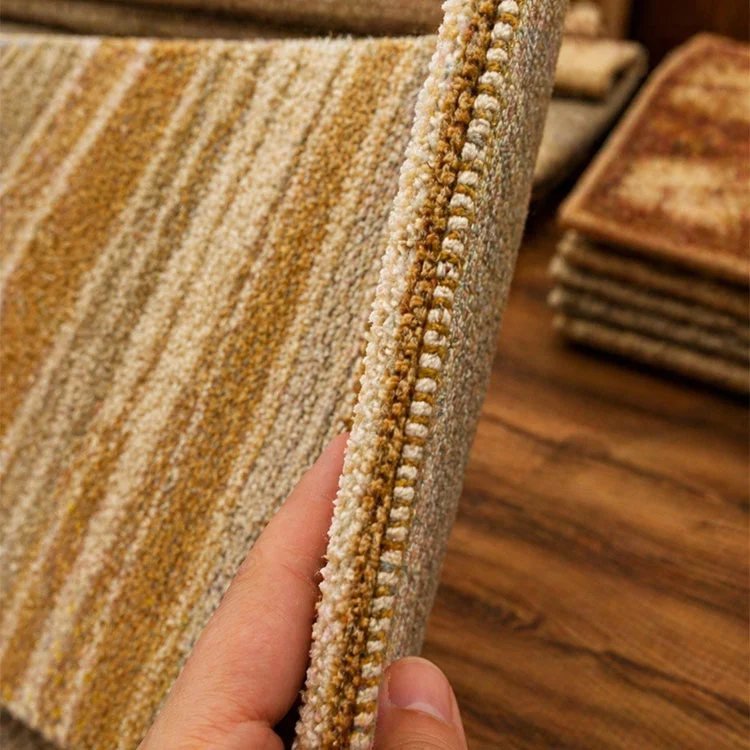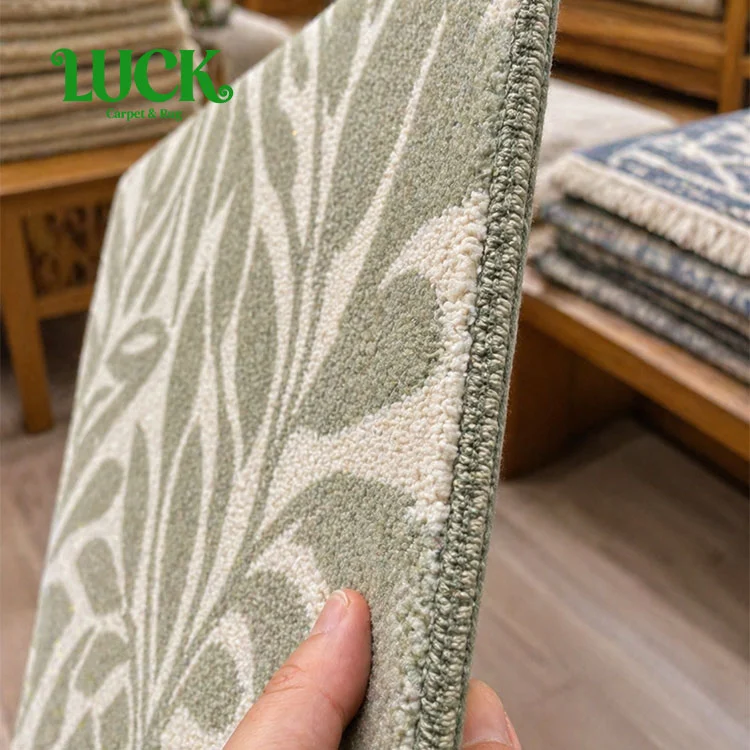
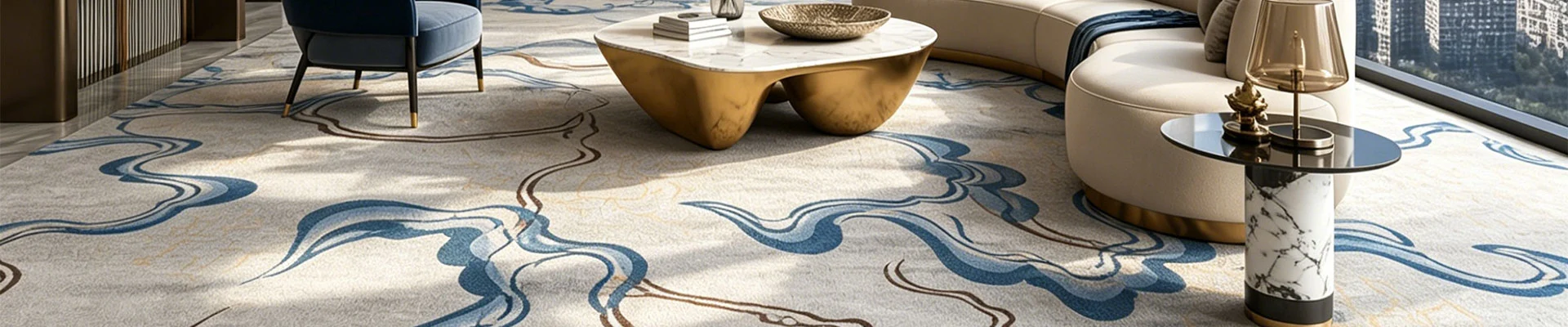
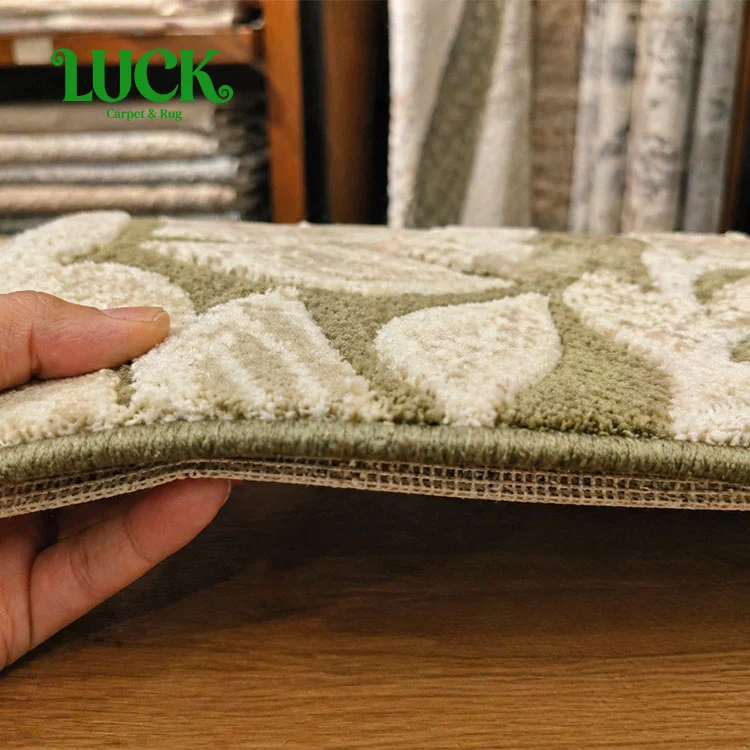
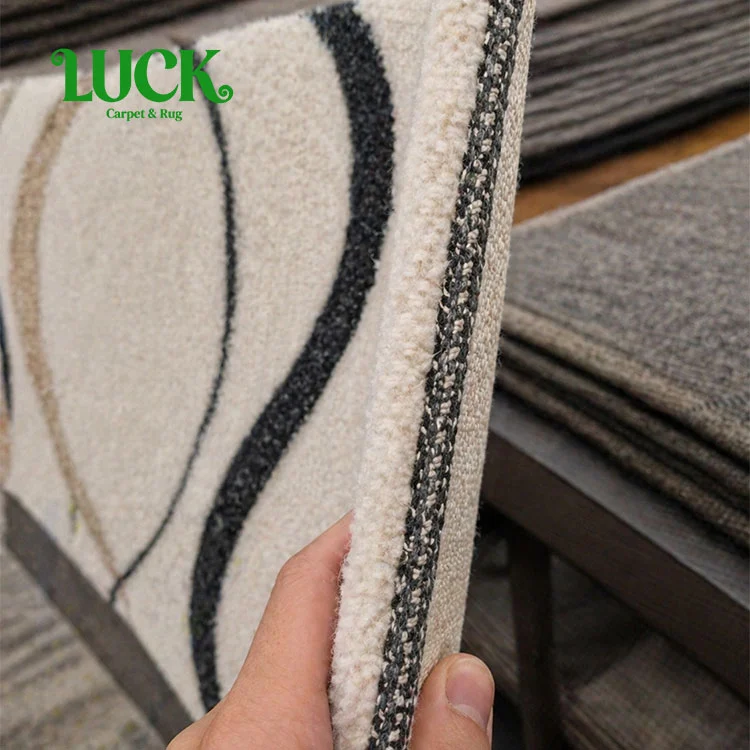
A Wilton Area Rug for Bedroom is different from printed rugs and many tufted rugs because its surface and foundation are formed as one woven structure, and this difference can be explained through weight distribution rather than only appearance. In our product review, I usually compare where the rug’s weight comes from. A printed rug may focus more weight on the surface fabric and printed layer, while its backing mainly supports flexibility and floor contact. A tufted rug often needs additional backing and adhesive after yarn insertion, so part of its structural weight comes from post-finishing. A Wilton rug is different because the face yarn, warp yarn, and weft yarn are built together during weaving. For a bedroom Wilton rug, the surface pile weight can commonly be discussed around 800–1, 400gsm, while the foundation or backing structure may be around 600–1, 100gsm. This means the product weight is not only added at the back after production; it is distributed between the woven face and the woven foundation. That is why a Wilton rug often feels more integrated than a printed rug and more structurally organized than many tufted rugs. I also look at the number of structural layers. A printed rug is often closer to a surface layer plus backing layer structure, and a tufted rug may involve base cloth, inserted pile, adhesive, and secondary backing. A Wilton rug is more like a woven face-and-foundation system, where the pattern and base are created together. For bedroom use, this matters because the rug should lie neatly beside the bed, keep its pattern stable from daily walking, and avoid feeling like a loose top layer attached to a separate bottom. At LUCK, I compare Wilton with other rug types by checking how much of the weight belongs to the woven surface, how much supports the foundation, and whether the structure works as one textile body.
A Wilton rug is a woven carpet made on a Wilton loom, and its pattern is created by yarn color placement inside the weaving process. This is the key point I explain to buyers: the design is not printed after the rug is finished; it is formed when selected pile yarns rise to the surface. A typical bedroom Wilton rug may use 2–8 active yarn colors in the loom. If the design is minimal, 2–3 colors can create a calm bedroom look; if the rug needs soft floral detail, a vintage border, or a more decorative pattern, 5–8 colors can give the design more depth. This color number is different from digital printing, where many visual tones can be created by ink, but the color mainly stays on the surface. In Wilton weaving, each visible color is connected to a yarn position, so color planning must match the loom structure. I also check pattern repeat accuracy. Bedroom rugs often use borders, center motifs, or balanced geometric layouts, so the repeat should stay visually aligned along the length and width. In our factory discussion, we usually try to keep visible pattern shift within a small range, such as about ±2mm–3mm for standard decorative patterns, because a larger shift can make a border look uneven when placed beside a bed. Another data point is the weaving route itself. A Wilton rug is built through the interaction of pile yarn, warp yarn, and weft yarn, so at least three yarn systems work together to form the face and foundation. This is why I describe Wilton rugs as structured woven home textiles rather than general decorative rugs. At LUCK, before recommending a bedroom Wilton rug, we check yarn color plan, loom repeat, pile type, woven foundation, edge finish, and final surface balance, because these details decide whether the rug looks stable, soft, and suitable for a bedroom.
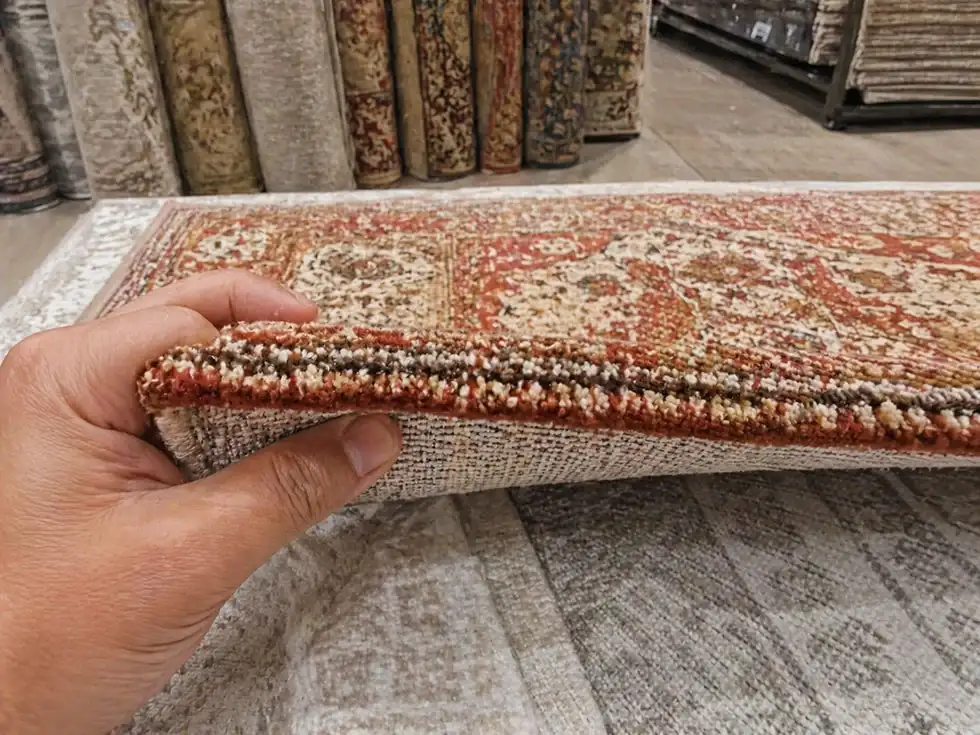
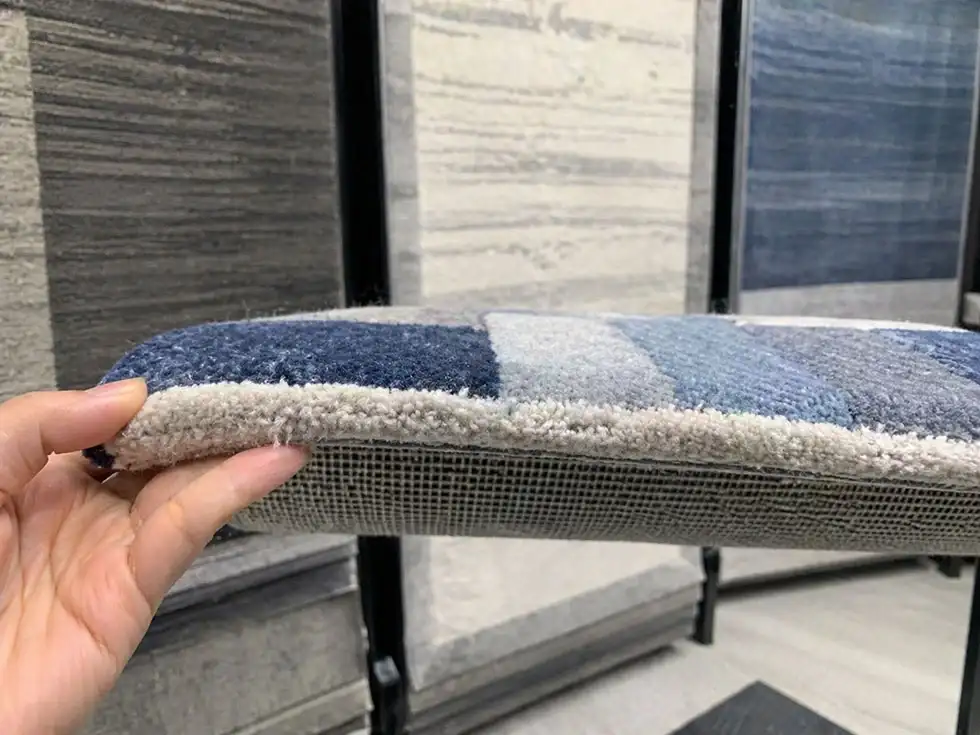
| Style | Wilton Area Rug for Bedroom |
| Yarn type: | Wool |
| Pile Height: | 8mm |
| Pile Weight: | 1550g/㎡ |
| Backing: | Jute |
| Fire Resistance: | Bfl-S1 |
| Application | Living Room, Bedroom, Dining Area, Study, Apartment, Family Room |
| SIze | Custom |
| Pattern | Custom Design Available |
| Technique | Woven |
When I give usage advice for a Wilton Area Rug for Bedroom, I usually start from the room layout rather than from the rug alone. A bedroom rug must work with the bed, wardrobe, nightstand, walking route, door gap, and floor type. If the rug is used as a bedside rug, I usually suggest leaving about 10cm–20cm of visible floor between the rug and the wall or skirting line. This small space helps the layout look cleaner and also reduces the chance that the rug edge is pushed upward by the wall. If the rug is partly placed under the bed, the visible part should be wide enough for the feet to land naturally after getting up. In many bedroom layouts, an extension of about 45cm–70cm beyond the bed side is a practical starting point because it gives the user a real stepping area instead of only a decorative strip. Door clearance is another detail I always check. If the rug is placed near wardrobe doors, sliding doors, or low furniture, a fuller structure around 12mm–15mm may feel more comfortable underfoot, but it also needs enough space for the door to move smoothly. On tile, laminate, vinyl, or polished wood floors, I usually remind buyers that a woven backing provides structure, but it may not provide strong grip by itself; if the floor is very smooth, a rug pad can be discussed. Furniture pressure also matters in bedrooms. If a bench, chair, or nightstand stays on the same part of the rug for a long time, I suggest adjusting the position slightly every 2–3 months to reduce fixed compression marks. For room environment, I prefer keeping indoor relative humidity around 40%–60%, because a room that stays too damp can make odor and dust control more difficult, while a room that is too dry may make the bedroom feel less comfortable. These are not fixed rules for every home, but they are practical checks I use when helping buyers place a Wilton bedroom rug more safely and comfortably.
For maintenance, I usually explain to buyers that this bedroom Wilton rug should be cared for gently and regularly, because bedroom rugs collect fine dust, hair, bedding fibers, and skin flakes even when the surface looks clean. In a normal bedroom, vacuuming 1–2 times per week is usually a practical starting point. If the room has pets, open windows, or heavier daily use, 2–3 times per week may be more suitable. I prefer this regular routine because it removes small particles before they settle deeper into the woven surface. For a bedroom Wilton rug with a lower-to-medium surface, cleaning is usually more manageable than with a very loose high-pile rug, because dust stays closer to the top and can be removed more easily. Stain response is another detail I care about. If water, tea, skincare products, or makeup touches the rug, the first 5–10 minutes are important. I suggest blotting with a clean dry cloth instead of rubbing, because rubbing can push residue deeper into the woven pile and make the mark harder to control. For larger bedroom rugs, rotating the rug every 3–6 months can help balance sunlight exposure, walking direction, and furniture pressure. This is especially useful when the rug is near a window, because one side may receive stronger daylight than the other. For deeper cleaning, I do not give a fixed promise. In many home bedrooms, professional cleaning can be discussed every 12–18 months, but lightly used rooms may not need it as often. Strong bleach, long soaking, and high-temperature treatment should be avoided unless the exact yarn material and backing structure have been reviewed. At LUCK, our care advice is based on real use: clean lightly but regularly, respond quickly to spills, rotate the rug when needed, and choose the cleaning method according to the rug material, woven backing, and bedroom environment.


Address
Shidaigongguan Building No.5 Office 1212, Haicheng east road, Duanzhou District, Zhaoqing City, Guangdong Province, China
Tel
Copyright © 2026 Zhaoqing Yunle International Trade Co., Ltd. All Rights Reserved.