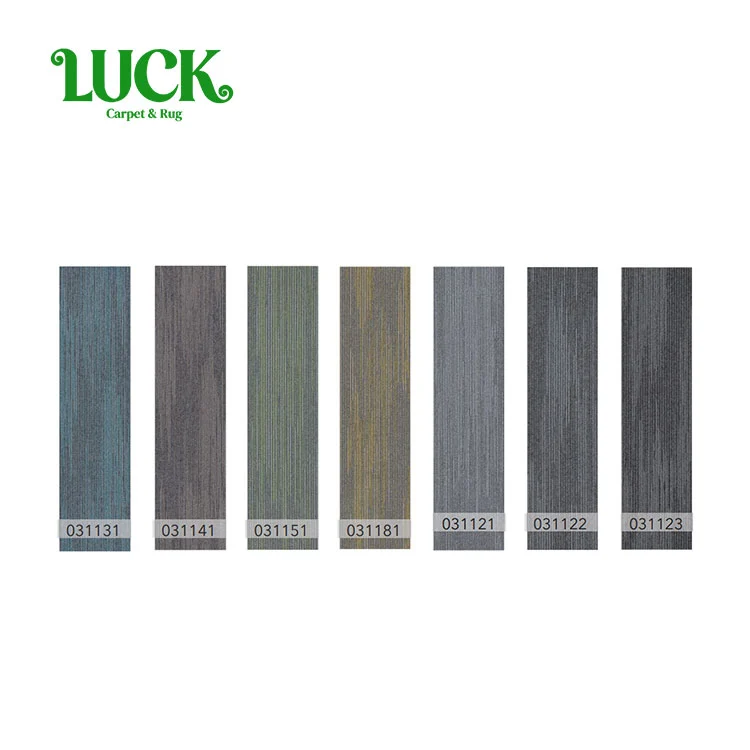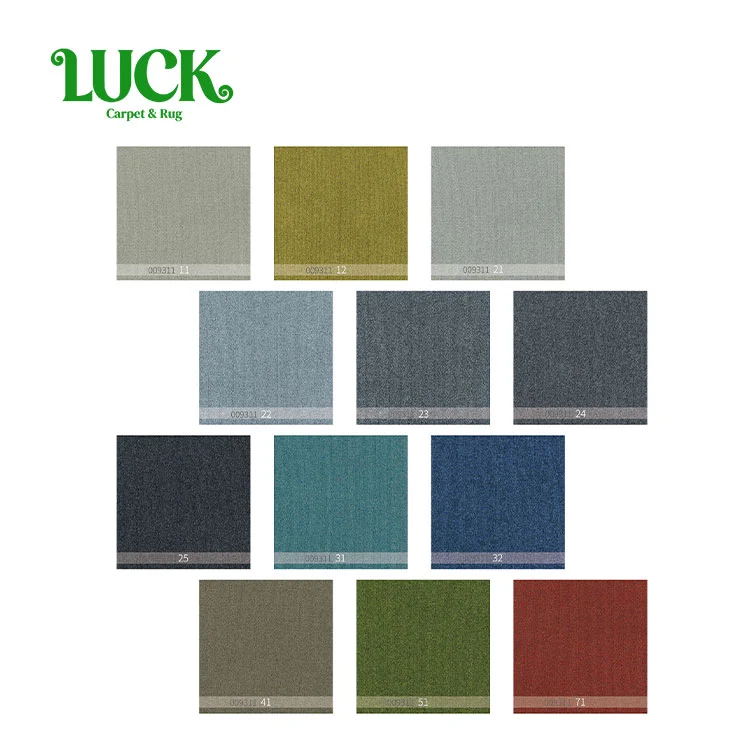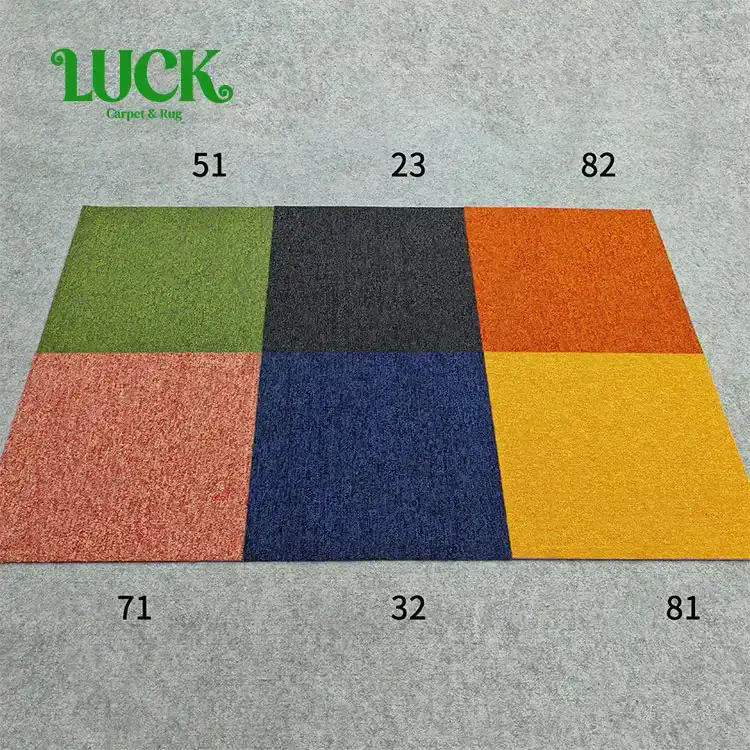
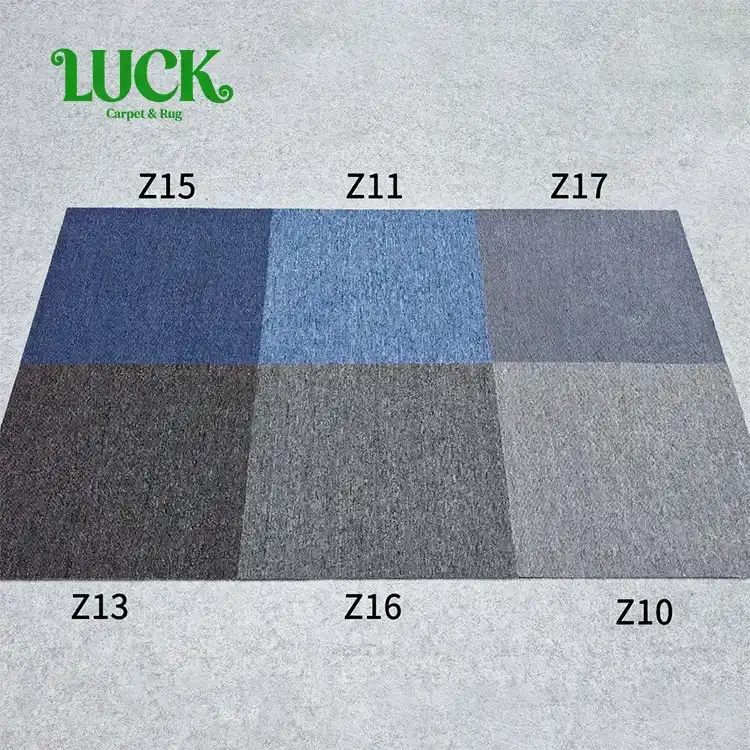
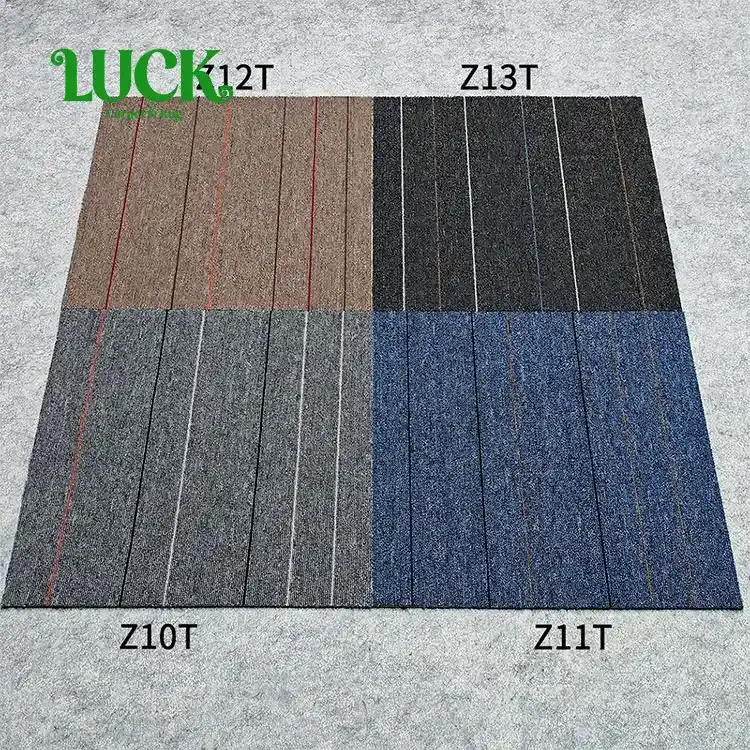
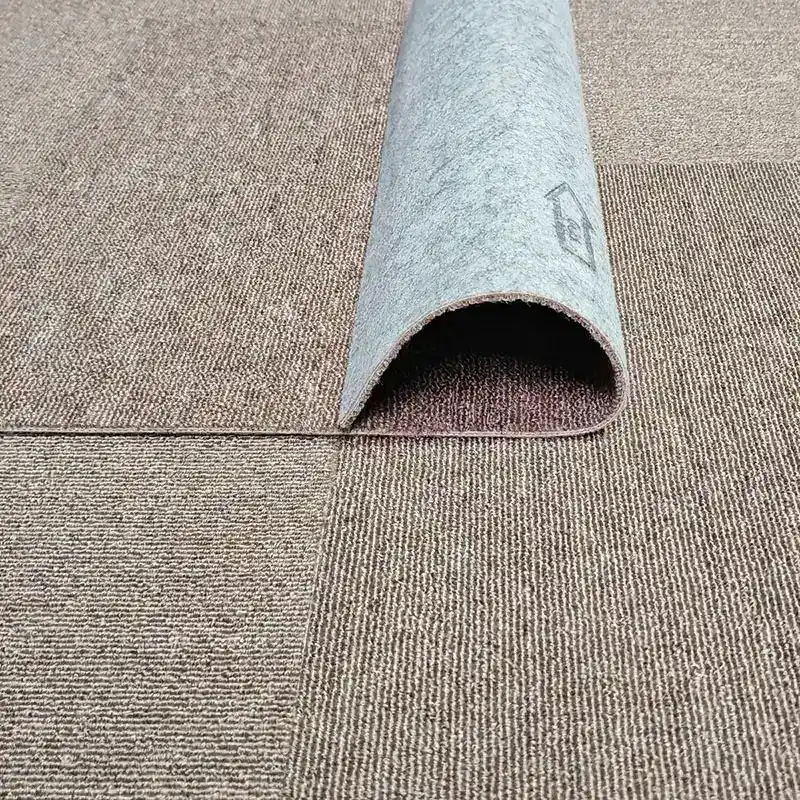
When we develop our PP Tufted Carpet Tile with Eco Backing, one topic that deserves a closer look is the inherent limitation of printing onto polypropylene fiber. Many flooring buyers enter the conversation expecting patterned carpet tiles, but with PP yarn a different technical path must be taken. The central difficulty lies in the color fixation temperature. Polypropylene has a melting point around 165 degrees Celsius, and its softening point begins even lower, near 140 degrees. Traditional carpet printing methods use steam or radiant heat to set dyes into the fiber, a process that routinely demands stable temperatures well above 160 degrees for the dye molecules to bond permanently. At those heat levels PP yarn loses its dimensional stability: the tufts start to shrink or lose their twist, the pile height collapses, and the backing can delaminate. We ran early trials in our sampling workshop and confirmed very quickly that post-dyeing and surface printing simply cannot deliver a consistent floor covering with this fiber. This is not a defect but a material reality, one that steered us fully toward solution dyeing. In solution dyeing, also referred to as spun dyeing, the pigment is dispersed into the molten polypropylene stream before the filaments are extruded. The color becomes an integral part of the fiber cross-section, which yields remarkable resistance to fading, bleach cleaning, and UV exposure when compared with topically applied dyes. Our tiles carry that embedded pigmentation from the surface all the way through the pile, so even as foot traffic gradually wears down the fiber tips, the visible shade remains uniform and fresh.
Moving into the properties of polypropylene yarn itself, we work with characteristics that directly shape how the tiles perform under real commercial conditions. The density of polypropylene is only 0.91 grams per cubic centimeter, the lowest among all synthetic carpet fibers, which means a full pallet of our tiles is noticeably easier to lift and transport. This lightness brings genuine savings in freight, reduces strain during installation, and becomes a structural benefit in high-rise projects where floor loading limits must be respected. One of the most practical advantages is the near-zero moisture regain, typically measured below 0.1 percent. The yarn does not absorb water, so spills from coffee, soda, or routine cleaning solutions remain on the surface where they can be blotted up before any staining or wicking occurs. That same hydrophobic nature allows the tile to dry quickly after wet extraction cleaning, lowering the risk of mold or mildew developing in humid settings. Polypropylene is inherently resistant to most acids, alkalis, and common industrial chemicals, which makes it suitable for spaces cleaned frequently with detergents or disinfectants. On the thermal side, we always note that the melting point sits at approximately 165 degrees Celsius, meaning any direct contact with a high-heat source, such as a dropped cigarette or a portable heater placed on the floor, can cause localized melting. For that reason, we guide clients away from placing these tiles near unshielded heating ducts or in areas subject to hot cookware drops. Mechanically, polypropylene offers a tenacity in the range of 3.5 to 5.5 grams per denier, which is sufficient for moderate to heavy commercial foot traffic when the tufting gauge is dense and the pile height is controlled. We select our needle gauge and yarn twist to give a comfortable underfoot feel while standing up to rolling office chairs and daily walkways. Because the base polymer is sensitive to prolonged UV exposure and can become brittle over time, we incorporate UV stabilizers directly into the extrusion process to protect the fiber. These are the material fundamentals that guide every production decision we make.
| Style |
PP Tufted Carpet Tile with Eco Backing |
| Yarn type: | polypropylene |
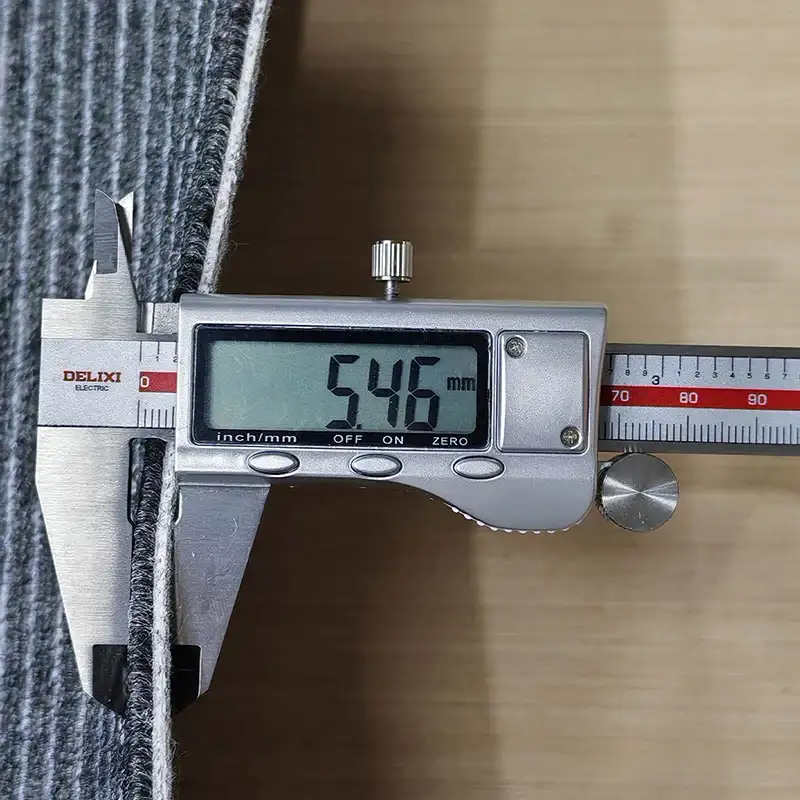
| Pile Height: | 4mm |
| Pile Weight: | 500g/㎡ |
| Backing: | Eco-friendly Backing |
| Fire Resistance: | Bfl-S1 |
| Application | General commercial, education, retail, public corridors |
| SIze | 50cm50cm/25cm100cm/Custom |
| Pattern | Custom Design Available |
| Surface Pile | Loop pile |
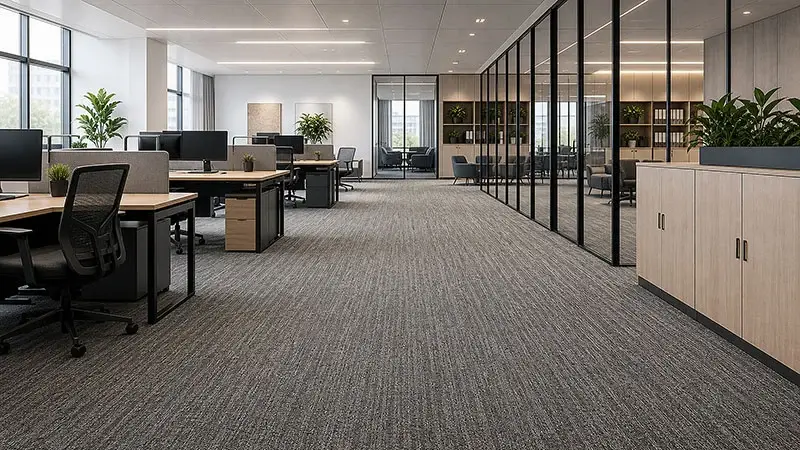
Selecting the right environment for our PP Tufted Carpet Tile with Eco Backing comes down to aligning its natural strengths with the real-world priorities of a project. Through our daily conversations with contractors and facility teams, we have seen these tiles deliver outstanding value in several distinct commercial scenarios. The foremost driver is cost efficiency. Polypropylene resin costs less than nylon or wool, and the lightweight structure reduces freight charges, on-site lifting, and the labor hours needed for cutting and fitting. These economics make the product a strong candidate for large open-plan offices with moderate foot traffic, where a fresh look every few years is desired without a heavy capital outlay. Educational facilities such as classrooms, libraries, and circulation corridors benefit from the fiber’s stain resistance and lack of mold support, handling the occasional juice spill or marker drop without leaving a permanent record. Retail spaces, pop-up stores, and exhibition booths are another excellent fit because the low per-square-meter cost allows design changes between seasons or campaigns. The minimal weight puts less demand on the subfloor, a real advantage in high-rise buildings where structural engineers specify dead load limits. In renovation projects, the ease of cutting tiles around irregular columns, door frames, and service hatches helps contractors meet tight move-in schedules.
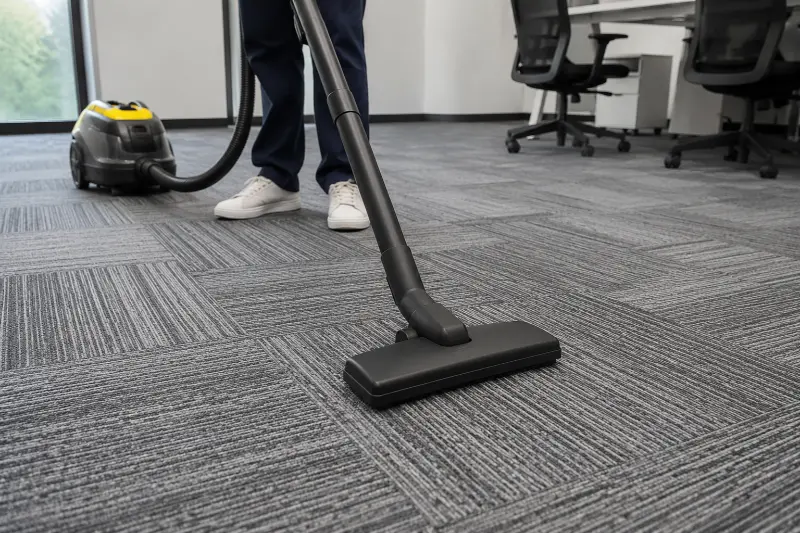
At the same time, we believe in sharing the material’s limitations openly so that every installation succeeds. The most critical point is thermal sensitivity. Polypropylene starts to soften long before it fully melts, so placing a tile directly against a floor-mounted heating grill or in a sunroom with strong, unfiltered glare can lead to permanent deformation and pile lay-over. In settings where hot equipment, soldering debris, or dropped cigarettes are a common occurrence, a different fiber type will serve more reliably. Heavy rolling loads with very narrow wheels, such as compact dollies or certain medical carts, can concentrate weight and crush the tufts, leaving matted patches that do not bounce back because PP lacks the natural resilience of wool and the engineered memory of high-grade nylon. Oil-based spills like grease from a food counter or lubricant from mechanical workshops can cling to the hydrophobic fiber surface and require solvent-based spotting agents, which in turn need careful application to avoid affecting the eco-friendly backing. We therefore advise a maintenance plan that combines daily vacuuming with periodic low-moisture hot water extraction, keeping cleaning water temperatures below 80 degrees Celsius to preserve the backing structure. Extended direct UV exposure without the proper stabilizer package will eventually degrade the polymer, causing surface chalking and loss of tensile strength. Even though our yarn includes UV inhibitors, these tiles are engineered for indoor use and should not be placed under unfiltered skylights. By weighing these characteristics at the specification stage, designers and buyers can position our PP Tufted Carpet Tile with Eco Backing as a dependable, value-oriented floor covering that performs with integrity within its defined scope.
Address
Shidaigongguan Building No.5 Office 1212, Haicheng east road, Duanzhou District, Zhaoqing City, Guangdong Province, China
Tel
Copyright © 2026 Zhaoqing Yunle International Trade Co., Ltd. All Rights Reserved.